
Last updated November 23, 2026
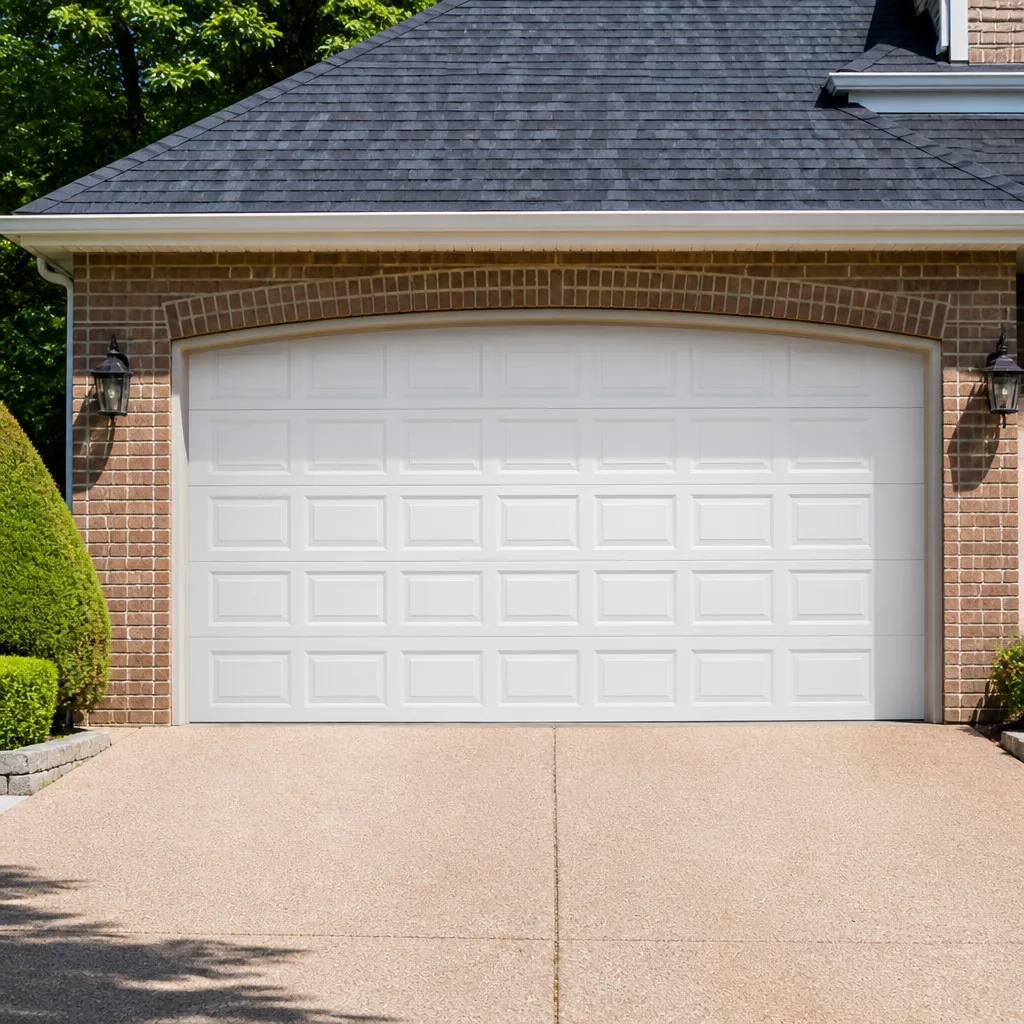 Raised-panel steel
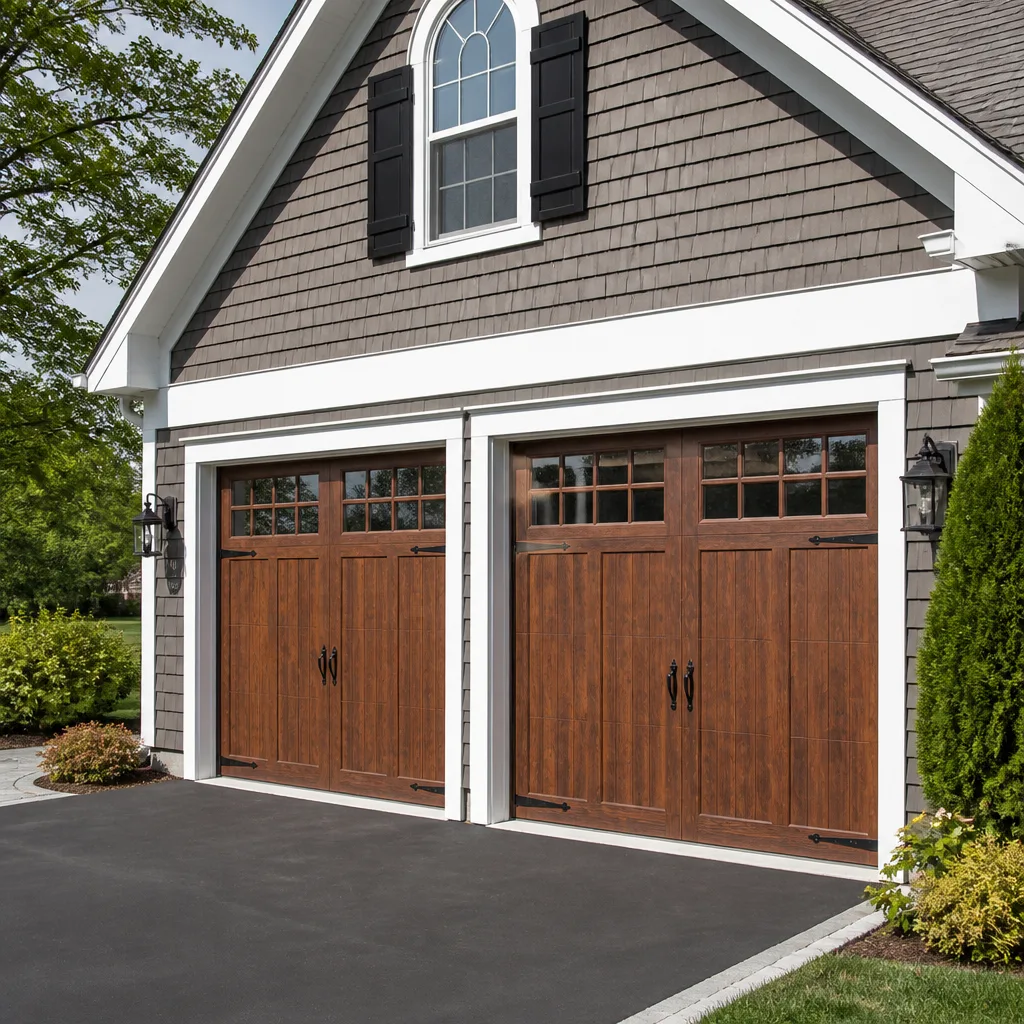 Carriage house
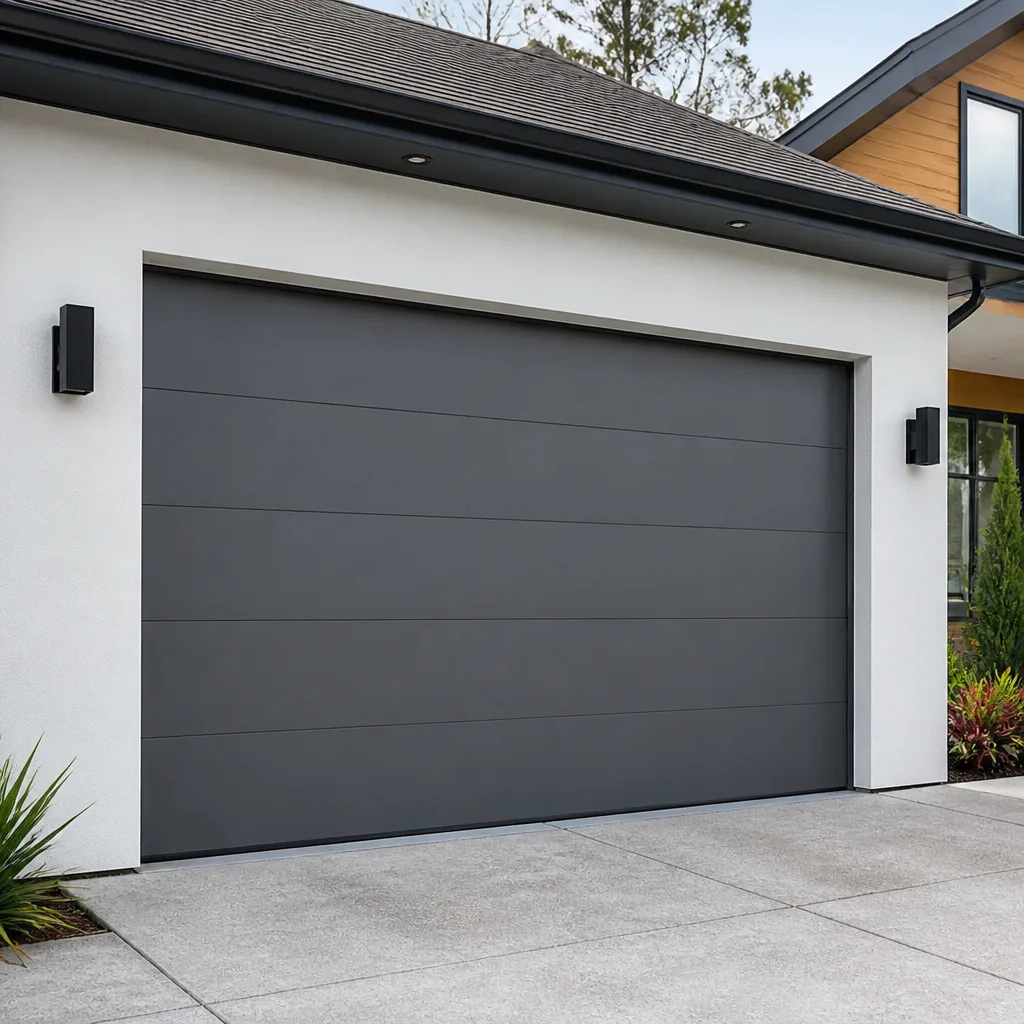 Modern flush
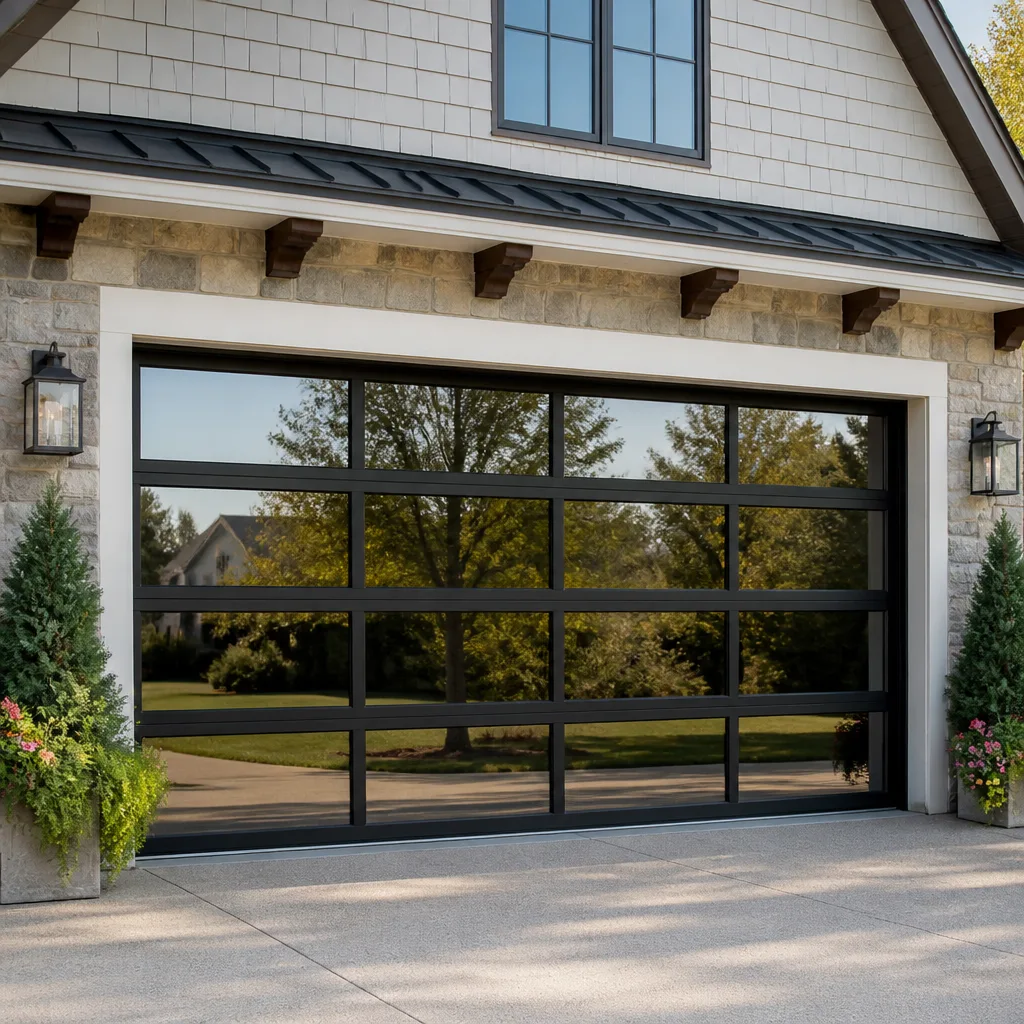 Full-view glass
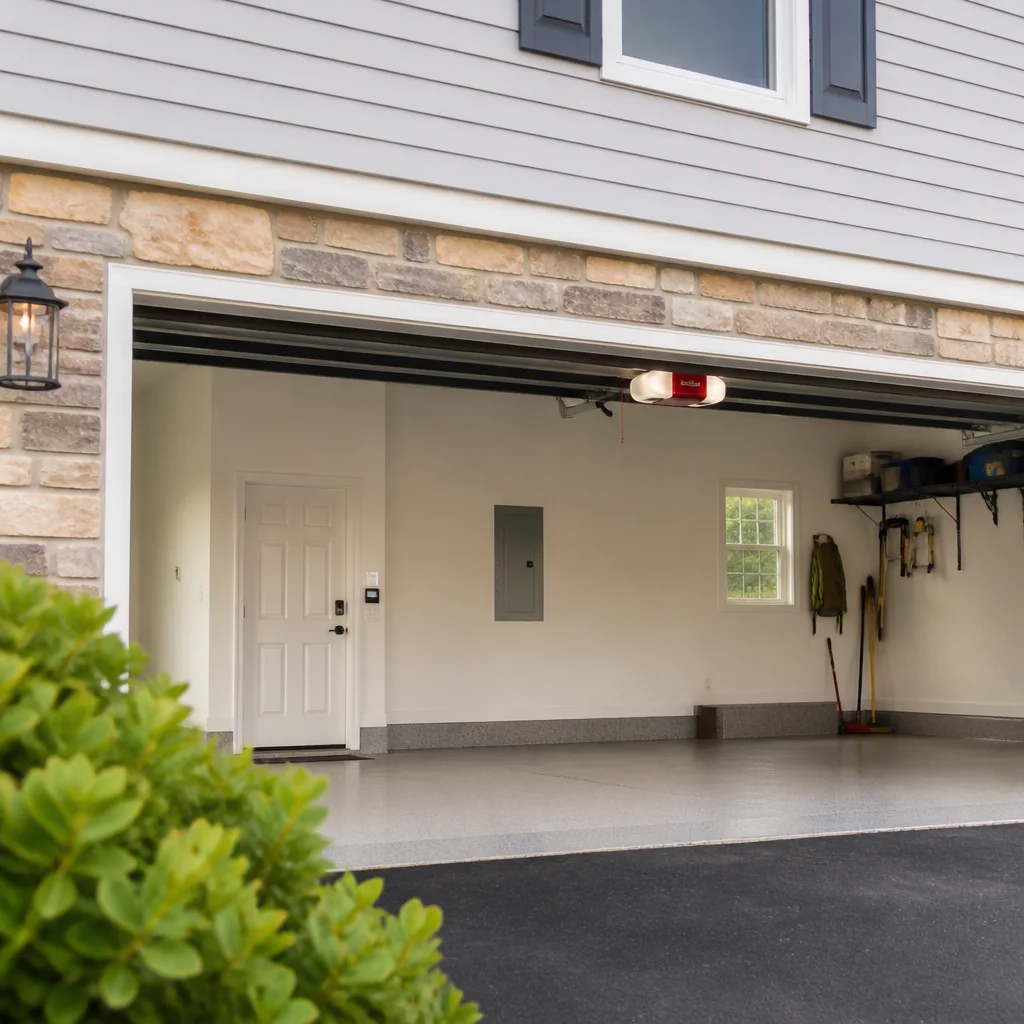 LiftMaster openers
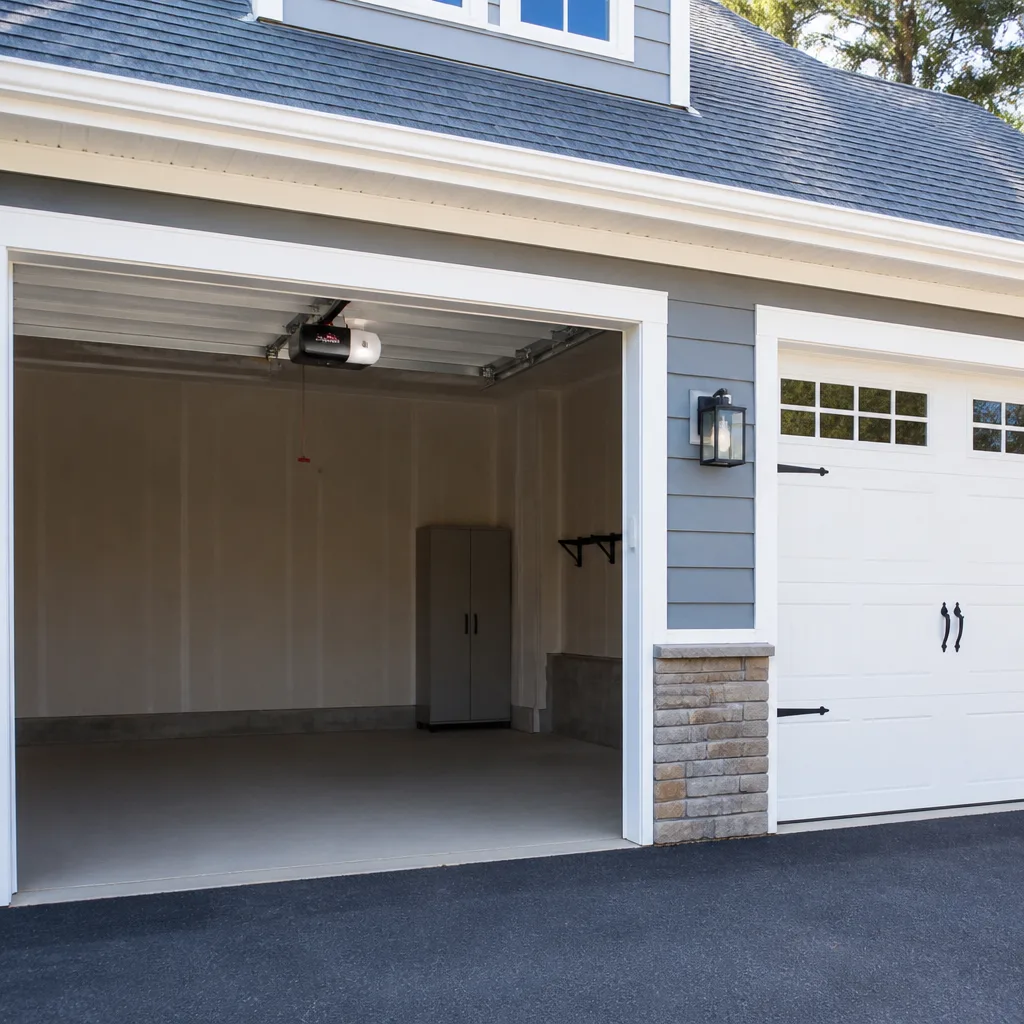 Chamberlain openers
Full 25-point door and opener safety check with every visit - springs, cables, rollers, tracks, and your LiftMaster or Chamberlain opener included
You get a price before we start. It does not change when the pro arrives.
Get your free estimateGarage Door Repair Troubleshooting in Bellevue: Common Problems and How to Fix Them
A door that reverses before it touches the ground and a door that stops halfway down feel like two different problems. Most of the time they trace back to the same safety sensor, and the test that proves it takes about half a minute. That gap between how a failure feels and what’s actually broken is why so many Bellevue homeowners replace the wrong part, or pay for a repair that never touches the real fault. In this guide we map the symptoms you’re seeing to the six root causes behind almost every residential failure, explain which checks are safe to do yourself and which three you should never attempt, and show you how to read your opener’s blink codes without hunting for the manual.
Quick Answer
Most garage door problems come down to one of six failure points: spring tension, a cable drum, sensor alignment, the limit switch, the trolley carriage, or the opener’s motor capacitor. You can diagnose sensor and travel-limit issues yourself in a few minutes, but spring tension, cable load, and anything involving the opener’s electrical components need a trained technician. Matching the symptom to the right root cause before you call saves time, money, and a second service visit.
Styles & brands we work with
- Raised-panel steel
- Carriage house
- Modern flush
- Full-view glass
- LiftMaster openers
- Chamberlain openers
Table of Contents
- Symptom-to-Root-Cause: The Map That Saves You a Wasted Repair
- The Six Most Common Failure Points in a Bellevue Garage Door
- Why Pacific Northwest Humidity Breaks Things Dry-Climate Guides Ignore
- What You Can Safely Check Yourself (and the Three Checks You Can’t)
- How to Read Your Opener’s Blink Codes
- Safe Short-Term Workarounds While You Wait for a Repair
- When to Call a Professional
Symptom-to-Root-Cause: The Map That Saves You a Wasted Repair
The fastest way to troubleshoot a garage door is to stop describing the symptom and start identifying the failure point. A door that reverses on the way down is usually a sensor problem. A door that lags, strains, or stops unevenly is usually a spring or cable problem. A door that runs but won’t travel its full distance is usually a limit switch or logic board issue. Getting this mapping right is what separates a ten-minute fix from a week of guessing.
Where the failure lives matters because a garage door is two systems working together. The mechanical side (springs, cables, drums, hinges, rollers, panels) moves the door. The electrical side (the opener, the safety sensors, the limit switches, the wall control) tells the door when and how far to move. A symptom that looks electrical is often a tired spring forcing the opener to work harder than it should. A symptom that looks mechanical can be a misaligned sensor sending the door back up before it ever reaches the floor.
Below is the map we use on every call. It doesn’t replace a diagnostic visit, and it won’t tell you a spring’s exact remaining life, but it will get you pointed at the right system before you pick up the phone.
- Reverses before touching the floor: safety sensor obstruction, misalignment, or a dirty lens.
- Stops halfway and won’t continue: limit switch setting, trolley carriage jam, or a binding roller.
- Won’t lift, but the opener motor hums: broken spring, snapped cable, or a stripped drive gear.
- Lifts unevenly or one side lags: unequal spring tension or a cable off its drum.
- Opener clicks but nothing moves: motor capacitor, stripped gear, or a logic board fault.
- Door slams down hard: broken spring on one side, or a worn bottom seal catching.
Homeowners in Bellevue’s older neighborhoods like Crossroads and Lake Hills often find that what looks like a single failure is two problems layered on top of each other: a worn spring that has been quietly straining the opener for months and a sensor that finally gave out. That’s exactly the kind of layered diagnosis our team makes before we touch a bolt.
The Six Most Common Failure Points in a Bellevue Garage Door
Nearly every garage door problem we see in Bellevue traces back to one of six components. Knowing what each one does, and how it typically fails, lets you predict what a technician is going to find before they arrive.
1. Spring tension
Torsion springs (the coiled bar above the door) and extension springs (the long springs running along the tracks) do the actual lifting. When a torsion spring breaks, it usually snaps audibly and the door becomes too heavy to lift by hand. Springs wear from cycles, not age alone, so a door that cycles many times a day will wear out its springs faster than a door that runs twice a day. This is the single most common failure point we diagnose, and it’s also the one that carries the greatest safety risk to a do-it-yourselfer.
2. Cable drum
The drums at each end of the torsion bar spool the lift cables as the door moves. If a cable jumps the drum, the door will lift unevenly or bind on one side. A slipped cable is a symptom that often points back to a spring problem, because a broken spring leaves one side slack and the cable can then unspool. This is a mechanical failure that should be corrected before the door is run again.
3. Sensor alignment
The two safety sensors near the floor at each side of the door send an infrared beam across the opening. If the beam is broken or the lenses are dirty, the opener believes something is in the doorway and reverses the door on the way down. This is the failure that produces the most false alarms and the most unnecessary service calls, and it’s usually the easiest to correct.
4. Limit switch
The limit switch tells the opener how far to raise and lower the door. If it drifts out of adjustment, the door stops short on the way up or down and appears jammed. Because limit-switch problems mimic mechanical jams, this is a common misdiagnosis – the door isn’t stuck, it’s simply been told to stop.
5. Trolley carriage
The trolley is the carriage that rides along the opener rail and connects the opener to the door. If the trolley jams, wears, or its release cord has been pulled, the opener runs but the door won’t move. This can look identical to a stripped gear or a dead motor, so checking the trolley is one of the first steps in diagnosis.
6. Motor capacitor
The capacitor gives the opener motor its starting boost. A failing capacitor produces the classic symptom of a motor that hums or clicks but doesn’t turn. It is a small, inexpensive part, but it’s a component that requires the opener housing to be opened, which is a job for a technician. This is also where brand-specific knowledge pays off – the capacitor and drive assembly differ significantly between a LiftMaster and a Genie, and diagnosing by brand means we don’t waste a visit on the wrong part.
When you’re ready for a proper diagnostic, our garage door repair team can test all six failure points in a single visit, so you’re not scheduling a second call for what the first should have caught.
Why Pacific Northwest Humidity Breaks Things Dry-Climate Guides Ignore
Bellevue sits in a marine climate with wet winters, cool springs, and long stretches of damp air. Most garage door troubleshooting guides are written for dry, sunny climates, which is why they miss the two failures that are most common here: roller corrosion and bottom seal swelling.
Roller corrosion
Steel rollers are the small wheels that ride inside the track. In dry climates they last for years without attention. In Bellevue’s humidity, moisture collects in the tracks and on the roller shafts, and the rollers slowly corrode to the point where they roll stiff or freeze outright. A door with seized rollers requires much more force to move, so the opener works harder, the springs wear faster, and eventually the door binds mid-travel. If you hear a grinding or squealing noise as the door moves, seized rollers are a strong suspect. Rollers are inspectable and lubricable, but seized ones need replacing, and an inspection is worth doing every few years in this climate.
Bottom seal swelling
The rubber bottom seal is what closes the gap between the door and the floor. In humid conditions that seal can absorb moisture and swell, which changes its profile and causes it to drag against the floor or grip the threshold. A door that closes most of the way and then reverses without a sensor obstruction is often suffering from a swollen seal. Seals that swell past a certain point can’t be adjusted back into shape – they need replacing.
What these two mean for your troubleshooting
If you’re troubleshooting a squeaky, binding, or reversing door in Bellevue, add rollers and the bottom seal to your suspect list. A dry-climate guide will send you straight to the sensors or the springs and never mention them. Our technicians work in this climate every week, so they know to check for humidity-driven wear as a matter of course, and they can tell you whether a seal or a set of rollers can be cleaned and adjusted or needs replacing. When the problem is in the opener and drive system rather than the door itself, we cover that under the same visit with garage door opener repair – one call, both systems, no handoff to a second company.
What You Can Safely Check Yourself (and the Three Checks You Can’t)
Plenty of garage door troubleshooting is safe to do at home, and it’s worth doing before you call anyone. Knowing which checks are safe and which will hurt you is what separates a successful bit of prevention from a hospital visit.
Safe to check yourself
- Test the safety sensors. With the door open, wave an object across the sensor beam and confirm the door’s light flickers and the opener reverses when you try to close. Clean the lenses with a dry cloth and confirm each sensor’s indicator light is on and steady.
- Watch the door travel. Open and close the door from a safe distance and note exactly where it stops, where it reverses, and whether it moves evenly on both sides.
- Check the manual release cord. Confirm the cord hangs freely and is reachable, but don’t pull it unless the door is fully closed. Pulling it with the door up can drop the door.
- Inspect the rollers and bottom seal visually. Look for rust, flat spots, or a seal that’s visibly dragging on the floor. Do this without forcing anything and without standing under the door.
- Check the wall control, remotes, and battery. A door that won’t respond to a remote but works from the wall control is usually a battery or remote issue, not a door issue.
The three checks you should never run yourself
These involve stored mechanical energy or live electrical components, and they cause the serious injuries we hear about every year. Leave them to a technician.
- Spring tension. A wound torsion spring holds enough stored energy to cause severe injury or worse if it releases or if the winding bars slip. Never try to adjust, unwind, or replace a spring yourself, and never reach into the torsion bar assembly. Spring repair is a dedicated service for a reason.
- Cable load. The lift cables are under continuous tension from the springs. A cable that snaps or slips while you’re near it can whip with enough force to cut through skin or bone. Don’t loosen, reposition, or handle cables.
- Electrical components. Anything that means opening the opener housing or testing the capacitor, logic board, or motor connections requires the power off and the right testing tools. A capacitor can hold a charge, and an opener’s low-voltage and line-voltage circuits behave differently. Don’t probe them.
If your diagnostic work leads you to one of these three, stop and call. Our team is trained on the electrical and mechanical side of every major brand, including the LiftMaster and Chamberlain openers found in most Bellevue homes, so we can test all three safely in one visit.
How to Read Your Opener’s Blink Codes
Most modern openers tell you what’s wrong with a pattern of LED blinks, and you don’t need the manual to read the three brands we see most often in Bellevue. The pattern is usually on the diagnostic LED on the back or side of the motor housing. Count the blinks between pauses, then match to the pattern below.
LiftMaster and Chamberlain
LiftMaster and Chamberlain are made by the same manufacturer and share the same diagnostic logic, so the codes are effectively identical. On both, the safety sensors are usually the first code you’ll see after a reversal:
- Sensor issue (often 5 blinks): the safety sensor beam is blocked, misaligned, or the sensor lens is dirty. Clean the lens, realign both sensors until their indicator lights are solid, and retry.
- Limit or travel problem (often 4 blinks): the opener isn’t completing its full travel. This points to the limit switch or a mechanical obstruction on the track.
- Motor or logic fault (a pattern of short and long blinks): electronics-level failure. Stop and call a technician.
LiftMaster and Chamberlain openers also have a self-diagnostic feature accessible through their wall control panel on some models; if you have the manual for your model, that panel can give you the code directly. If you don’t, count the blinks.
Craftsman
Craftsman openers (made under the LiftMaster family for years) use the same general blink-logic, so the counts above apply to most residential Craftsman units. A steady blink on the safety sensor indicator usually means a blocked beam, and a slow flash on the opener’s main light often indicates the door ran into a mechanical obstruction. If you see a rapid repeating blink pattern that doesn’t match the sensor or travel codes, the control board is likely involved – that’s a stop point.
What the codes don’t tell you
Blink codes point to a category, not a component. A “sensor issue” code doesn’t tell you whether the beam is blocked by a spiderweb, whether a wire is loose, or whether the sensor itself has failed. That’s why we test the actual cause behind the code rather than replacing the sensor on the first blink. If your opener is a Genie or a Raynor, the manual or the brand’s support materials are the best code reference – Genie’s codes differ from the LiftMaster family, and our technicians keep current on both. Reading the code correctly is what keeps you from paying for a part you didn’t need.
Safe Short-Term Workarounds While You Wait for a Repair
Sometimes the repair can wait a day or two. Sometimes it can’t. Either way, you need to know what’s safe to do so the door is usable, or safely out of service, until a technician arrives. A garage door is heavy and under tension, and a half-working door can still drop. These workarounds are about staying safe, not about forcing a broken door to work.
By failure point
- Sensor alignment: clean both lenses and realign them until the indicator lights are solid. Then test with a small object across the beam. If the door closes and stays closed, you likely have a working door until the sensor drifts again. If it recurs, the sensor or wiring needs replacing.
- Limit switch / travel: don’t adjust the limit switch yourself if you’re not sure how. Instead, operate the door only by hand or hold the wall control – some openers allow held-to-travel operation on these models – and don’t run an automatic cycle that overshoots. If you can’t get the door to close fully, close it manually and call.
- Broken spring (one side): do not run the opener. A door with one broken spring on a two-spring system is unbalanced, and running the opener can bend the door, damage the panels, or snap the remaining spring. Close the door fully, disconnect it from the opener, and don’t use the door.
- Snapped cable: stop using the door entirely. The door can fall or come off the track. Keep it closed, avoid the tracks, and call.
- Stripped gear / hummed motor: the door can usually still be opened and closed by hand if the springs are intact and the door is balanced. Disconnect the opener, move the door by hand, and don’t leave the opener running against a stalled door – that risks burning out the motor.
- Trolley jam: pull the release cord only when the door is fully closed, then operate the door by hand. When the trolley is jammed and the opener is running, do not attempt to force the carriage back onto the rail; that’s a service job.
What a “working” workaround looks like
A successful workaround means (1) the door is either fully closed and secure or fully open and secured, (2) you’re not leaving the opener to cycle against a stuck door, and (3) the door hasn’t moved under its own weight unexpectedly. If you’re not sure the door is safe, close it, disconnect it from the opener, and treat it as out of service. “Usable but risky” is not a workaround, it’s an accident waiting to happen. Our emergency service is built for exactly these situations, so the safe move is to call rather than force it.
When to Call a Professional
Some garage door problems are a five-minute adjustment. Others are a stop-and-call. The line between them is basically this: if the failure involves springs, cables, or electricity, call a professional. If the door comes off its track, if you hear a loud snap and the door won’t lift, if the door reverses for no clear reason after you’ve cleaned and realigned the sensors, or if the opener hums and won’t turn, you’re past the DIY stage. A door that’s been left half-open because it won’t close is a security problem, and those get prioritized. Bellevue Garage Door Repair Pros offers free estimates in Bellevue – call (866) 937-9023. We answer 24/7. Fast dispatch from 7am to 7pm, Sunday through Friday. One call covers the door and the opener, so you’re not coordinating two contractors while the door is stuck.
See the difference
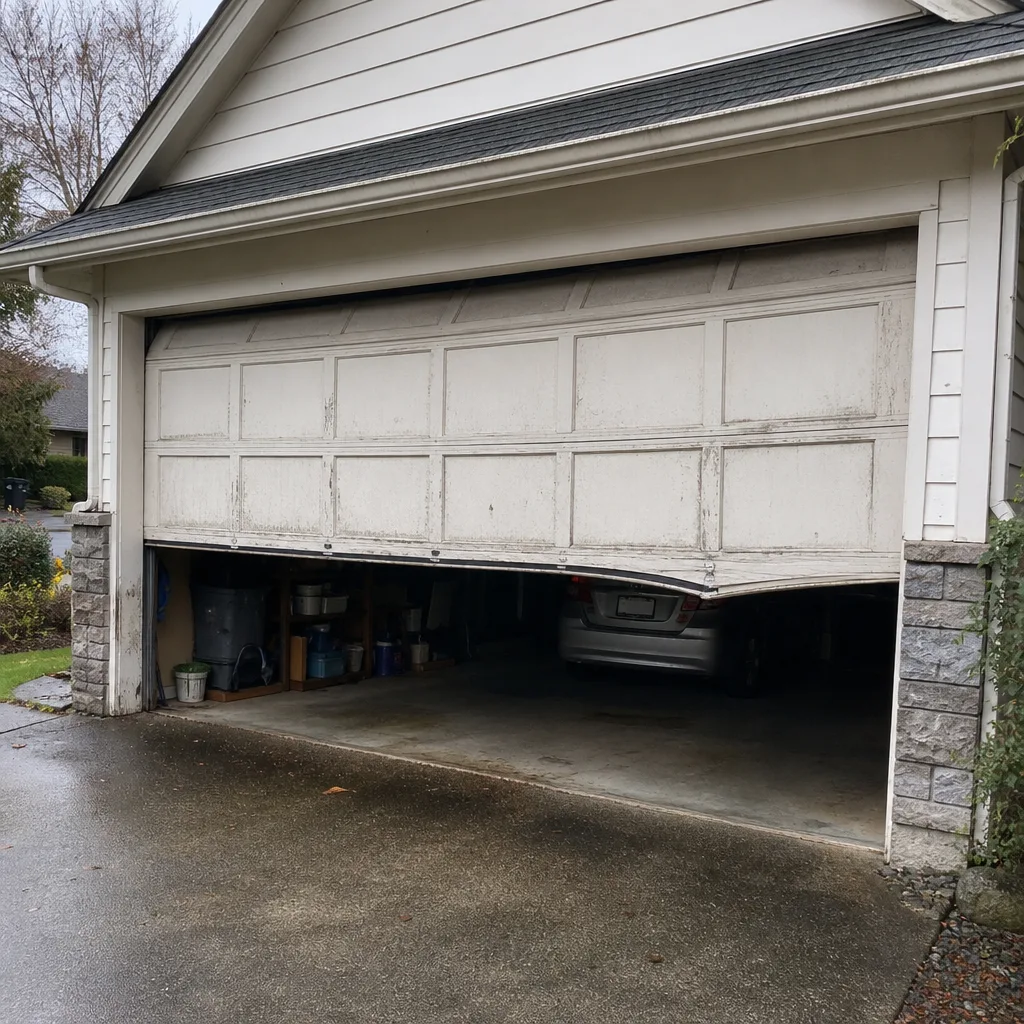 Before
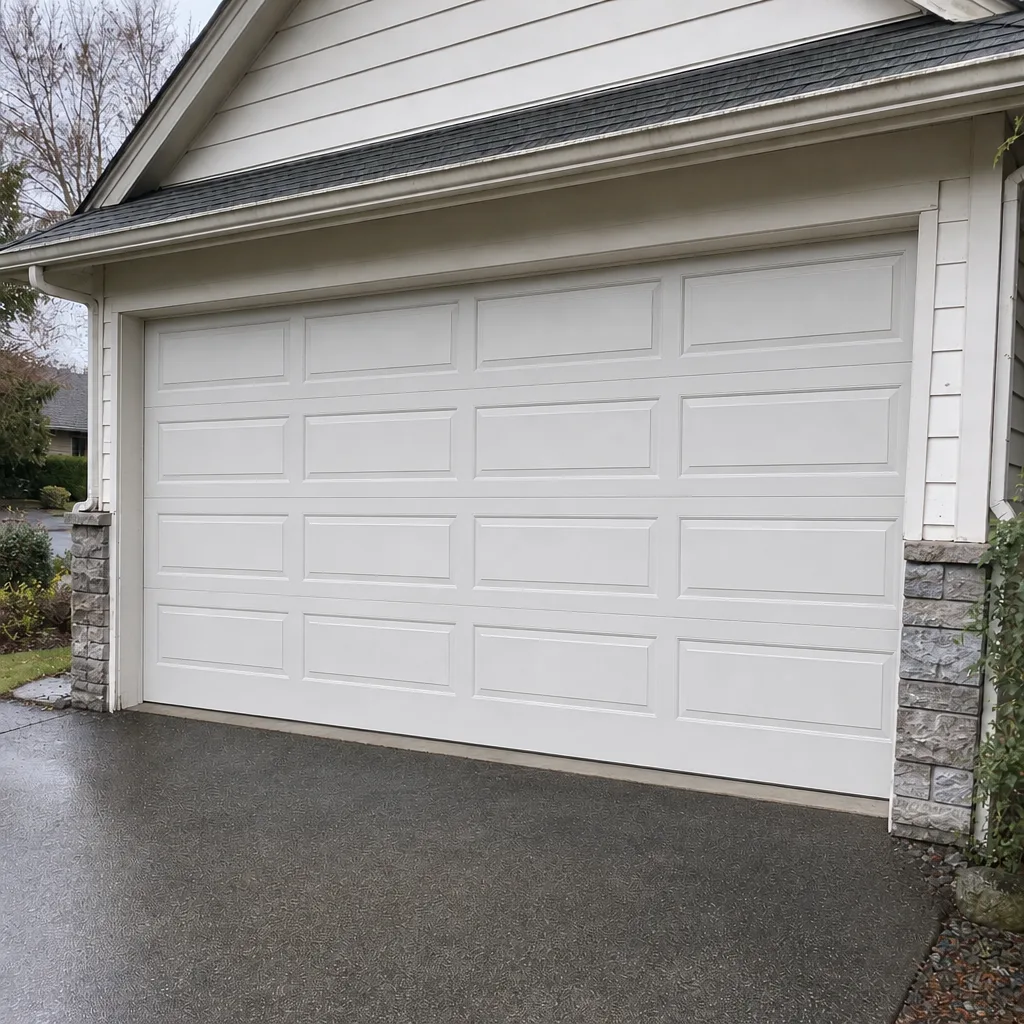 After
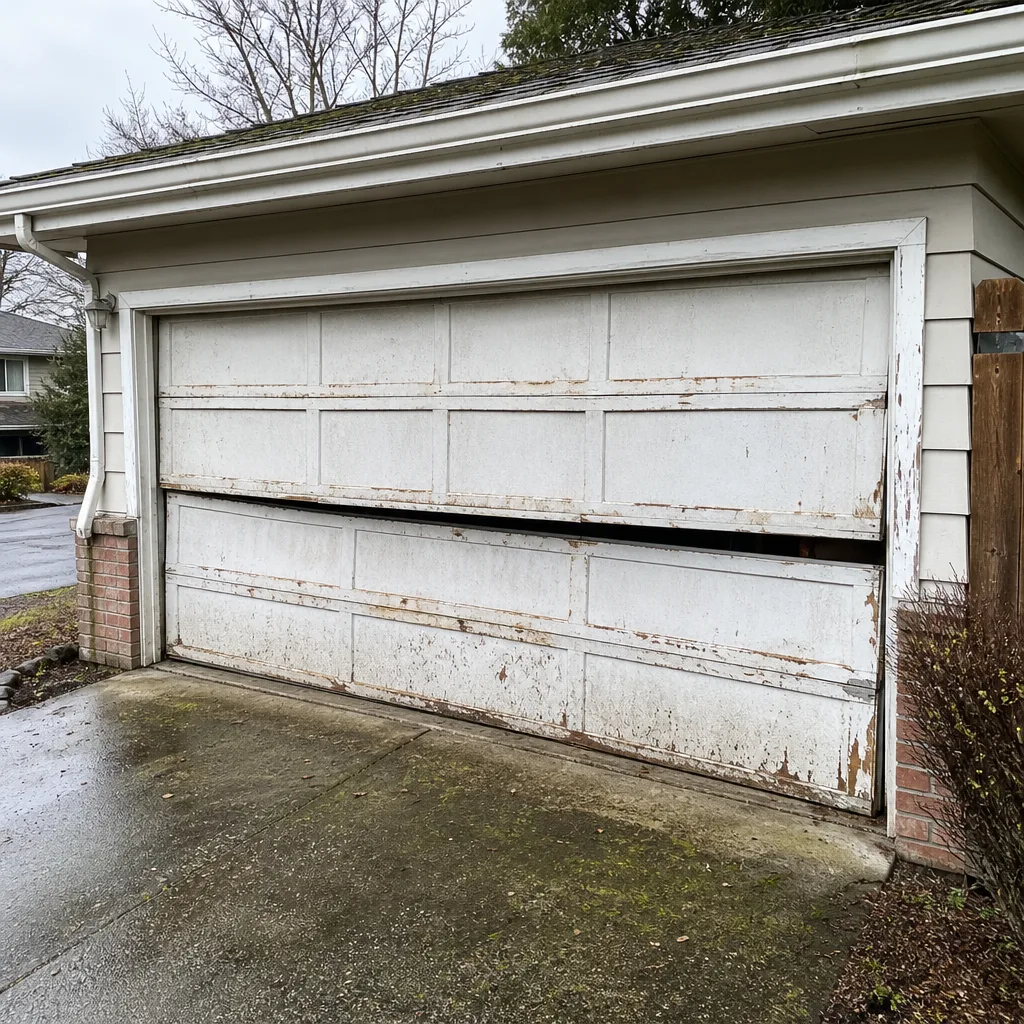 Before
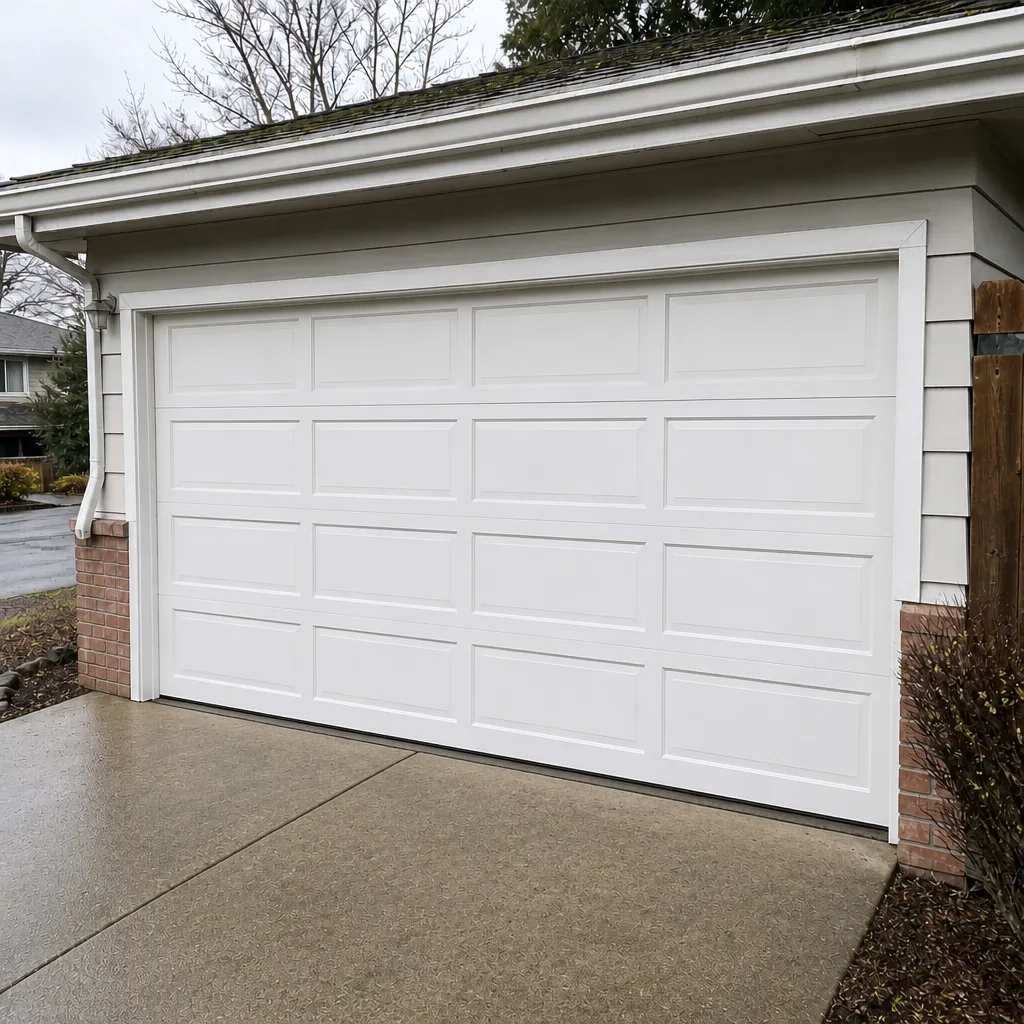 After
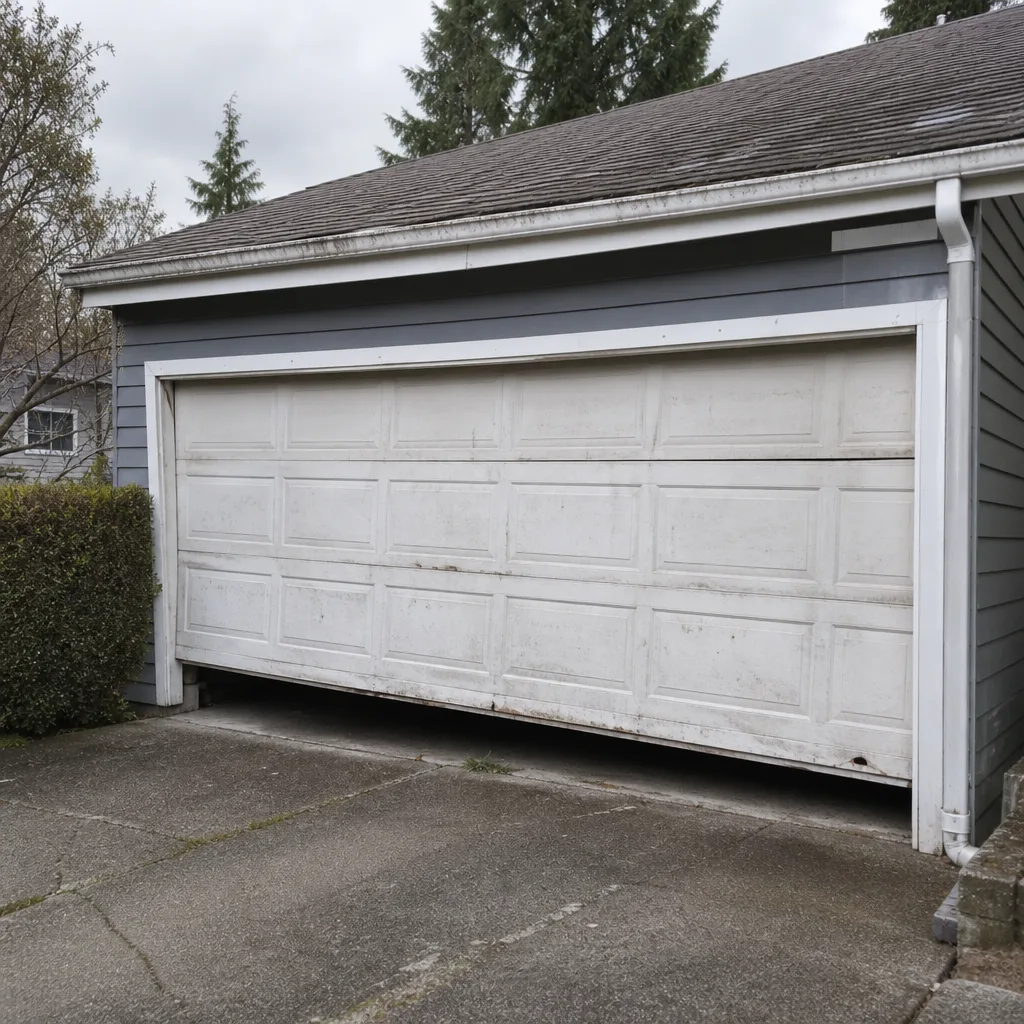 Before
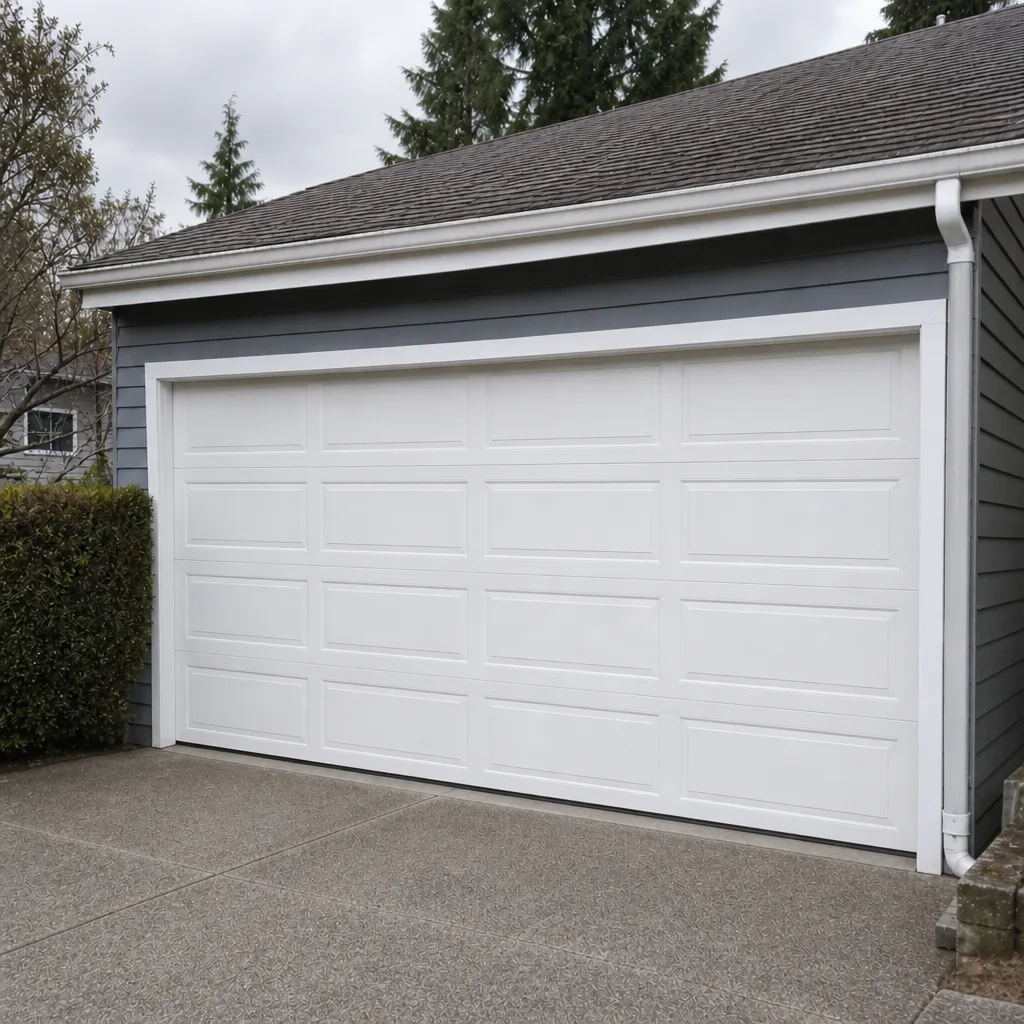 After
Common Mistakes to Avoid
These are the ones we see most often, and each one costs a Bellevue homeowner time or money they didn’t need to spend.
- Blaming the opener for a mechanical failure. A weak spring forces the opener to do more work, and an opener that “seems” dead is often just being asked to lift a door with a broken spring. Test the door’s balance before you blame the opener.
- Replacing the sensor on the first blink. A blink code points to a category, not a component. Clean and realign the sensors before you buy a new one, or you’ll be paying for a part that wasn’t broken.
- Filing the door down and calling it fixed. Shaving a swollen bottom seal to stop it dragging seems smart, but it leaves a permanent gap and lets water in. The seal needs replacing, not trimming.
- Lubricating rollers with the wrong product. In Bellevue’s humidity, the wrong lubricant collects grit and makes corrosion worse. Use a proper roller lubricant, not a multi-purpose spray, and replace rollers that are already seized.
- Adjusting the limit switch to force a stuck door. If the door binds on a mechanical obstruction, adjusting the limit switch just makes it reverse at a different point. You’re hiding the symptom, not fixing the cause.
- Running a door with one broken spring. On a two-spring door, running the opener with one spring broken can bend the panels or break the remaining spring. Disconnect and call.
- Ignoring a “small” mid-travel stall. A door that stops halfway once and then works fine is usually warning you about a binding roller or a limit switch that’s drifting. Catching it early keeps it from becoming a failed opener.
Frequently Asked Questions
In about 70% of cases the cause is the safety sensors at the bottom of the tracks. Clean the lenses, check that the indicator lights on both sensors are solid, and realign them until the beam is continuous. If the door still reverses after that, the sensor or its wiring needs testing. Call (866) 937-9023 for an exact quote – estimates are free.
No. Torsion springs store enough energy to cause serious injury if they release, and winding bars can slip catastrophically. Never adjust, unwind, or replace a spring yourself. Spring repair is a dedicated, safety-critical job that a technician should perform, and our team handles it as a standard service. Call (866) 937-9023 and we’ll give you a free quote.
We don’t publish firm prices because the cost depends on the failure point, the brand of opener, and the parts required – a sensor realignment is a different job from a spring replacement or a stripped gear. The price is quoted and agreed before any work starts, and the written estimate sets the final price. Call (866) 937-9023 for a free estimate.
No, the price is set by the written estimate and agreed before any work begins. If our technician finds the problem is different from what you described on the phone, we explain what we found and the revised price before we do anything. You won’t get an invoice larger than the quote you agreed to. Call (866) 937-9023 for a free estimate.
Yes – the local professional who performs your repair is licensed and insured as the state of Washington requires. Our technicians have up to 11 years of experience, and we’re trained on the eight major residential brands, including Clopay and Amarr. Call (866) 937-9023 for a free estimate.
Yes, same-day service is available for time-sensitive situations. We answer 24/7 and dispatch from 7am to 7pm, Sunday through Friday, and we’re closed Saturday. Call (866) 937-9023 and we’ll get you on the schedule.
The Bottom Line
Troubleshooting a garage door gets far easier once you stop chasing symptoms and start matching them to failure points. Sensors cause reversals, springs and cables cause uneven or no-lift, limit switches and trolleys cause stalls, and the capacitor causes a hum with no motion. Bellevue’s humidity adds two more suspects – corroded rollers and swollen bottom seals – that generic guides skip entirely. Do the safe checks yourself, read your blink codes before you call, use a workaround only when the door stays secure, and hand the springs, cables, and electrical work to a technician. When you’re ready, our garage door installation and repair team is one call away. For repair, maintenance, or a new door, start at Bellevue Garage Door Repair Pros and call (866) 937-9023 for a free estimate.
Written by the team at Bellevue Garage Door Repair Pros.