
Top Signs You Need Garage Door Service – Don’t Ignore These
By the time your garage door starts grinding, the roller causing it has already worn its stem oval and been wobbling in its bracket for weeks. The noise is the last warning, not the first. Most Bellevue homeowners call when something is loud or broken, but the signals worth acting on show up earlier and quieter. Here are the indicators we look for, and where to find them on your own door. If you’d rather not crawl around the tracks yourself, call (866) 937-9023 and we’ll take a look.
Why the Noises You Notice Are Already Late Warnings
A garage door is a system under constant tension, and its parts fail in a sequence. The quiet stages come first: a cable beginning to fray, a roller stem wearing into an oval, a spring losing tension in one spot. Those develop over weeks. The loud stage – grinding, squealing, popping – arrives only once a part has worn far enough to start binding or slipping. That’s why we tell Bellevue homeowners to inspect visually, not just listen. Noise tells you something already failed. A visual check tells you what’s about to.
Doors here deal with wet winters, moss, and temperature swings that work hinges and seals harder than in drier climates. That shortens the quiet window between “fine” and “failing” more than most people expect. Our technicians have up to 11 years of experience, and the pattern holds across every brand we work on. If you want a professional set of eyes on it before noise starts, a routine garage door repair inspection is the cheapest way to catch a problem in the quiet stage.
The Five Early Warning Signs Most Homeowners Walk Past
These five visual indicators show up weeks before a door fails outright. Each is visible with a flashlight and no tools, and each tells you something specific about what’s wearing out.
- Cable fraying at the drum. Look where the cable winds onto the drum above each side of the door. A healthy cable is tight and smooth. Broken strands or a fuzzy, bird-nested look mean the cable is close to snapping. This one is never a wait-and-see.
- Roller stem wear. On the rollers that ride in the track, check where the metal stem meets the roller body. If the stem looks oval rather than round, or the roller wobbles in its bracket, it’s worn. Worn rollers drag, and dragging rollers strain everything else.
- Spring rust banding. A torsion spring should be uniform. A band of orange-brown rust at one point means moisture has been sitting there and the steel is thinning at that spot. In Bellevue’s wet climate, that’s a common find.
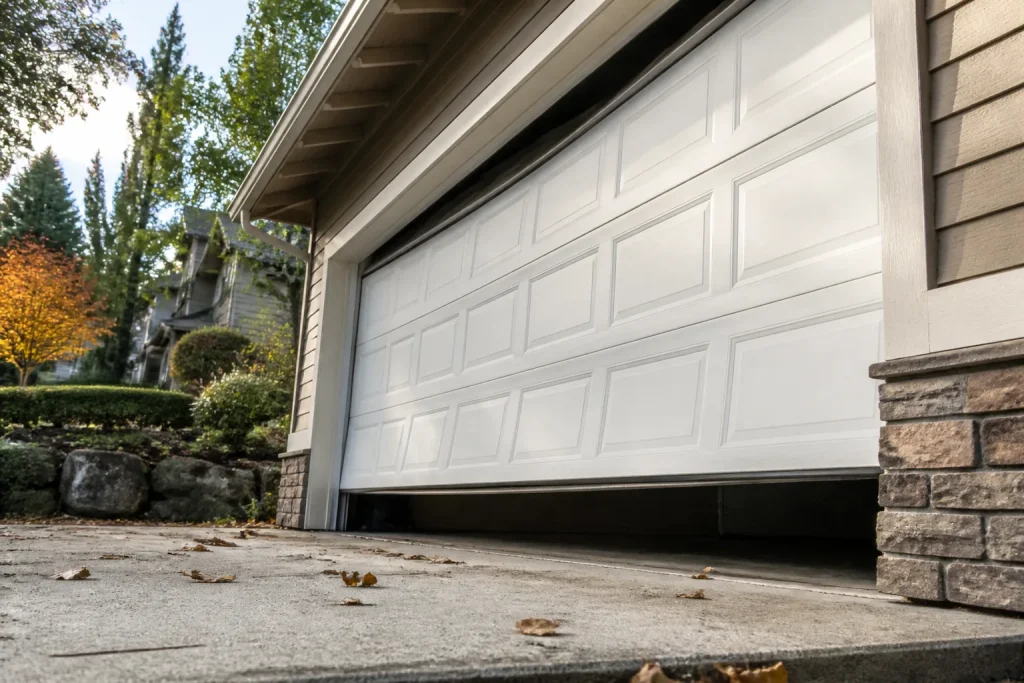
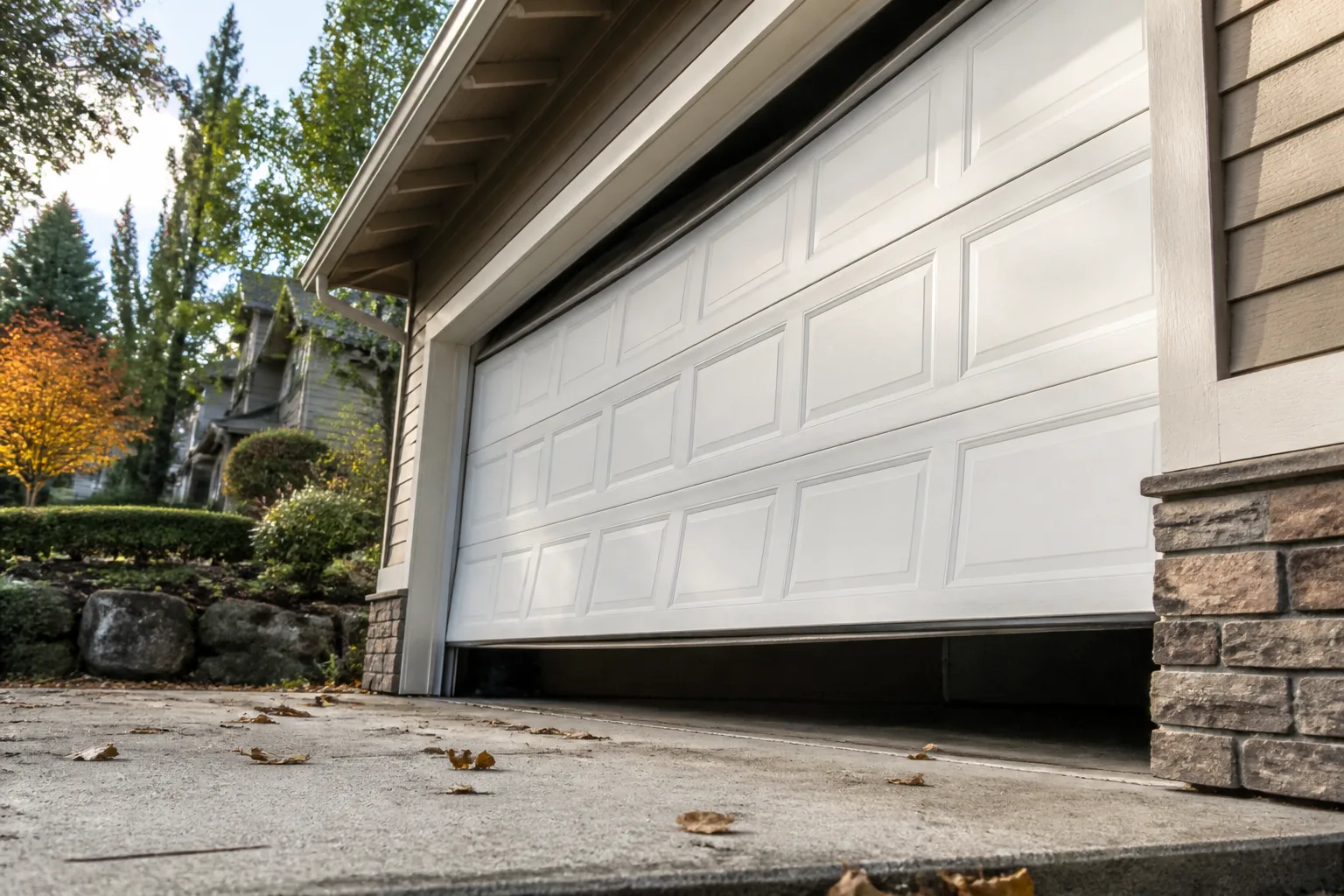
- Panel joint gaps. Stand outside and look along the horizontal seams between panels. Gaps that weren’t there before, or panels that don’t line up, mean the door has twisted or a hinge has loosened.
- Weather seal compression loss. The bottom rubber should press flat against the floor along its whole length. Flattened, torn, or missing sections let water and cold air in, and they signal a door that isn’t sitting square.
Catching any one of these early usually means a single-part fix. Ignoring two or three together is how a door turns into a multi-component repair.
The 90-Second Monthly Walk-Around That Catches Problems Early
This is the routine we suggest to every Bellevue homeowner. It takes about 90 seconds once a month and catches the signals above before they cascade.
- With the door closed, run a flashlight along both cables at the drums. Look for fraying or slack.
- Check the rollers by eye and by a light hand-wiggle. Any wobble in the bracket is worth noting.
- Inspect the spring for rust banding or a gap in the coils.
- Look along the panel seams from outside for new gaps or misalignment.
- Press the bottom seal with your foot along its length to feel for flattened spots.
- Run the door once and watch it travel. It should move smoothly and stay level from side to side.
Write down anything that looks off and compare next month. A single doubtful spot is worth a call. The one thing we’d never suggest is adjusting a torsion spring yourself – those springs are under extreme tension and can cause serious injury. That’s a job for a trained technician, full stop.
What Each Sound Tells You (So You Can Describe It Accurately)
When you call, the words you use help us know what we’re walking into. Different failures sound different, and Bellevue homeowners who describe the noise accurately tend to get a faster, more accurate diagnosis.
- Popping or snapping usually points to a cable. A popping sound often means a cable has jumped its drum or a strand has let go.
- A sharp crack or bang points to a spring, often a torsion spring that has broken. If your door suddenly feels extremely heavy, this is the likely cause.
- A steady grinding or squealing usually means worn rollers or dry hinges dragging in the track.
- A rattle or rumble points to loose hardware – brackets, hinges, or the opener’s rail mounts.
If you hear a crack and the door won’t lift, stop using the opener. A door with a broken spring is dangerously heavy and the opener is straining to compensate. Call us and we’ll get it sorted, whether it’s a door issue or an opener issue – one call covers both. Our garage door opener repair work handles the drive side, and we diagnose by brand, so whether it’s a LiftMaster, Chamberlain, or Genie system, we know how that unit behaves.
Why an Uneven Door Is a Bigger Priority Than a Slow One
A slightly slow door is usually low urgency – lubrication, a tired opener, or cold weather. A door that moves unevenly is a different story. If one side lifts before the other, or the door tilts as it travels, the load is no longer balanced. That asymmetry puts extra strain on one cable and one side of the spring, and it’s the physics behind a lot of sudden cable snaps.
In our experience, a Bellevue door that’s been running slightly crooked for a while is more likely to fail suddenly than one that’s just a bit slow. When you watch your door travel, focus less on speed and more on whether it stays level. An uneven door deserves a call sooner than a sluggish one. A door that’s twisted or off-track needs a proper repair before a cable gives way – that’s when an inconvenient noise becomes a genuine safety concern.
Bellevue’s Weather Leaves Its Own Clues
Living here, the door tells you things through the seasons that homeowners in drier places never see. A few local signals are worth knowing.
- Moss on the bottom seal means the seal is trapping moisture and staying damp. Left alone, that accelerates rot and lets water creep toward the door’s lower hardware. Clean it off and consider whether the seal needs replacing.
- Condensation inside the opener housing points to a humidity problem reaching the electronics. If your opener is a Chamberlain or Genie and it’s acting up in the wet months, that’s a clue worth mentioning when you call.
- Orange streaking on the door track is surface rust, common in wet climates. A little is cosmetic. Streaking that keeps coming back means moisture is sitting on the track and the finish needs attention.
None of these are emergencies on their own. But they tell you your door is working harder than it should, and that’s the moment to schedule maintenance rather than wait for a breakdown in the middle of a rainy stretch.
When to Call a Pro
Call us when you spot any of the five early indicators, hear a crack or pop, notice an uneven door, or find moss and rust that keep returning. Springs and cables are genuinely dangerous to touch – they hold enormous tension – so those are always a pro call. For those, and for a door that won’t move at all, we answer 24/7, and a call outside dispatch hours is booked into the next opening, Sunday through Friday, 7am to 7pm.
If you’re planning ahead, take a look at garage door installation for replacing an aging door, or start at Bellevue Garage Door Repair Pros to see everything we handle.
The Bottom Line
The signs worth acting on are visual, not loud. Fraying cables, oval roller stems, rust banding on the spring, panel gaps, and flattened seals show up weeks before a door gets noisy. A 90-second monthly walk-around in Bellevue catches them early, when a fix is small. An uneven door beats a slow door for urgency, and local weather clues – moss, condensate, track rust – tell you when it’s time for maintenance.
If you’re in Bellevue and need help, Bellevue Garage Door Repair Pros offers free estimates. We handle the door and the opener under one call, diagnose by brand, and take on spring repair as its own dedicated service. Call (866) 937-9023. We answer 24/7. Fast dispatch from 7am to 7pm, Sunday through Friday.
Frequently Asked Questions
The earliest reliable sign is visual, not audible: a fraying cable at the drum or an oval-worn roller stem. Check cables and rollers with a flashlight before you wait for a grinding noise. If you spot either in Bellevue, call (866) 937-9023 – estimates are free.
Once a month is the practical rhythm here, given the wet climate and seasonal swings. The 90-second walk-around covers cables, rollers, spring, panel seams, and the bottom seal. Any doubtful spot is worth a call to (866) 937-9023.
Not always, but it usually means worn rollers or dry hinges, and it tends to appear after a problem has already developed. Get it checked early rather than letting it strain the opener and cables. Call us at (866) 937-9023 for a look.
No – springs and cables are under extreme tension and can cause serious injury if handled without the right tools and training. Leave them to a trained technician. For spring or cable repairs in Bellevue, call (866) 937-9023.
Written by the team at Bellevue Garage Door Repair Pros.
Need Garage Door Help?
Call Bellevue Garage Door Repair Pros - the local pro we connect you with is licensed and insured, here with fast help in Bellevue.
(866) 937-9023