
Last updated November 23, 2026
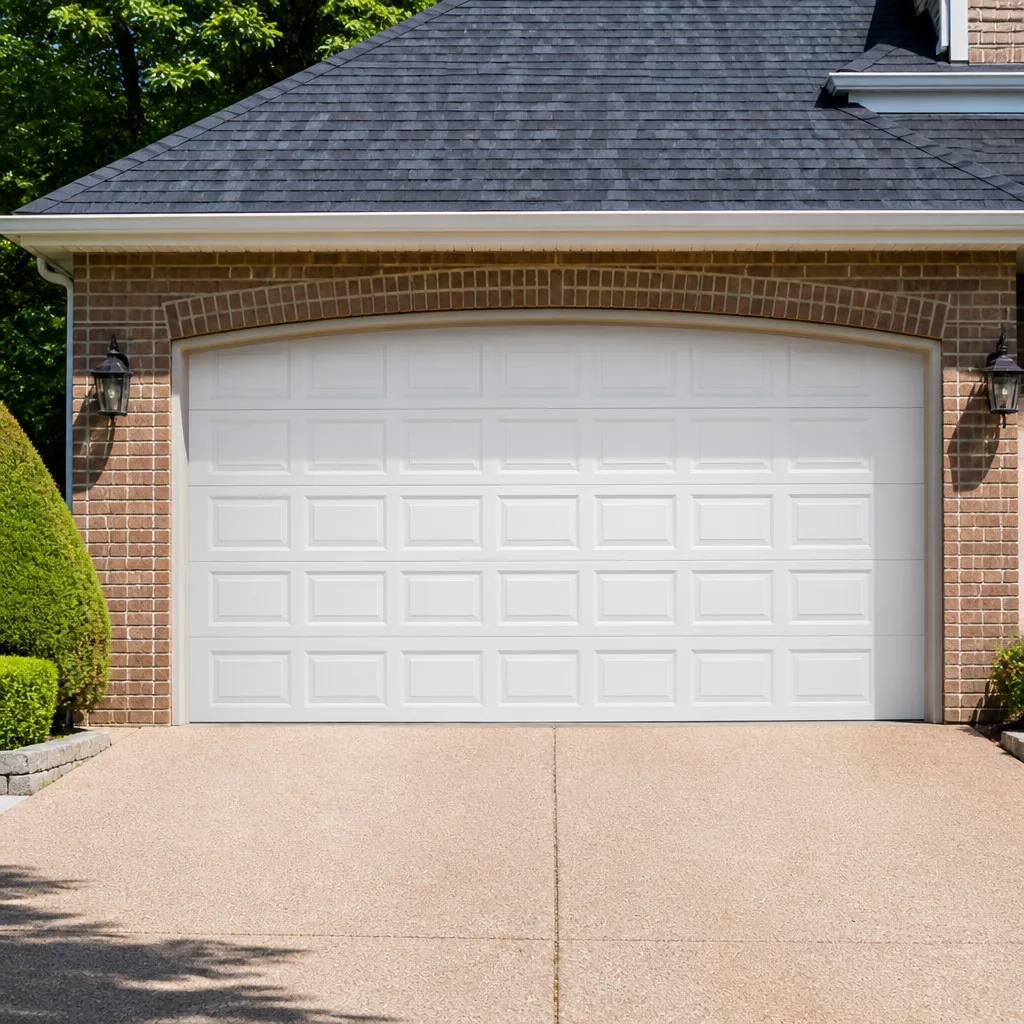 Raised-panel steel
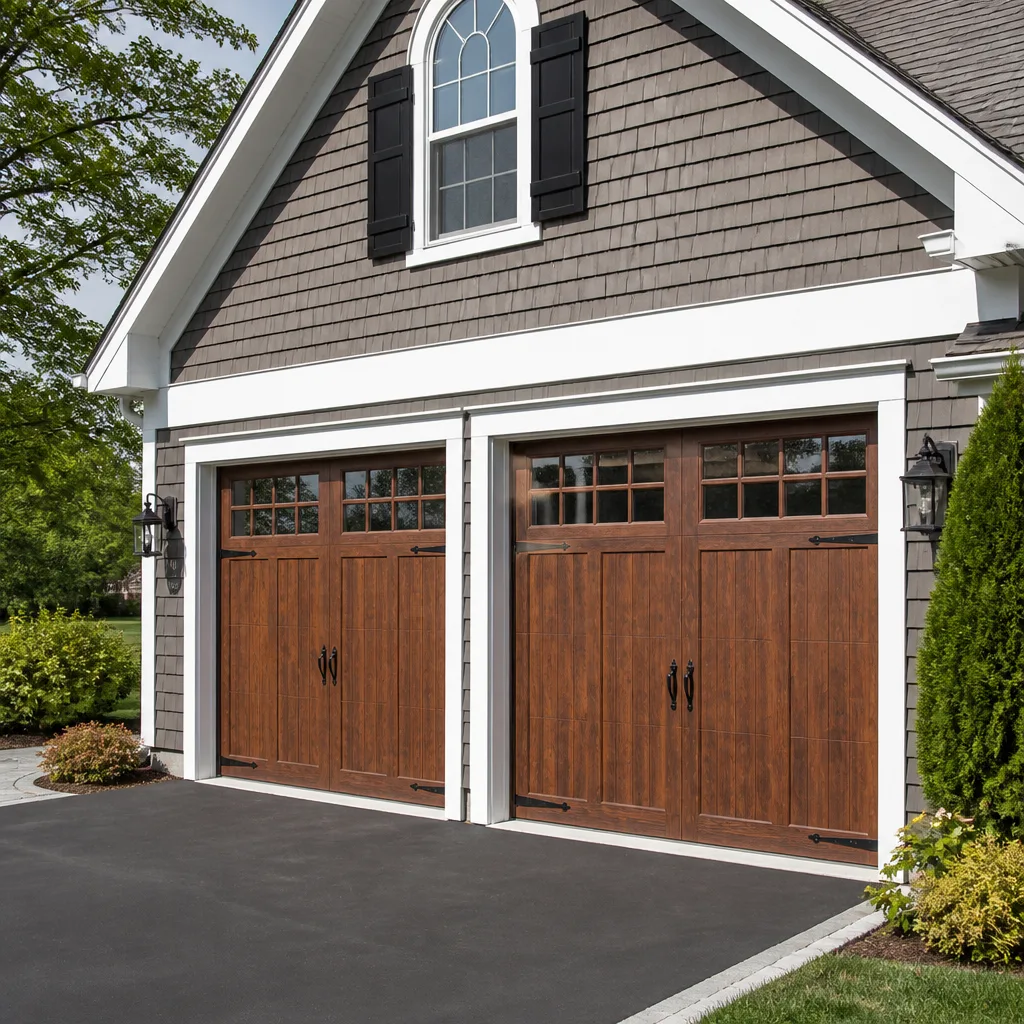 Carriage house
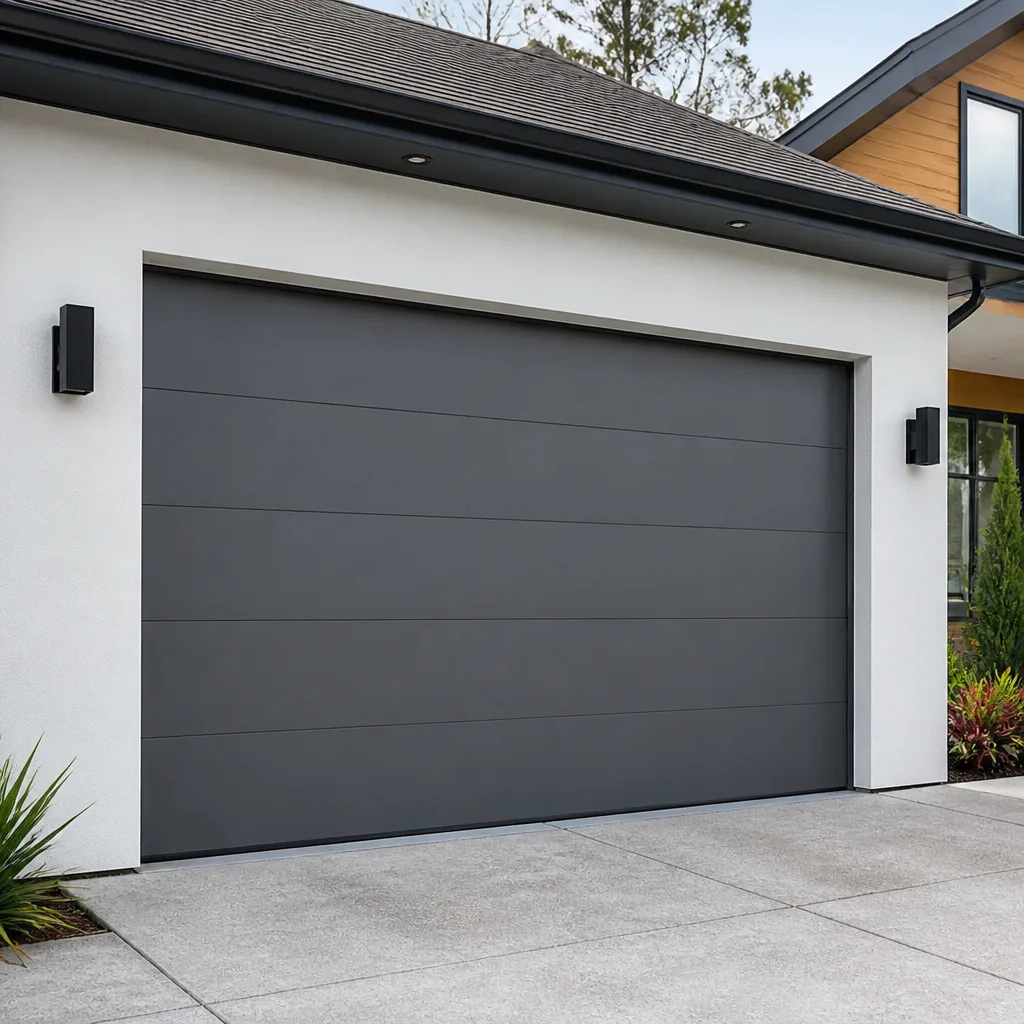 Modern flush
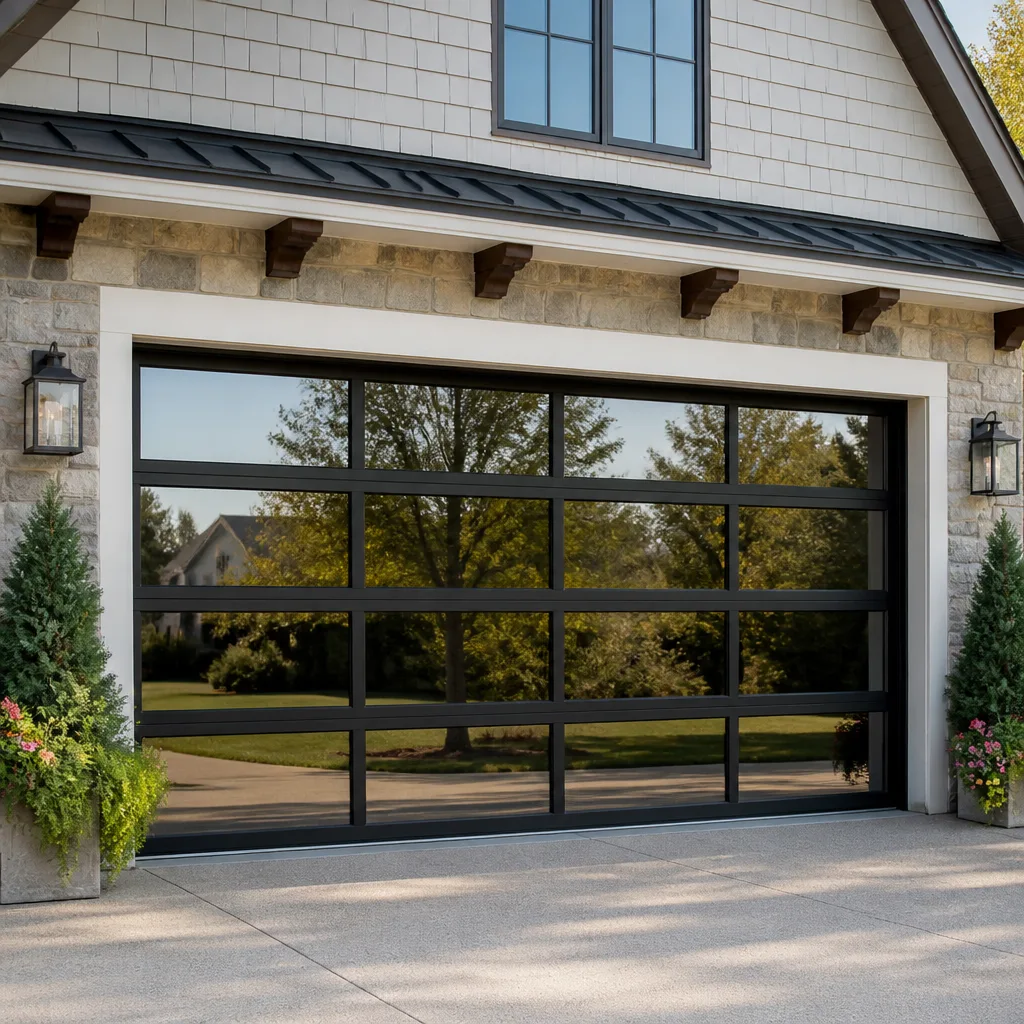 Full-view glass
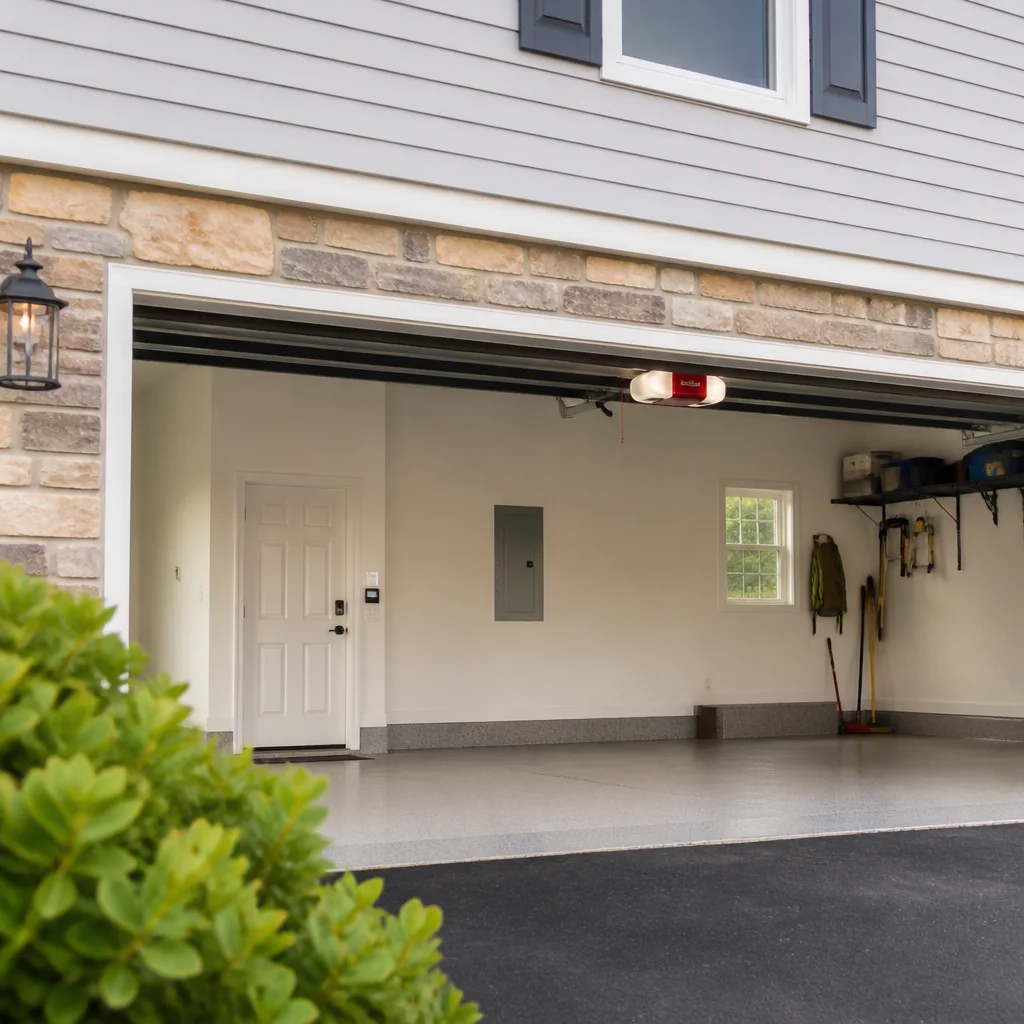 LiftMaster openers
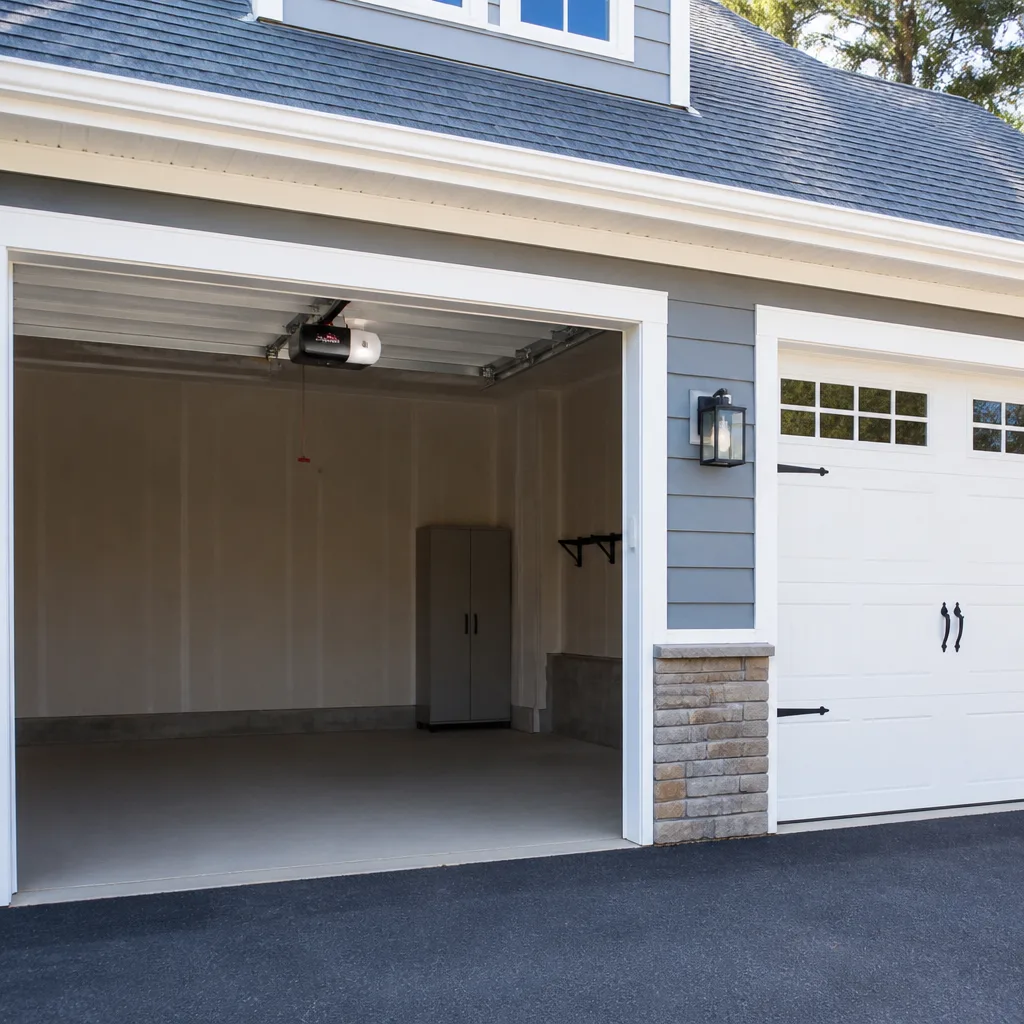 Chamberlain openers
Full 25-point door and opener safety check with every visit - springs, cables, rollers, tracks, and your LiftMaster or Chamberlain opener included
You get a price before we start. It does not change when the pro arrives.
Get your free estimateGarage Door Warning Signs: A Bellevue Homeowner’s Reference Guide
Two noises sound almost identical from inside the house: a grinding that means a worn roller and a grinding that means a cable is about to wind off its drum. One is a routine fix. The other is a loaded steel cable under hundreds of pounds of tension that can release without warning. Homeowners lump both into the same mental category of “the garage is making a weird sound,” and that gap in understanding is where the real risk lives. In Bellevue, where many homes sit on slopes and garages take a beating from damp winters and summer heat, the door works hard year-round. This guide gives you a three-tier framework so you know exactly when to watch, when to book, and when to stop using the door entirely.
Quick Answer
Garage door warning signs fall into three severity tiers. Monitor it covers cosmetic or slow-developing issues like a squeaky roller or a slightly noisy opener. Schedule soon covers anything that changes how the door moves – slow travel, uneven closing, a reversing opener. Stop using the door now applies to visible cable damage, a snapped spring, or a door that hangs crooked under tension. Treat each tier differently and you avoid both needless panic and serious injury.
If you’re unsure which tier a symptom belongs to, call us at (866) 937-9023. We answer 24/7, and we can help you decide whether it’s safe to keep operating the door while you wait for a scheduled visit.
Styles & brands we work with
- Raised-panel steel
- Carriage house
- Modern flush
- Full-view glass
- LiftMaster openers
- Chamberlain openers
Table of Contents
- The Three-Tier Severity Framework
- Tier 1: Monitor It – Signs You Can Watch
- Tier 2: Schedule Soon – Signs That Need a Service Call This Week
- Tier 3: Stop Using the Door Now
- The Cable Slack Test: What to Look For Without Touching Anything
- Opener Warning Patterns by Brand
- A “Slow Door”: Spring, Motor, or Track?
- The Asymmetric Gap Test
- Common Mistakes to Avoid
- When to Call a Professional
- Frequently Asked Questions
The Three-Tier Severity Framework
The most useful thing you can do as a homeowner is sort every symptom into one of three buckets before you touch the phone. It changes how fast you act, who you call, and what you do in the meantime. In our experience, most people either overreact to a minor squeak or underreact to a symptom that should have stopped the door from moving days earlier.
Here’s the framework in full:
- Tier 1 – Monitor it. The door operates correctly and safely; the symptom is cosmetic or minor. Examples: a light squeal on one roller, a slightly rattling panel, or a remote that’s begun to intermittently miss.
- Tier 2 – Schedule soon. The door still operates but something has changed in how it moves, sounds, reverses, or closes. These are the symptoms where a service call within days prevents a small repair from becoming a large one. Examples: slow travel, a door that reverses before touching the floor, or an opener that overloads and stops mid-travel.
- Tier 3 – Stop using the door now. There is a visible or audible sign that a component under tension has failed or is failing. These are the symptoms where operating the door risks injury, a dropped panel, or damage to the opener motor. Examples: a snapped torsion spring, a visibly hanging cable, or a door that closes crooked with one side lagging behind.
The reason this framework matters in Bellevue specifically: a lot of homes here have older doors that have been through many wet winters and dry summers, and multiple small problems often stack up quietly before anything dramatic happens. A door that’s been in Tier 1 for two years with no action is often already sitting in Tier 2 by the time the owner finally books a visit. Catching the transition from Tier 1 to Tier 2 is where you save real money.
Tier 1: Monitor It – Signs You Can Watch
Tier 1 symptoms are annoying, not dangerous. The door still lifts and lowers on a smooth path, the opener cycles normally, and nothing is visibly under strain. These signs mean a service visit is worth scheduling when it’s convenient, not before.
- A light squeal from a roller or hinge. Usually a dry bearing or a slightly worn roller. It’s a comfort issue more than a failure signal, but it can lead to a seized roller if left for years.
- A faint rattle in a hollow-steel or vinyl-backed panel. Fastener play as the panel moves. Cosmetic in most cases, but worth checking the bolts during a routine service.
- A remote that needs a firmer press or occasionally misses. Often a fading battery or a weak remote antenna; a diagnostic on the opener will confirm whether it’s the remote or the receiver.
- A very slight delay between the opener starting and the door beginning to lift. This can be normal travel engagement, but if it lengthens over time, it moves into Tier 2.
- Slight cosmetic dents in a lower panel. No mechanical impact unless the panel warps enough to bind in the tracks – a rare outcome on a well-maintained door.
The move from Tier 1 to Tier 2 is usually gradual. Track symptoms in a note on your phone: date you first noticed, and whether it got worse over a week or a month. When you call for a service visit, that log is genuinely useful. It tells the technician whether they’re looking at a fresh problem or something that’s been developing, which changes how much they diagnose versus how much they repair.
Tier 2: Schedule Soon – Signs That Need a Service Call This Week
Tier 2 is the category where a phone call this week saves a much larger repair next month. The door still operates, but something in its movement or sound has changed enough that driving it daily is wearing components faster than normal.
- Slow travel in either direction. The door takes noticeably longer to open or close than it used to. Could be a weakening spring, a tired motor, or a track misalignment – we get into how to tell in the slow-door section below.
- The opener reverses before the door touches the floor. This is a safety reversal, and it’s meant to protect people and objects. It’s not a fault in itself, but it means something is triggering that reversal – often a misaligned safety sensor, a worn bottom seal, or a floor that’s slightly uneven.
- A thumping or banging sound when the door starts to move. Usually a loose hinge plate or a gap opening up between panel sections. If it’s the opener pulling hard at the start, that can also mean the springs are doing less work than they should.
- A single spring that looks like it’s slightly stretched compared to how it used to be. Extension springs can stretch over time before failing, and the door will start to feel heavier to lift by hand.
- The opener trips the internal overload and stops mid-travel without a clear cause. More common on older Chamberlain and LiftMaster units; see the brand-specific section for what that pattern usually means.
If any Tier 2 symptom is happening every time you operate the door, treat that as urgent. Once-a-week hiccups can wait a few days. Consistent behavior usually can’t – it means the component has developed a stable fault, and consistent faults tend to fail more suddenly than intermittent ones.
Tier 3: Stop Using the Door Now
Tier 3 is the category where the answer is a flat, unambiguous stop. These are the symptoms where operating the door can injure someone, drop a panel, or cause the opener to keep pushing against a component that’s already failed. Bellevue homes deal with enough weather without taking on the risk of a door that’s under load with damage.
- A loud snap followed by the door not lifting at all. A classic torsion spring failure. The door becomes very heavy – on the order of what a person can’t safely lift, which is why we recommend staying clear and not trying to force it.
- A visibly hanging cable anywhere along the door path. Cables operate under high tension. If a cable has slipped off its drum or is visibly slack where it should be taut, the door is one bump away from a serious release.
- A door that hangs visibly crooked, with one side low. This usually means one of the two springs is broken or a cable has jumped. Driving the opener against a crooked door can snap a hinge or damage the opener’s drive gear.
- A torsion bar that’s visibly bent or a spring with a clear break in the coil. The spring is no longer doing its share of the work, and the remaining spring now carries double load. That’s a compounding failure risk.
- Any door that has come off a track. Even a small off-track pop on one side can cascade into a panel crashing down. Stop using it.
When a Tier 3 symptom appears, close the garage door manually if it’s already open, using the manual release on the opener, and do not reopen it. If the door is stuck open and you can’t safely close it, that’s the exact situation our emergency garage door service exists for. Call (866) 937-9023. We answer 24/7, and fast dispatch runs 7am to 7pm, Sunday through Friday.
The Cable Slack Test: What to Look For Without Touching Anything
You can spot a failing cable without touching anything, and you absolutely should not touch one – cables carry serious load even on a “closed” door. The check is entirely visual, done from the floor and from a step back, and it takes about thirty seconds.
Here’s how to look at a cable that may be about to jump its drum:
- Look at the drum, not the cable. The drum is the spool the cable winds onto at each top corner of the door. A healthy drum has the cable wound in neat, evenly spaced coils. A failing one has coils overlapping, bunched, or sitting unevenly across the drum face.
- Look at the cable where it runs down to the bottom bracket. A healthy cable is taut and straight. A failing one shows a small wave or curve, especially near the bottom bracket. Any visible slack means the tensioning is off.
- Look for travel marks on the drum face. If the drum face shows metal-on-metal wear lines outside the normal cable path, the cable has slipped off in the past and reseated – a strong warning that it may not reseat next time.
- Look at the bottom bracket with the door fully closed. Cables attach here, and the bracket should sit flush and square. A bracket that’s visibly bent, twisted, or sitting off-angle usually means the cable was already loaded unevenly.
- Listen for a “pop” or metallic tick during travel. If you hear this once and then the door runs strangely, the cable may have left the drum. Do not press the button again to “test” it.
If any of these five signs show up, treat that as Tier 3. A cable that jumps its drum can whip with significant force and can drop a door panel. This is one of the reasons we treat dedicated Bellevue Garage Door Repair Pros spring and cable work as its own service line – it’s a repair that requires specific tooling and hands-on knowledge of the door’s tension system, not a general fix-it visit.
Opener Warning Patterns by Brand
Openers fail in brand-specific patterns, and knowing which pattern you’re seeing changes how you interpret a strange noise or a mid-travel stop. Our technicians work on the brand you already own, and we’ve spent enough time with the major units to recognize the difference between a LiftMaster force-limit trip and a Genie LED code before we open the housing.
LiftMaster: Force limit and travel limit behavior
LiftMaster units (and Chamberlain units, since they share a platform) rely on a force limit setting to detect an obstruction. When a door grows heavier – often because a spring is weakening or a track has developed friction – the opener hits its force limit and reverses. That reversal looks identical to a sensor trip, but it isn’t. If your LiftMaster reverses part-way up with no obstruction in the path, the door itself has become harder to move. That’s a Tier 2 signal pointing at the door, not the opener.
Chamberlain: Motor overload cycle
Chamberlain openers often respond to a door that’s too heavy by running the motor up to its thermal limit and cutting out mid-travel. The unit then stops, sits for a period, and works again – a cycle that repeats. If your Chamberlain opener keeps stopping part-way and then working again after a rest, you’re seeing a motor overload triggered by door friction or a failing spring. That’s a Tier 2 that could become Tier 3 if ignored for weeks.
Genie: LED diagnostic codes
Genie units are the most direct about telling you what’s wrong. Their main units flash LED codes on the head unit when a fault occurs, and the code itself corresponds to a specific failure – travel limit, force limit, sensor, or wiring. That’s helpful, but it’s an entry point rather than the answer. The code tells you which sensor tripped; it doesn’t tell you why. A sensor code from a misaligned safety beam on a Bellevue door often resolves in a diagnostic visit; a sensor code from a failing sensor harness or a board-level fault usually needs more.
One clarification, so it doesn’t get lost: “brand-specific behavior” is the honest version of what we do. We aren’t claiming factory-authorized status with any of these manufacturers, and we aren’t implying it. What we are is fluent in how the eight major residential brands (LiftMaster, Chamberlain, Genie, Clopay, Amarr, Wayne Dalton, Craftsman, and Raynor) fail, which is what lets us diagnose by brand rather than by guesswork. For deeper troubleshooting on the opener side, our page on garage door opener repair walks through the actual opener diagnostics in more detail.
A “Slow Door”: Spring, Motor, or Track?
A door that runs slow almost never tells you what’s actually failing. Three completely different failures produce a similar outward symptom, and the fix for one does nothing for the others. There are three checks you can make from the ground with no tools, and together they usually point at the answer.
- The manual lift check. Disconnect the opener using the manual release (usually a red pull handle hanging from the rail). With the door fully closed and standing to the side, lift it by hand. A door with working springs should lift with light, steady effort and stay where you let go of it roughly mid-travel. A door that feels very heavy and drops back down quickly points at a spring problem. A door that lifts easily by hand but still runs slow with the opener connected points at the opener or the track.
- The track friction check. With the door disconnected, run your eye along both vertical tracks from the floor up to the curve. Look for a kink, a bend, or a section where the door’s rollers are visibly pushed to one edge. If the rollers are riding hard against one side of the track, you’ve found a track alignment problem.
- The opener sound check. With the door disconnected from the opener, run the opener by itself. A healthy opener runs the trolley smoothly with a low, even hum. A struggling one grinds, whines, or surges. If the opener runs cleanly alone but the door runs slow when connected, the extra load is in the door, not the opener.
In Bellevue, the manual lift check is often the most useful of the three, for a simple reason: this area’s mix of damp winters and warm dry summers is hard on springs and hinges, and a weakening spring is the single most common cause of a door that starts running slow. If your manual lift check feels heavy and uneven, that’s the answer. If the door lifts fine by hand but the opener still strains, keep the opener in the frame rather than the springs.
The Asymmetric Gap Test
Most homeowners look at the bottom of a closed garage door and see a weather seal problem when there’s a gap. Sometimes it is. But an asymmetric gap – one corner touching the floor while the opposite corner shows daylight – is often the first visible sign that a track has bent, a hinge plate has failed, or the door is riding on a track that’s out of level.
Here’s how to read the gap:
- Even gap all the way across: usually a worn bottom seal. Tier 1, and easy to resolve.
- One corner touching, the other corner showing a gap, and the gap runs out gradually along the length of the door: the door is nearly level but not quite – often a track that’s settled slightly on one side. On sloping Bellevue lots, this is more common than on flat ground because the foundation and framing can settle differently at each side of the garage.
- One side sitting visibly lower, with a step in the gap: usually a bent hinge plate or a roller that’s worn down more on one side. Tier 2.
- The door visibly off-square when closed: the door is riding out of alignment, usually from a bent track or a failing end hinge. Tier 3 if the door also hangs crooked during travel.
Run the asymmetric gap check once a month. It costs nothing, and it catches a bent track or a failing hinge while the fix is still small. Once a bent track has driven the door off-level for a few weeks, the wear works its way into the hinges and the bottom panel and the repair becomes meaningfully bigger.
Common Mistakes to Avoid
- Treating every symptom as the same level of urgency. A squeaky roller and a slack cable are not the same phone call. Sorting symptoms into tiers tells you whether to schedule or stop – and getting that wrong is where both needless panic and real injuries come from.
- Forcing a stuck door with the opener’s wall button. When a door won’t lift cleanly, pressing the button to “test” it again and again drives the opener against a failure that it isn’t designed to overcome. On a Bellevue door with a broken spring, this can burn out the opener’s drive gear along with the spring repair.
- Standing close to the door when testing it after a strange noise. Sound is a warning, but it’s a warning at a distance. When you press the opener to test an unusual noise, stand back and to the side, not underneath the door.
- Tightening a cable by hand. Cables on a garage door carry load even when the door is down. Never adjust, unhook, or straighten a cable yourself. This is the single most dangerous mistake in the trade.
- Assuming weatherstrip fixes an asymmetric gap. A gap that runs unevenly across the length of the door usually means the door is not closing level – an alignment problem, not a seal problem. New weatherstrip on a bent track is money thrown away.
- Ignoring a small dent in the middle of a lower panel. Not dangerous on its own, but if a Bellevue door has taken a hit and the panel is now binding in the track, that dent is on the way to a track failure. Watch for friction during travel in the weeks after any impact.
- Waiting on a slow door until it stops entirely. Slow travel is the cheapest of all these symptoms to diagnose. Once the door stops, multiple components usually fail at once, and the repair becomes a bigger job with more parts.
When to Call a Professional
Call us when any Tier 3 symptom appears, when a Tier 2 symptom is happening every time you operate the door, or when you’re unsure which tier a symptom belongs to. The Bellevue Garage Door Repair Pros team offers free estimates in Bellevue – call (866) 937-9023. We answer 24/7, and fast dispatch runs 7am to 7pm, Sunday through Friday.
If you’re ready to move from a warning sign to a fix, our garage door repair service handles the door side of the job, and our garage door installation team picks up when a door has reached the point where replacement makes more sense than repair. One call covers both the mechanical door and the opener system, so you’re not juggling contractors if a spring repair and an opener fault turn up together. Our technicians have up to 11 years of experience across the eight major residential brands, and the price is quoted and agreed before any work starts.
Frequently Asked Questions
The most common warning signs in Bellevue are slow travel, uneven closing, unusual noise during operation, and an opener that reverses before the door touches the floor. Our local damp winters and dry summers are hard on springs and hinges, so slow travel from a weakening spring is a common early signal. If you spot any of these, call (866) 937-9023 for a free estimate – we can usually tell you which tier the symptom belongs to before we arrive.
Spring repair in Bellevue typically runs $180 to $340 for a single spring replacement; a matched pair is usually replaced together and costs about twice the single-spring range. The written estimate sets the final price, and we quote and agree it before any work starts. Prices vary with door weight, spring type, and how much access the technician has to the torsion assembly. Call (866) 937-9023 for an exact quote – estimates are free.
Yes – emergency service is one of our core offerings, and when the door won’t move, we move fast. Call (866) 937-9023. We answer 24/7, and fast dispatch runs 7am to 7pm, Sunday through Friday. If you reach us outside dispatch hours, we’ll book the call into the next opening, Sunday through Friday, 7am to 7pm. Same-day service is available when the schedule allows.
A slow door with a healthy-sounding opener is almost always a door problem, not an opener problem. The three-check diagnostic in this guide sorts it for you: if the door is hard to lift by hand, the springs are weakening; if the rollers ride hard against one edge of the track, it’s alignment; if the door lifts easily and the opener still strains, the opener is where to look. Call (866) 937-9023 and we’ll help you sort which one you’re looking at.
No – an uneven gap across the bottom of the door is often the first visible sign of a bent track or a failing hinge, not just a worn seal. A gap that runs evenly across the whole bottom is usually weatherstrip. A gap that shows daylight on one corner and none on the other usually points to an alignment problem even if the door still opens and closes normally. Call (866) 937-9023 for a free estimate so a technician can check the door level and the track alignment together.
No – the price is quoted and agreed before any work starts. We confirm what the actual problem is during the estimate visit, and if the repair turns out to be different from the initial description, you see the updated written estimate and approve it before we begin. Nothing comes as an invoice after the fact. Call (866) 937-9023 for an exact quote – estimates are free.
The Bottom Line
Most garage door problems announce themselves long before anything dramatic happens. What separates a small fix from a real hazard is whether you can sort the symptom into the right tier. Monitor cosmetic noise and slight vibration; schedule visits for anything that changes how the door moves or reverses; stop using the door for visible cable damage, snapped springs, bent tracks, or a hanging door. In Bellevue, watching for slow travel and uneven closing during the wet and dry seasons catches the majority of developing problems while the repair is still small. Our technicians have up to 11 years of experience and work on eight major brands, so the diagnosis is by brand, not by guesswork.
If anything in this guide sounds like your door, call (866) 937-9023. We answer 24/7. Fast dispatch from 7am to 7pm, Sunday through Friday. The estimate is free, the price is agreed before any work starts, and one call covers the door and the opener.
Written by the team at Bellevue Garage Door Repair Pros.
See the difference
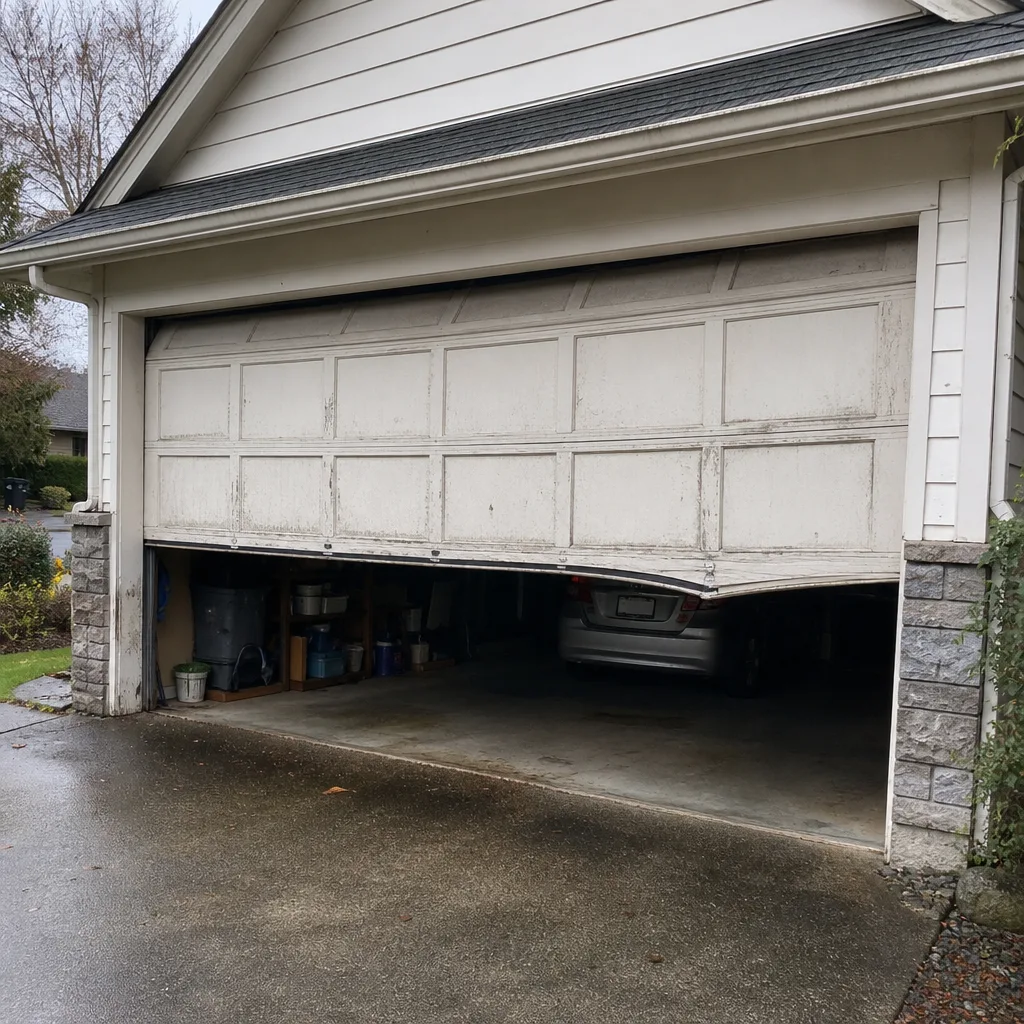 Before
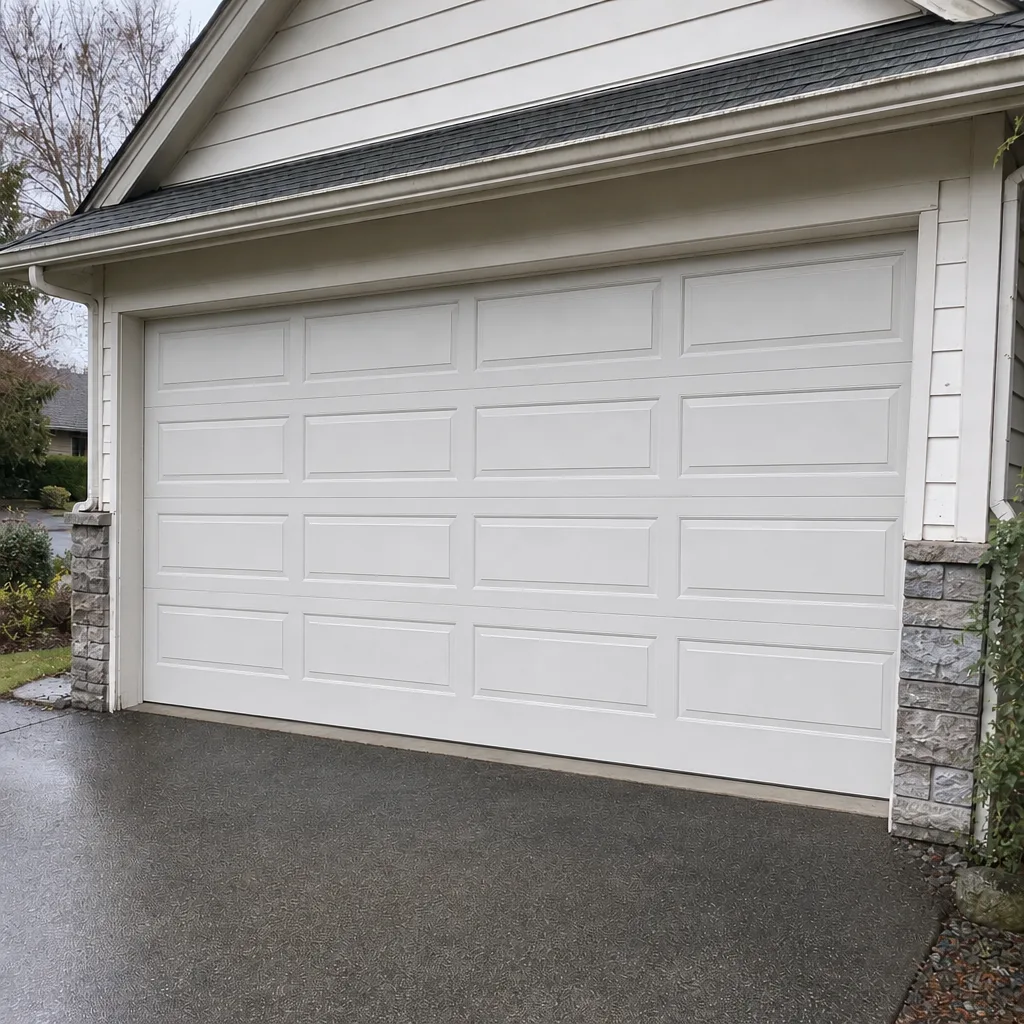 After
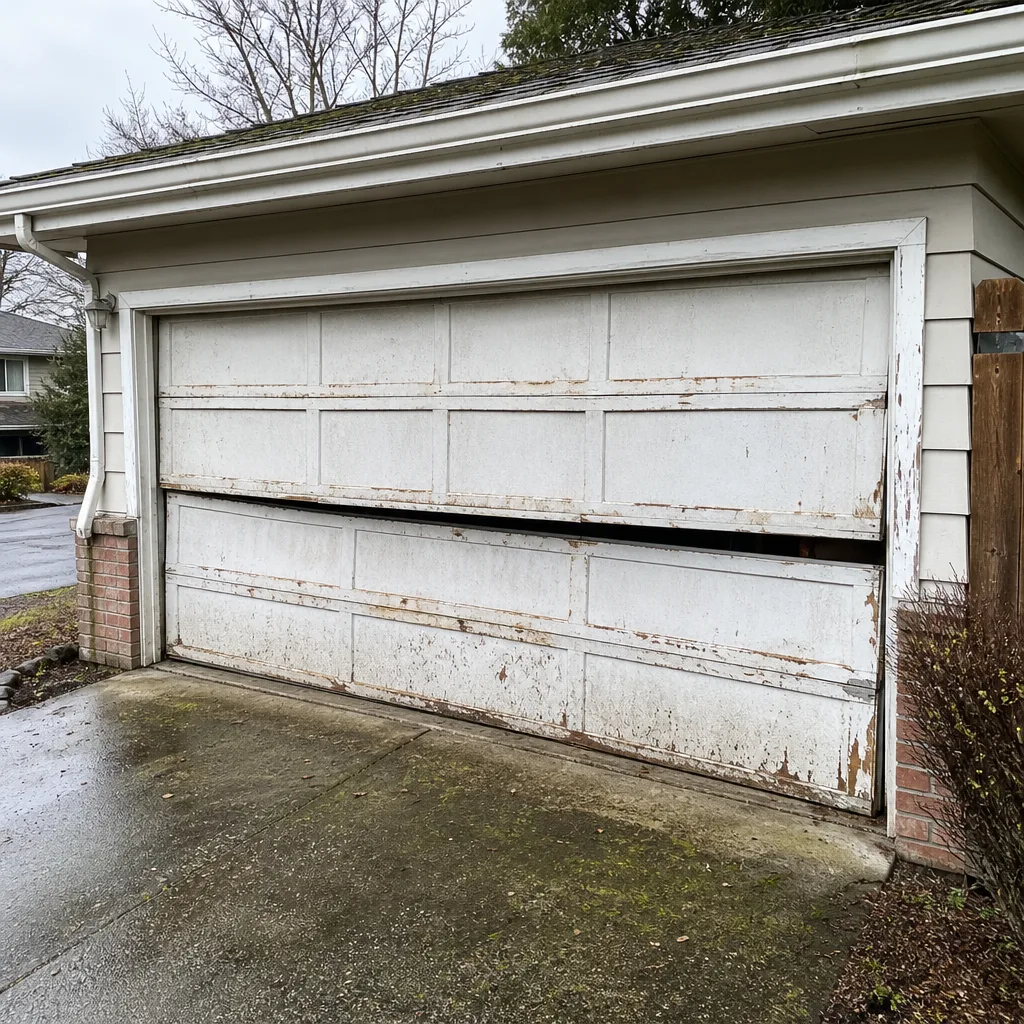 Before
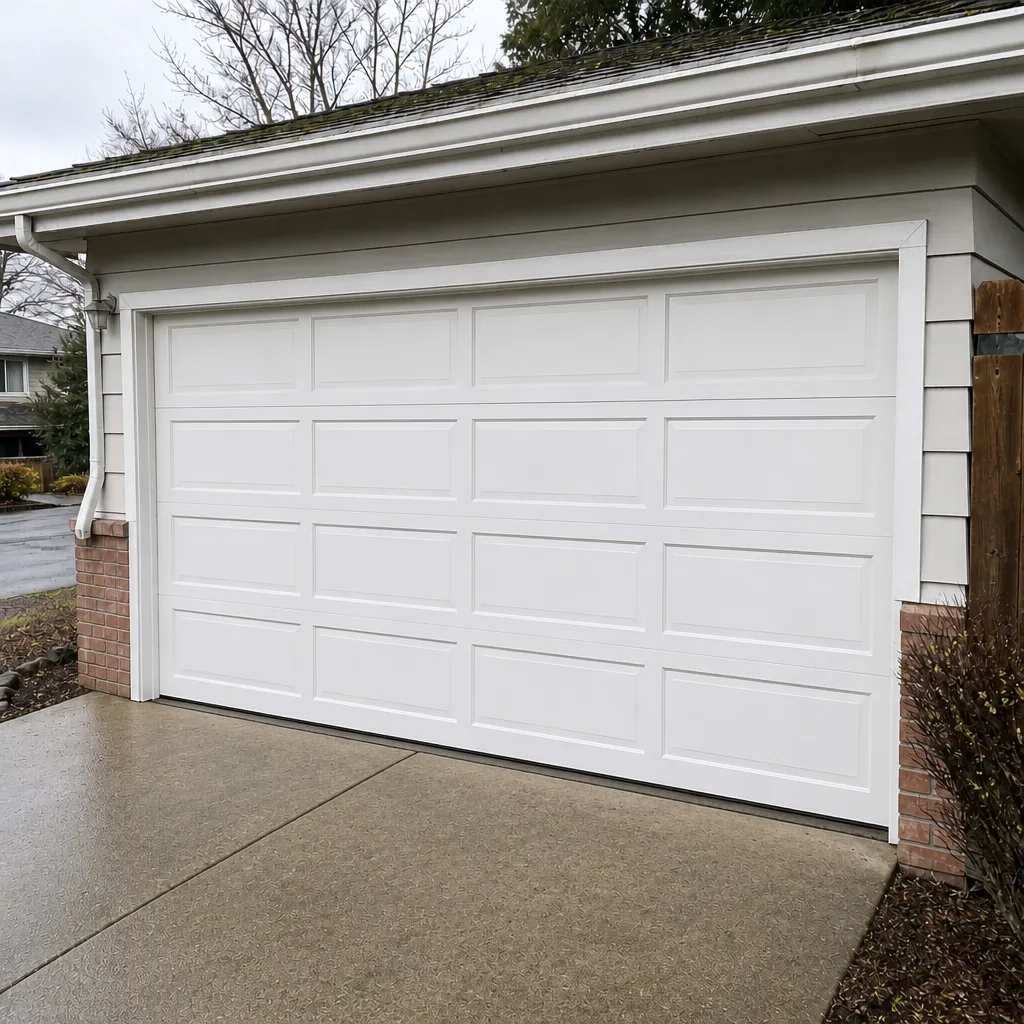 After
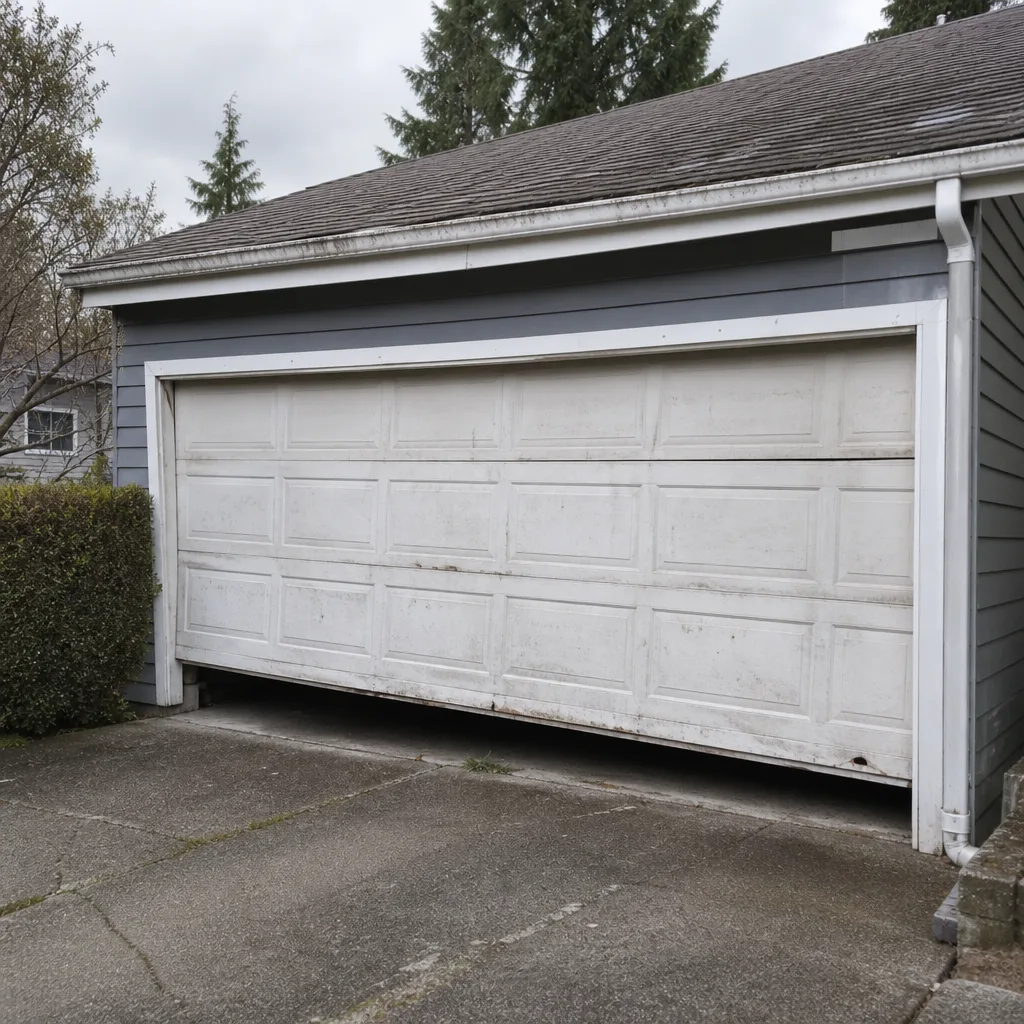 Before
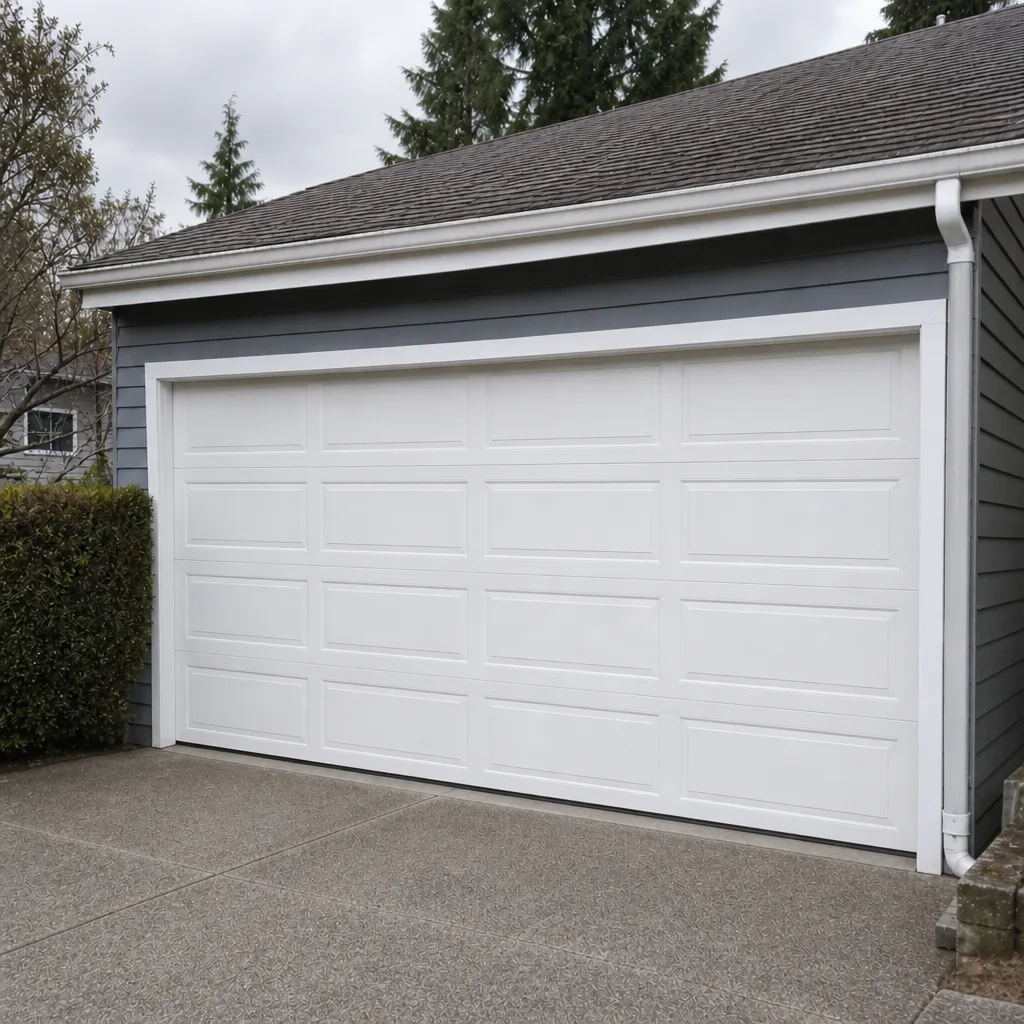 After