
Last updated November 23, 2026
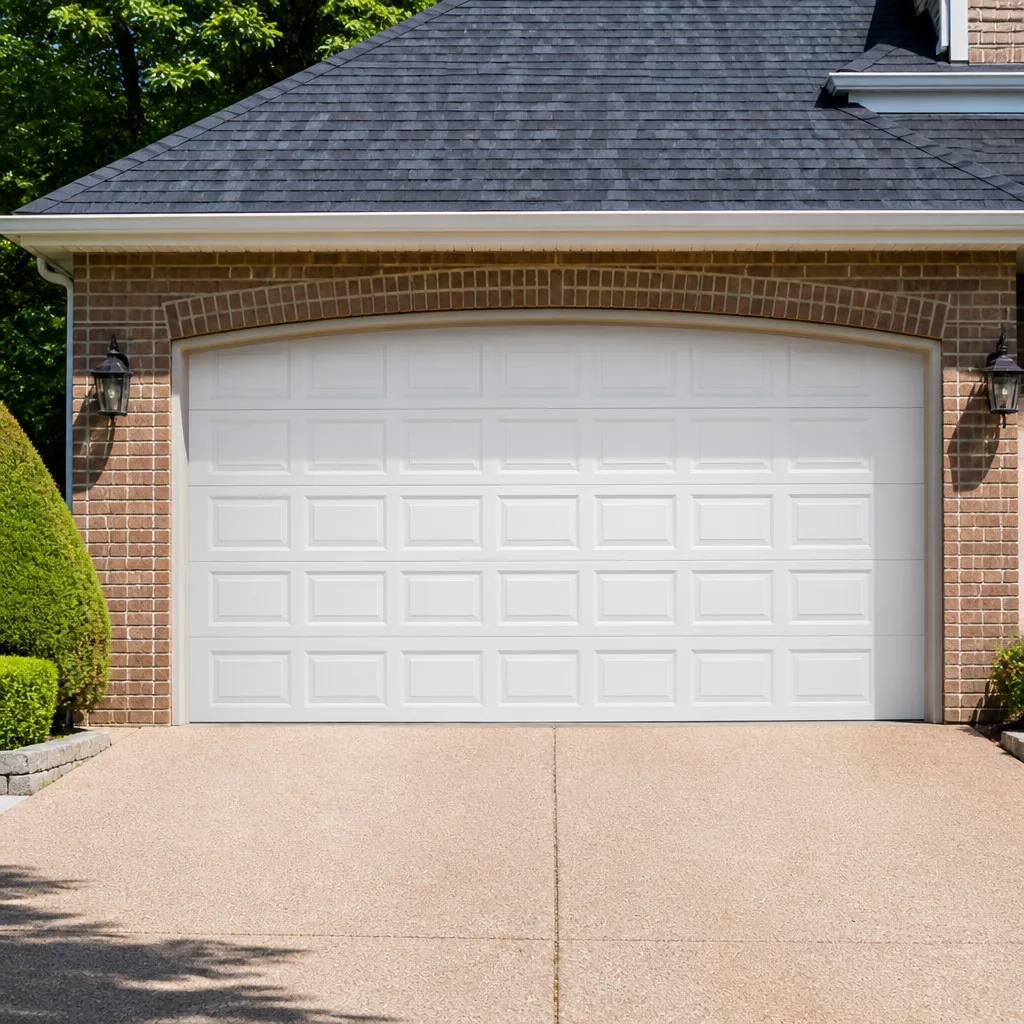 Raised-panel steel
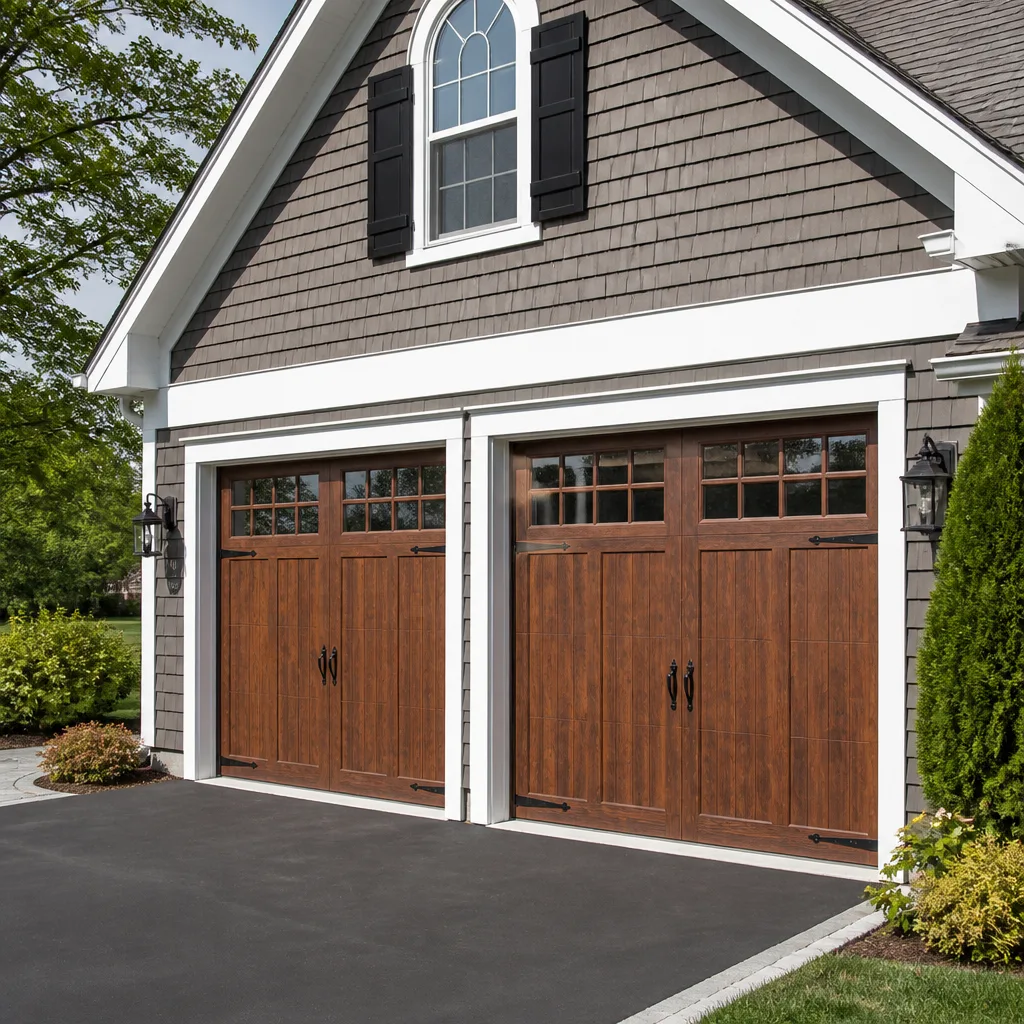 Carriage house
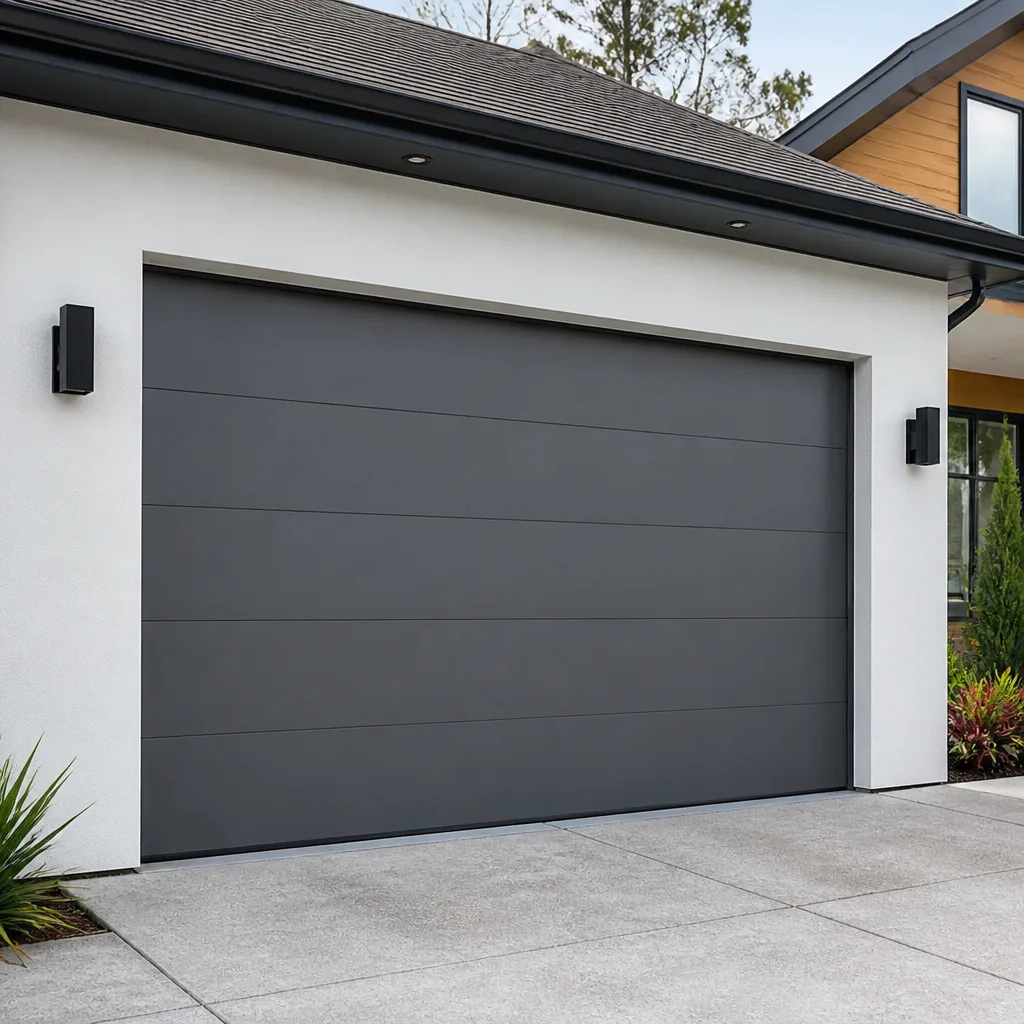 Modern flush
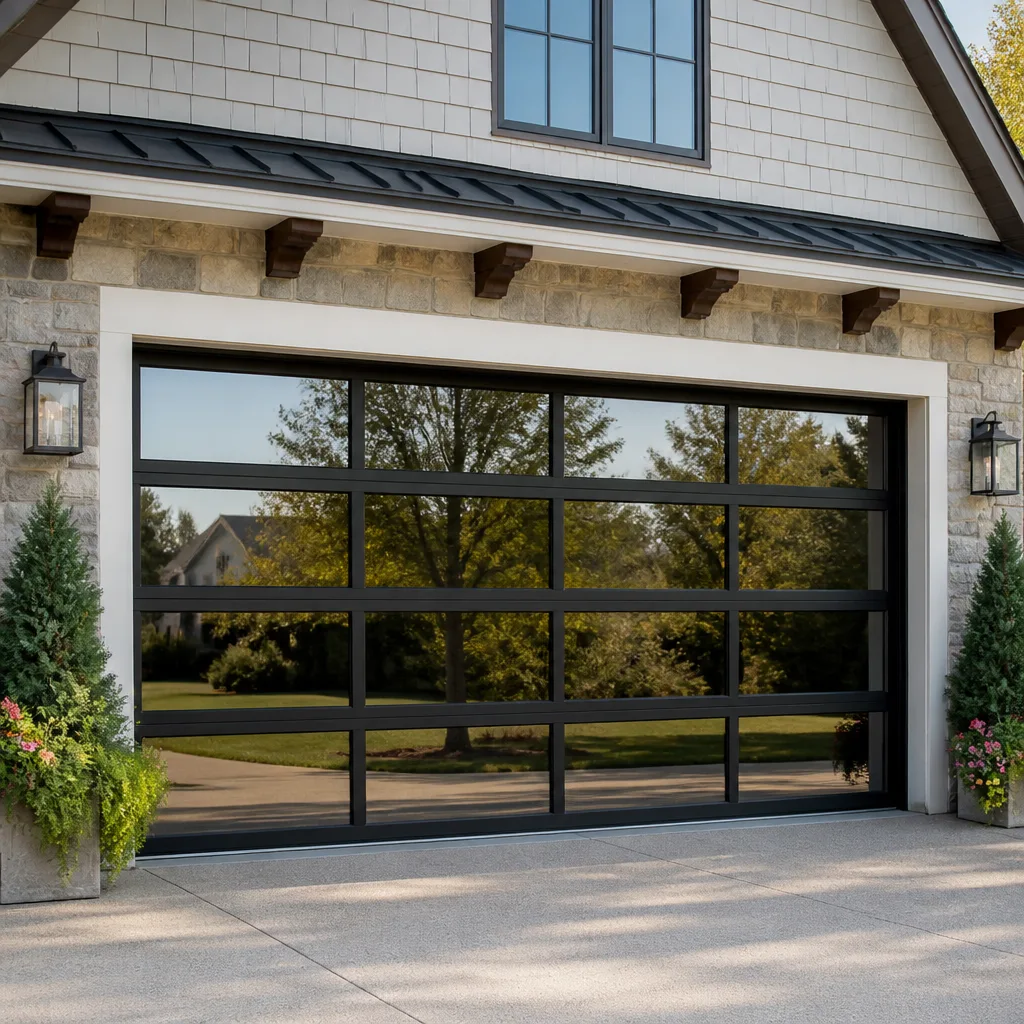 Full-view glass
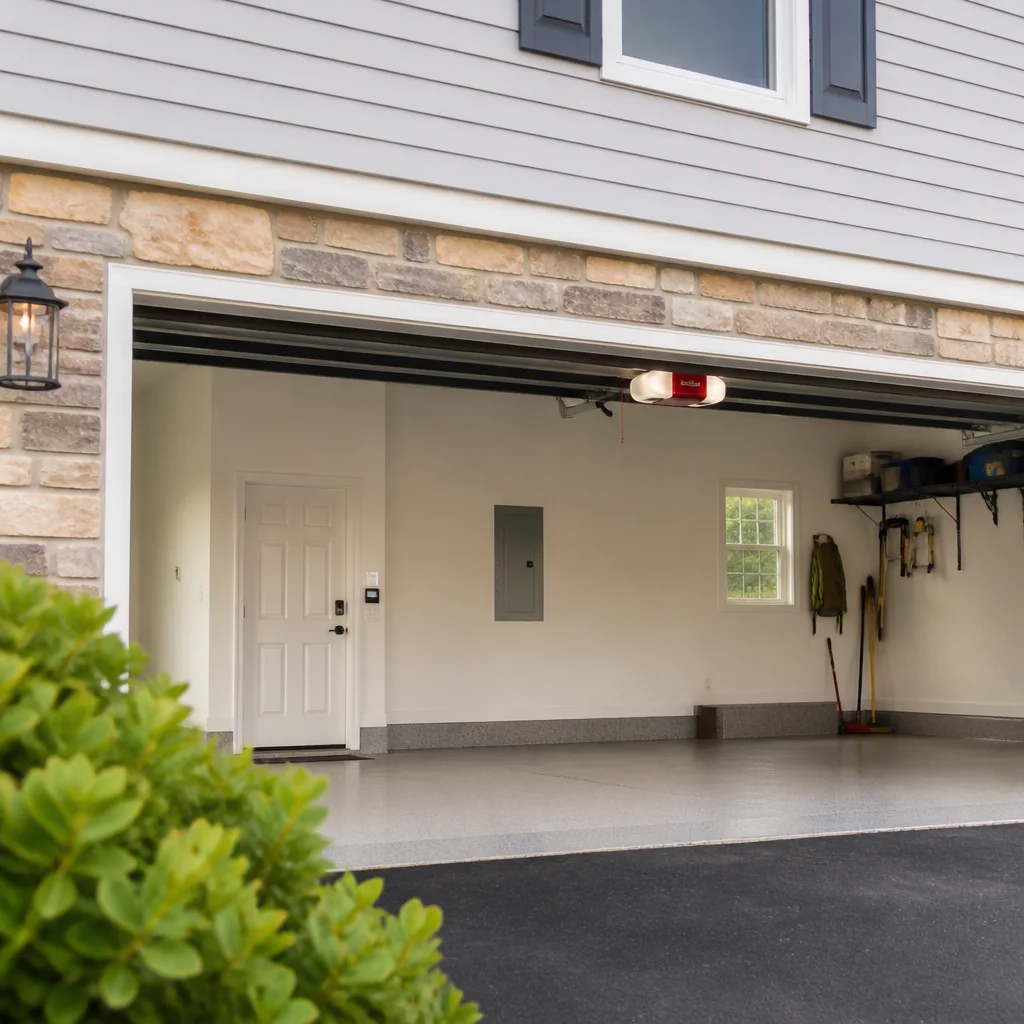 LiftMaster openers
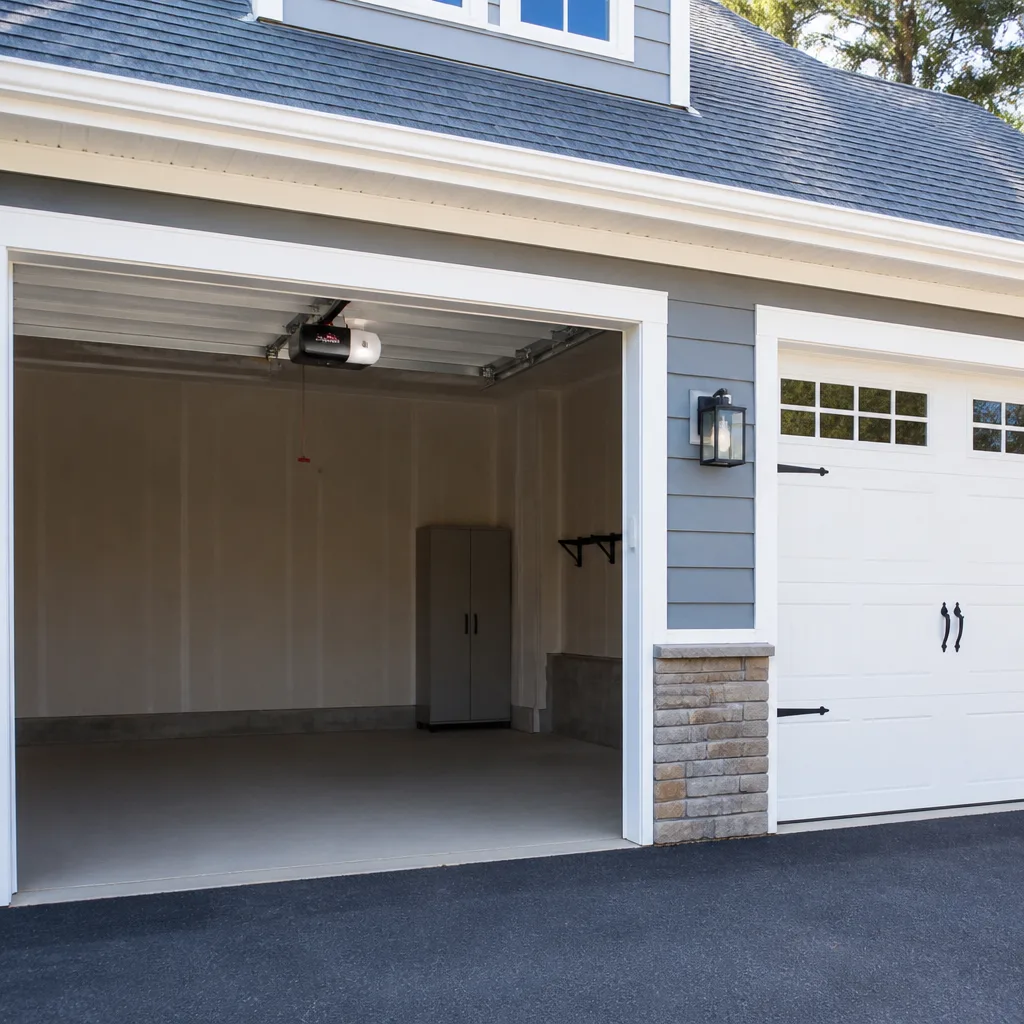 Chamberlain openers
Full 25-point door and opener safety check with every visit - springs, cables, rollers, tracks, and your LiftMaster or Chamberlain opener included
You get a price before we start. It does not change when the pro arrives.
Get your free estimateGarage Door Repair Maintenance Checklist for Bellevue Homeowners
A torsion spring rarely fails without warning. In the weeks before it snaps, a tired spring leaves measurable clues in how fast your door rises, where it drifts when you let go, and how it sounds on the way down. The trouble is that nobody ever tells homeowners what to measure. Most maintenance checklists hand you a vague list of things to “look for” and leave you guessing whether a wobble is normal aging or the first sign of a failure. This guide takes the opposite approach. Every item below comes with a pass/fail benchmark so you can tell a healthy door from one that’s about to cost you a Sunday. We’ll cover balance testing, spring life math, brand-specific lubrication, and the Bellevue rainy-season checks that matter more than any calendar reminder.
Quick Answer
A complete garage door maintenance check in Bellevue runs through seven areas: balance (the door should hold still at the halfway point), springs (estimate their remaining cycle life from install date and daily use), rollers and hinges (inspect and lubricate without touching spring tension), weatherstripping (test the bottom seal before the wet season, not after), opener travel and force settings, track alignment, and safety reversal. Balance, roller inspection, seal replacement, and lubrication are safe for most homeowners. Spring tension, cable, and high-tension work are not.
Bellevue Garage Door Repair Pros offers free estimates for any check that turns up a real problem: call (866) 937-9023. We answer 24/7. Fast dispatch from 7am to 7pm, Sunday through Friday.
Styles & brands we work with
- Raised-panel steel
- Carriage house
- Modern flush
- Full-view glass
- LiftMaster openers
- Chamberlain openers
Table of Contents
- The Manual Balance Test: What Normal Actually Looks Like
- Spring Cycle Life: Doing the Math on Your Springs
- Lubrication Points by Brand: LiftMaster, Chamberlain, Genie, and the Rest
- Bellevue Weatherstripping: Check It Before the Wet Season
- What You Can Safely Do vs. What Needs a Professional
- Opener Checks: Travel, Force, and Safety Reversal
- The Monthly Five-Minute Routine
- A Season-by-Season Schedule for Bellevue Homes
The Manual Balance Test: What Normal Actually Looks Like
Here’s the benchmark most checklists skip: with the opener disengaged, your door should sit still when you let go at the halfway point. Not drift up a little. Not sag down a foot. Still. That single behavior tells you the springs are still carrying the door’s weight in roughly equal measure. The moment the door starts creeping on its own, you have your first measurable warning that the springs are losing lift.
Run the test with the door closed and the opener disconnected (there’s a pull cord or lever on the rail for exactly this). Then:
- Lift the door to about waist height by hand and let go.
- Watch what happens. A door that stays put passes. A door that sinks means the springs are losing tension. A door that springs upward means the springs are overtensioned or something is out of adjustment.
- Measure how far it drifts. A few inches of sink is a soft warning. More than a foot and the door is doing work the springs should be doing, and every cycle adds wear to the opener.
- Reconnect the opener and lift the door a few more times. Listen for changes in sound between the first and last cycle.
A door that fails this test isn’t always an emergency, but it’s a signal. In older Bellevue neighborhoods like Bridle Trails and Woodridge, we see a lot of doors from the 1990s where the springs are past their cycle life but still technically lifting the door. The balance test is often the first thing that catches them.
If the door sags severely or you hear clanking or popping during a manual lift, stop testing and call for garage door repair. Springs under load are dangerous to handle, and a sagging door that jams mid-travel can bend the track.
Spring Cycle Life: Doing the Math on Your Springs
Most torsion springs don’t fail because of age. They fail because of cycles, and every open-and-close is one cycle. You can figure out roughly where your springs are in their lifespan with two numbers: the install date (usually stamped on the spring tag) and how many times your door moves each day.
Estimate cycles per day like this:
- Weekday commuters (1-2 cars): 4-6 cycles per weekday, 2-3 on weekends. Call it roughly 1,800-2,000 cycles a year.
- Family with school runs and evening activity: 6-10 cycles per day. Call it 2,500-3,500 a year.
- Home office driver or heavy daily use: 10+ cycles per day. Call it 4,000+ a year.
Standard springs are usually rated for around 10,000 cycles. That means a commuter household typically gets 5 to 6 years out of a spring set, and a heavier-use home closer to 3. Every spring manufacturer publishes its own rated cycle count for the specific wire gauge and length in your door, so the number stamped on your spring matters more than any rule of thumb.
Matched pairs usually fail together because they’ve cycled the same number of times. Replacing one spring and leaving the other is a common shortcut that invites a second failure weeks later, and it’s almost always more expensive than replacing the pair the first time. If a technician quotes you a spring replacement and doesn’t ask about the other spring and its cycle count, that’s a signal to ask questions.
If you’re near or past the expected cycle life and the balance test is failing, don’t wait for the snap. Book a spring inspection and get an honest read before the door goes down for a week. We handle this as a dedicated service because it’s one of the most dangerous and mishandled garage door jobs there is.
Lubrication Points by Brand: LiftMaster, Chamberlain, Genie, and the Rest
The right lubricant and the right interval depend on your hardware. A LiftMaster or Chamberlain belt-drive system and a Clopay door with its own hinge design don’t want the same treatment. Get this wrong and you either attract grit to the rail or over-oil the hinges until they weep onto your car.
Here’s what we tell Bellevue homeowners about the pieces that actually matter:
- Torsion springs and bearings: a light spray of silicone or white lithium lubricant, twice a year. Never oil the torsion shaft ends where the set screws grip.
- Hinges and pivot points: one drop of light oil per hinge, once a year. Wipe away anything that runs. Clopay hinges with sealed bearings usually want less, not more.
- Rollers: nylon rollers need no oil. Steel rollers get one drop each. Don’t grease the roller stems on nylon units, it just attracts dust.
- Track: never lubricate the vertical track or the horizontal rails. Grease on the track mixes with dust and turns into a sticky track that makes the door drag. Wipe them clean with a dry cloth instead.
- Opener rail: LiftMaster and Chamberlain belt-drive rails need no lubrication at all. Screw-drive and chain-drive units built by Genie or Craftsman take a thin film of lithium grease on the chain or screw, once a year. Wayne Dalton’s idrive and similar jackshaft units want silicone on the torsion bar ends, not on the belt.
What matters more than any single product is consistency. Twice a year for springs and once a year for hinges, rollers, and chain. The reason Bellevue doors suffer is salt-free but still wet: our spring-through-fall dampness works fine as a lubricant, right up until it stops doing the job and the door starts complaining. A dry, squeaky door is a call. A door that suddenly goes quiet after being noisy for a month is also a call, because the noise may just have found a looser place to hide.
For opener-specific issues like a reversing door, a remote that won’t pair, or a safety sensor that keeps tripping, our garage door opener repair covers the electronics side. One call handles the door and the opener so nothing gets lost between contractors.
Bellevue Weatherstripping: Check It Before the Wet Season
Calendar month is the wrong trigger for weatherstripping. The right trigger is the first sustained rain of the fall, or the first hard rain after a dry spell. In Bellevue, that usually lands in late September or October. If you check the bottom seal after the first storm, you’ve already given water six weeks to find the crack in the foundation or rust the bottom of the door panel.
Test the bottom seal with a simple close-and-feel check:
- Close the door fully.
- Slide a piece of paper under the door at three points across the width: left, middle, right.
- If the paper slides out easily at any point, the seal isn’t making contact and water will follow the same path.
- Look at the bottom seal from outside. Any crack, flat spot, or daylight visible under the door means it needs replacing.
The seal itself is cheap and genuinely DIY-friendly on most doors. It’s the flattest-wearing piece on the whole system and Bellevue’s rain is relentless against it. A bottom seal replacement in Bellevue typically runs $90-$180 in materials and parts for the seal alone, and if you’d rather we handle it, the labor is small. This is one of the few jobs on the checklist where the homeowner’s time and a pro’s time are nearly the same, so it’s fine to do it yourself.
Don’t stop at the bottom seal. The side jambs and top seal matter too, especially on north-facing garages where sun never fully dries the wood. Run a fingertip along the jamb seal at the base of the door on both sides. If the rubber is hard, cracked, or peeling off its retainer, that’s water waiting to get in. Rainwater that gets past the jamb seal often pools against the interior base plate and rusts the bottom roller bracket over a season or two.
garage door installation teams usually seal any new door properly from day one. On an older door, weatherstripping is the cheapest maintenance you can do to extend the life of everything behind it.
What You Can Safely Do vs. What Needs a Professional
Some garage door maintenance is fine to do yourself. Some is a genuine risk of serious injury, and we’d rather you know which is which than read a checklist that pretends everything is equal. Here’s our honest split.
Safe for most homeowners:
- Running the balance test (with the opener disconnected and the door fully down before you start)
- Inspecting rollers, hinges, and the bottom seal by eye and hand
- Replacing the bottom weather seal
- Lubricating springs, hinges, and rollers with the products above
- Wiping down tracks with a dry cloth
- Testing the safety reversal (see the next section)
- Visual inspection of the spring tag for install date and cycle rating
Needs a trained professional:
- Any spring tension measurement or adjustment. Torsion springs carry enormous stored energy and can cause severe injury if released incorrectly. They have no place in a homeowner toolkit.
- Cable replacement. Cables are under tension and can whip if a bad spring lets go.
- Bracket and bearing plate work at the top of the door. That’s where the whole spring load is anchored.
- Track realignment when a door has come off track or jammed mid-travel.
- Opener force setting adjustment when a door reverses unexpectedly or doesn’t reverse when it should.
The rule of thumb we tell every homeowner: if the task involves standing above the door, reaching for the spring, or touching anything the torsion bar passes through, stop and call. If the task is below knee height or spray-on lubrication, you’re probably fine. When a door won’t move at all, we move fast. That’s what our emergency service is structured for, so a jammed door doesn’t become a security problem when you’re trying to leave for work or get in after dark.
We work on the brand you already own. LiftMaster, Chamberlain, Genie, Clopay, Amarr, Wayne Dalton, Craftsman, and Raynor are all in our day-to-day rotation, so diagnosis is by brand behavior, not by guesswork. Our technicians have up to 11 years of experience with these systems.
Opener Checks: Travel, Force, and Safety Reversal
The opener is doing more work than most people realize when springs are tired. On a properly balanced door, the opener’s job is mostly guidance. On a door that fails the balance test, the opener pulls the whole weight, and every cycle wears the gear, motor, and drive system faster. If you fix the balance issue, you often save the opener as a side effect.
Two opener checks belong in every quarterly routine:
- Safety reversal: put a 2×4 block flat on the ground under the closing door. When you close the door, it should reverse on contact with the block. If it stops without reversing or pushes down on the block, the force setting needs adjusting.
- Photo-eye check: close the door and wave your leg through the sensor beam near the floor. The door should reverse. If it doesn’t, the sensors are misaligned, dirty, or the wiring has failed. In Bellevue, dirty photo-eyes are often the single cause of a “dead” opener call.
Also listen for changes. A LiftMaster belt drive should be nearly silent. A Chamberlain chain drive has a steady mechanical rhythm. Genie screw-drive units have their own purr. When any of those change, whether it’s louder, grinding, or noticeably slower on the last foot of travel, it’s usually a torque issue caused by tired springs or a binding track, not the motor itself. Catching that early saves you an opener replacement on a door that only needs a spring service.
The silent-failure mistake is a reversing door. Any door that reverses mid-travel should never be pushed into service for the day. The safety system is telling you something is working against it, and pushing that door into daily use is how a small binding problem becomes a bent panel.
The Monthly Five-Minute Routine
A monthly check short enough that you’ll actually do it beats a thorough annual one you keep putting off. This is the five-minute version, and it covers the items that catch most failures early:
- Eye check: walk the full arc of the door with it fully up and fully down. Look for bending in the bottom panel, cracked hinges, and misaligned tracks.
- Hand test: disengage the opener and lift the door waist-high. Does it hold halfway? Does it feel balanced or heavy? Reengage.
- Ear check: run one open-and-close cycle with the door empty and listen for any new noise. Note the noise to compare next month.
- Safety check: wave a leg through the photo-eye beam during a close. The door should reverse.
- Seal check: run a hand around the bottom of the closed door from inside. Any daylight or draft?
That’s five minutes, once a month. Every month, not just when the door gets annoying. The value is the comparison: most failures announce themselves as a change, and you can only spot a change if you know the baseline. If you’re used to a silent LiftMaster belt drive, a new whoosh on the way down is data. If you’ve never run the test before, you won’t notice the change until something breaks.
A Season-by-Season Schedule for Bellevue Homes
Bellevue’s climate matters more than a calendar. Our wet season runs roughly October through April, with grey drizzle most of that time and heavier rain in early winter. Summer is dry and mild, with occasional hot stretches that bake the door panels and seals. The maintenance schedule that fits our weather looks like this:
- Late September (before the wet season): bottom and side seal check, track wipe-down, hinge lubrication. This is the one check most homeowners miss, and it’s the one that saves the most interior damage.
- November or December: full balance test, spring cycle count review, safety reversal check. Doors under heavier holiday use tend to reveal tired springs around now.
- February or March: another seal check. Winter rain tends to find any weakness in the seal that autumn didn’t reveal.
- May: full spring and hinge lubrication after the wettest months, opener force check, and a noise comparison against your memory of last year.
- August: a fast dry-season check. Heat can cause door panels and jambs to expand slightly, so a door that tracked perfectly in spring might start to bind in summer.
If any of those checks returns a confirmed problem, don’t sit on it. Booking a maintenance estimate in Bellevue before the wet season starts is a completely different experience from trying to book one the week the door stops moving. When the door won’t move in December, we move fast, but it’s a lot easier to prevent the January failure than to rescue a house full of wet gear in the middle of a storm. Our team works across the full lifecycle from emergency repair through permanent installation, and starting with Bellevue Garage Door Repair Pros is the fastest route to a straight answer on what your door actually needs.
Common Mistakes to Avoid
- Treating “still opens and closes” as passing. Plenty of Bellevue doors we see are technically functioning but already well past their spring cycle life, and the balance test would have caught that months earlier. If the door stays put at halfway and everything is quiet, you’re fine. If either fails, it isn’t.
- Replacing one spring of a matched pair. Pair springs cycle together, so they age together. Swapping one and leaving the other often means a second repair within weeks, and the total bill ends up higher than the pair replacement.
- Lubricating the track. Grease on the track picks up grit and turns into a sticky runway. Dry cloth only. Hinges and roller stems are what get oil.
- Checking the bottom seal after the first storm. Bellevue’s first heavy rain finds every cracked seal in October. By then, the water is already in. Check it late September.
- Pushing a reversing door into service. A door that reverses mid-travel is telling you something is wrong. Pushing it through a day of commutes is how a small problem becomes a panel replacement.
- Trusting a generic handyman with spring work. Spring tension is a particular skill with particular tools, and a door that’s reassembled wrong doesn’t usually fail dramatically on the spot. It fails the following week, sometimes on a Saturday, always at the worst time.
- Ignoring changes in sound. A door that gets louder over two weeks almost always has a reason, usually a tired spring or a binding roller. The sound is the cheapest diagnostic you have.
See the difference
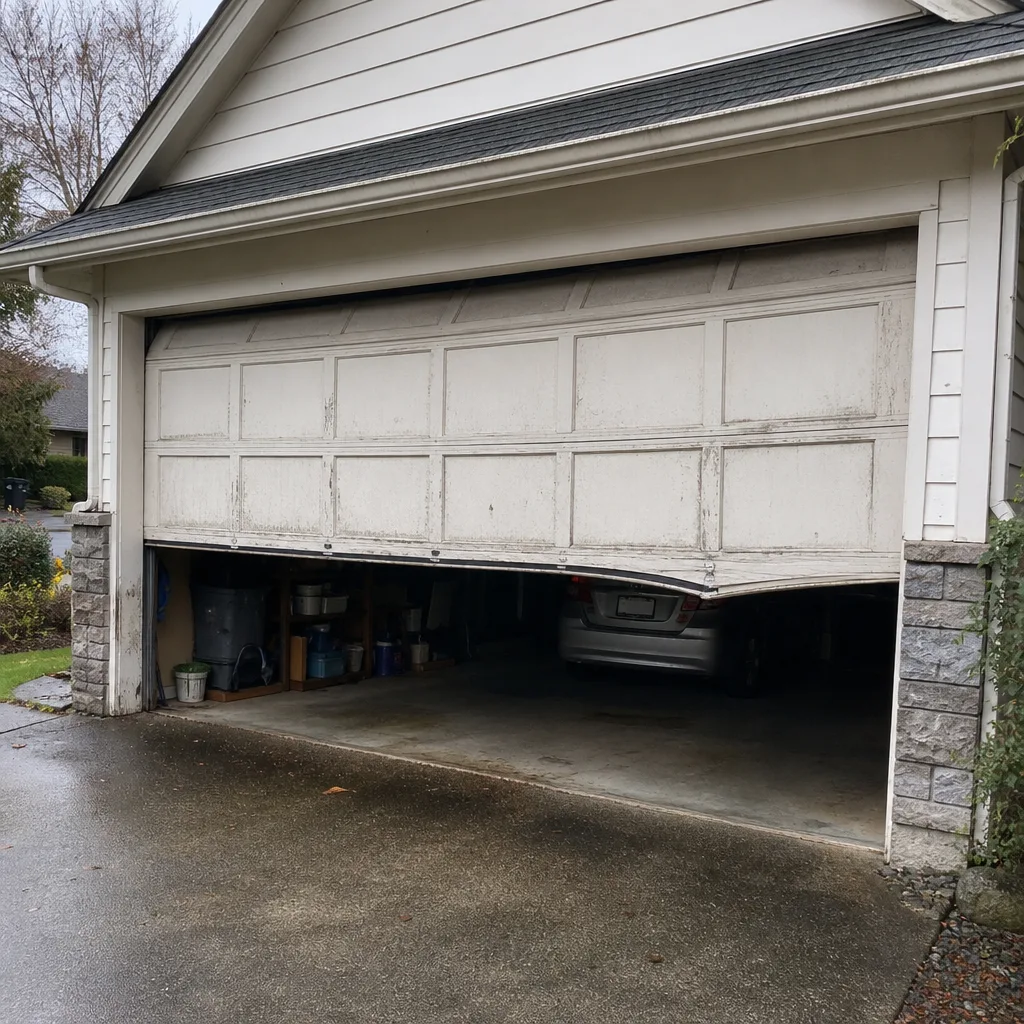 Before
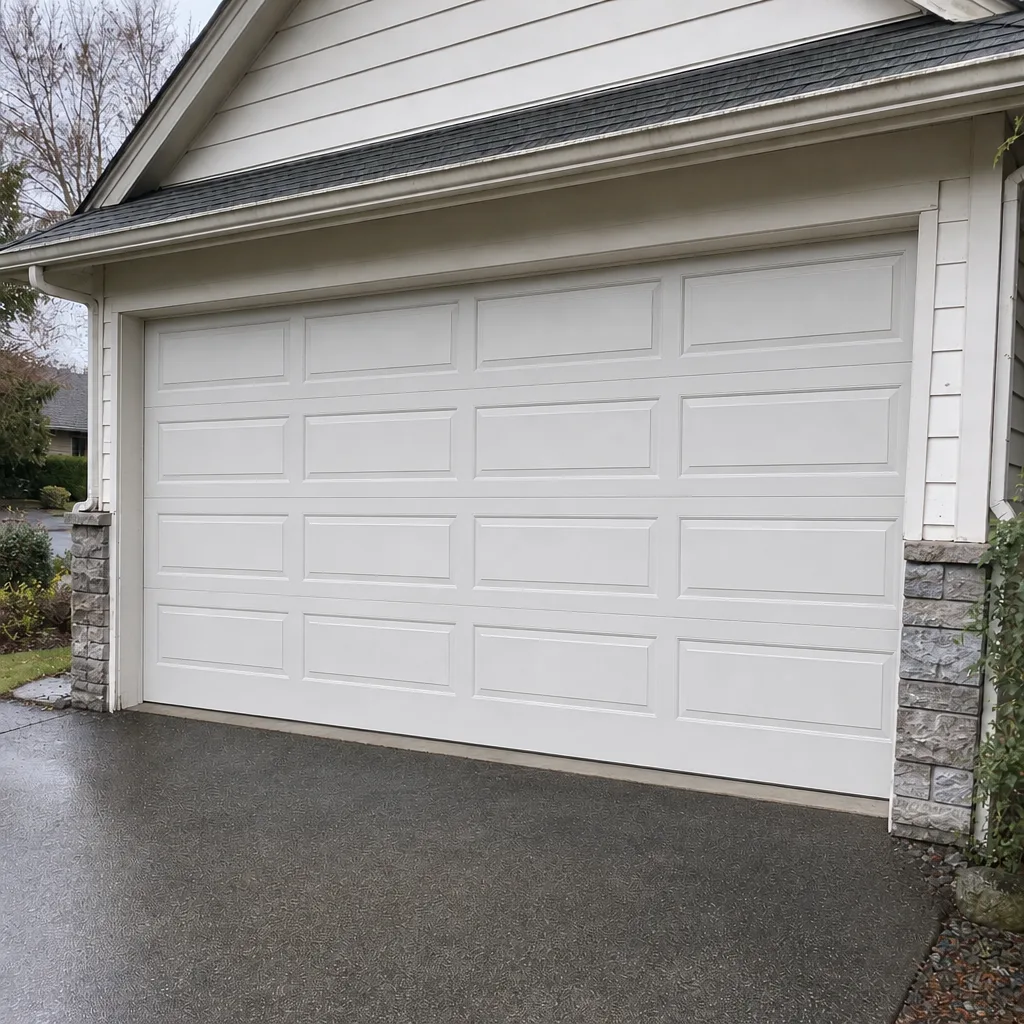 After
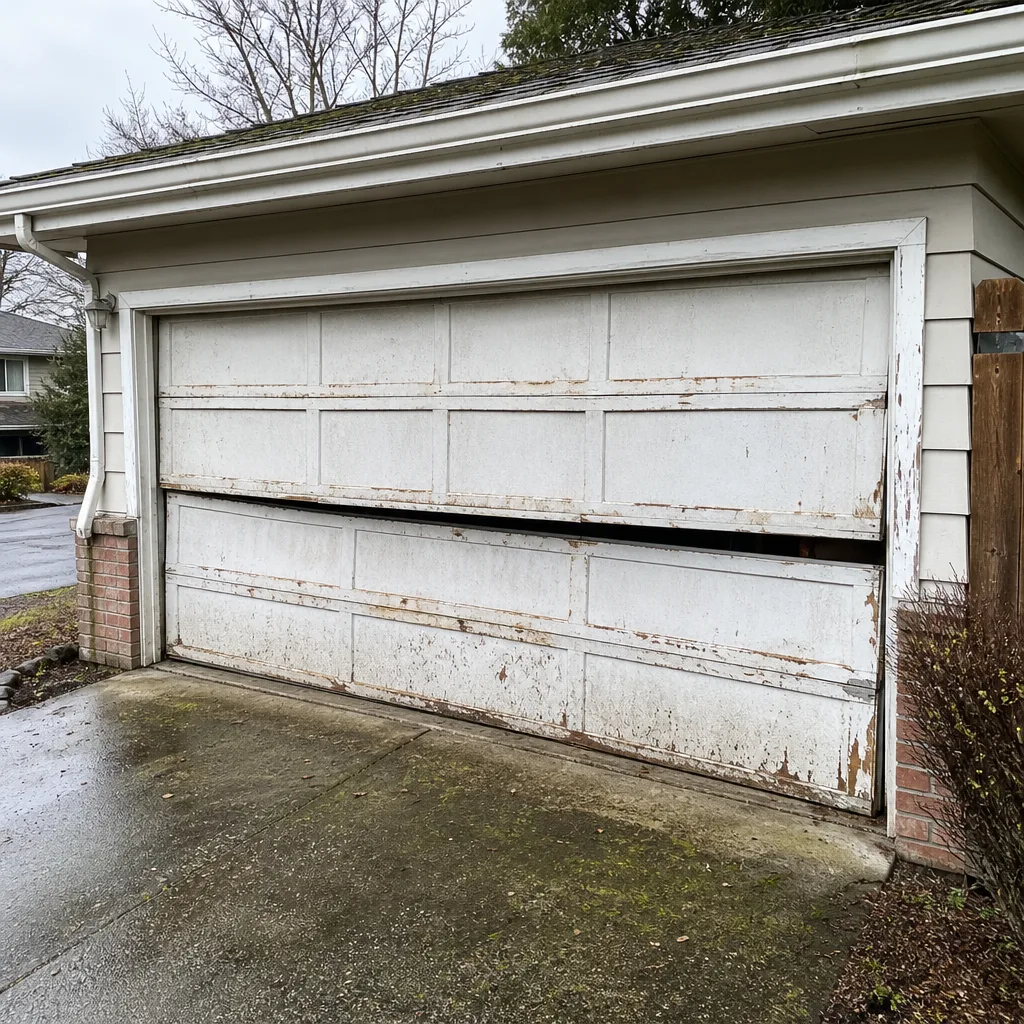 Before
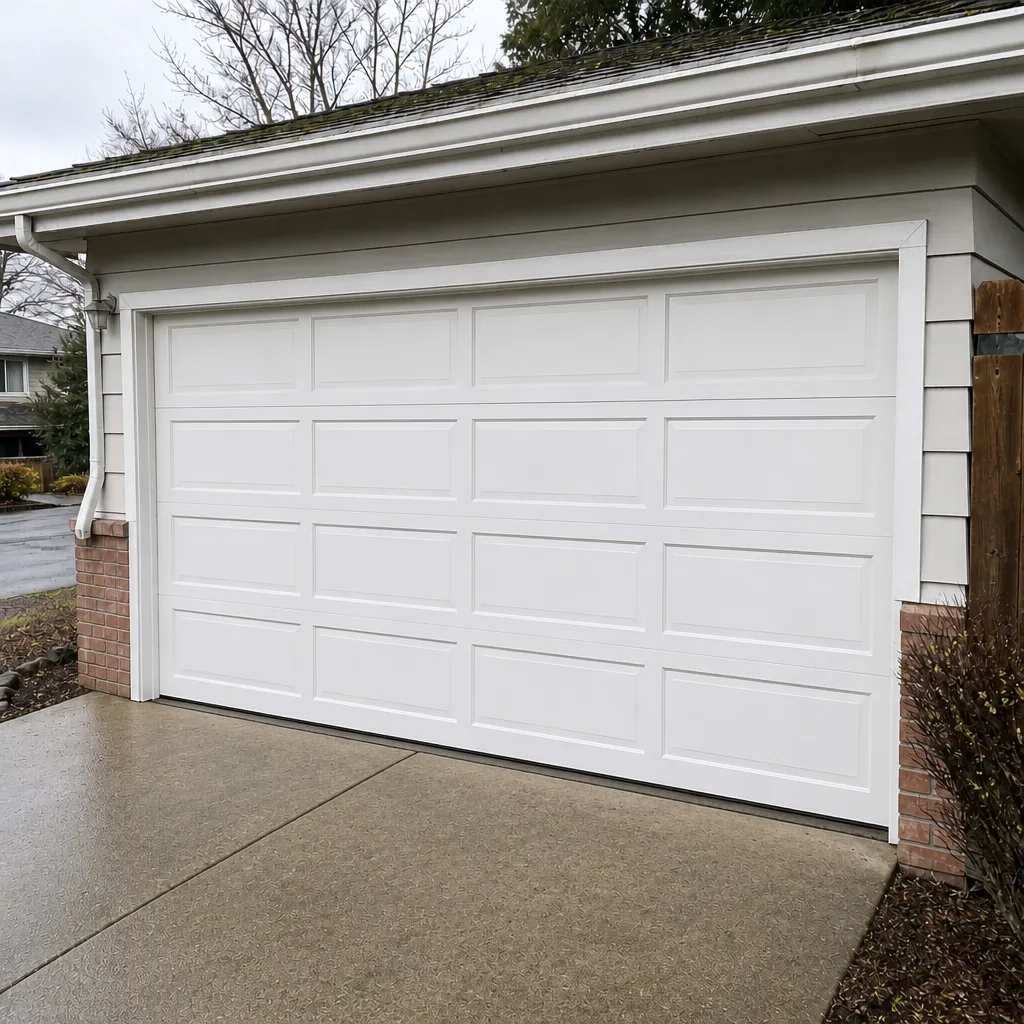 After
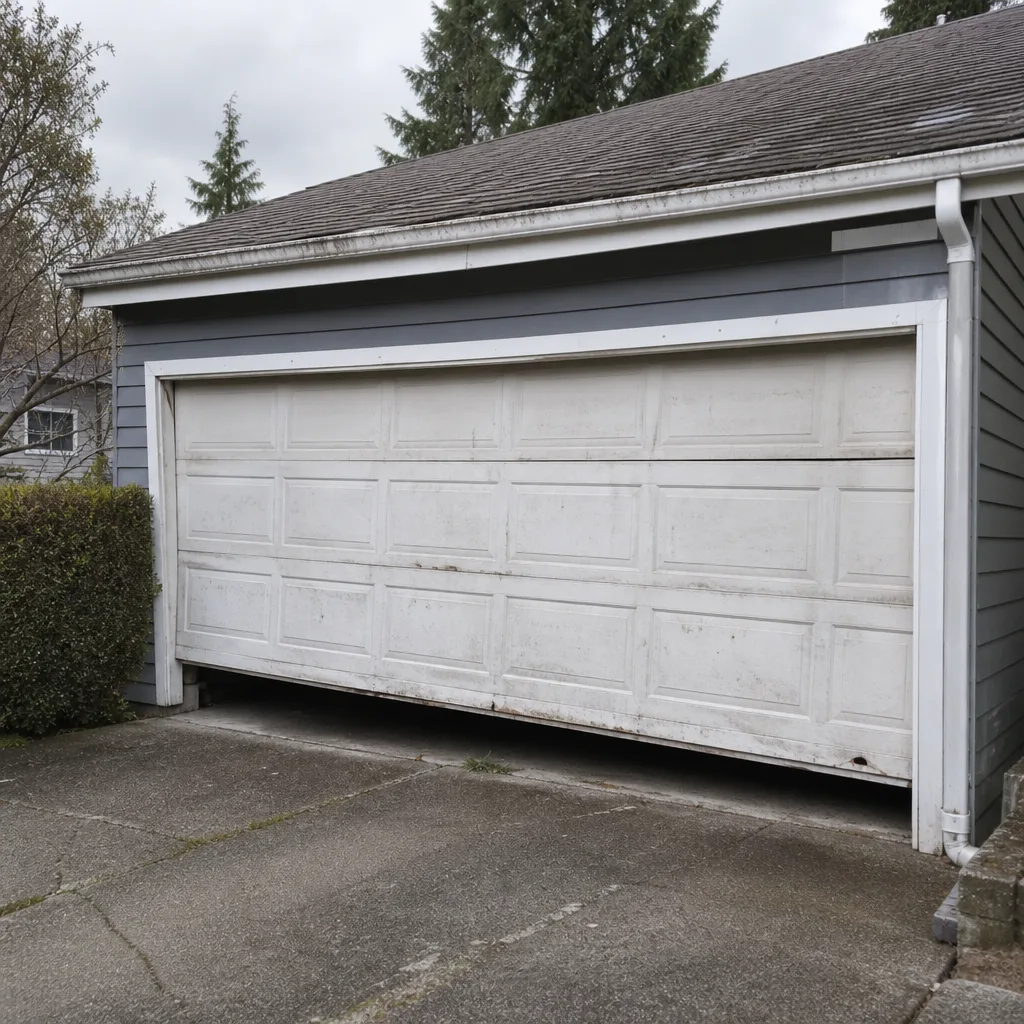 Before
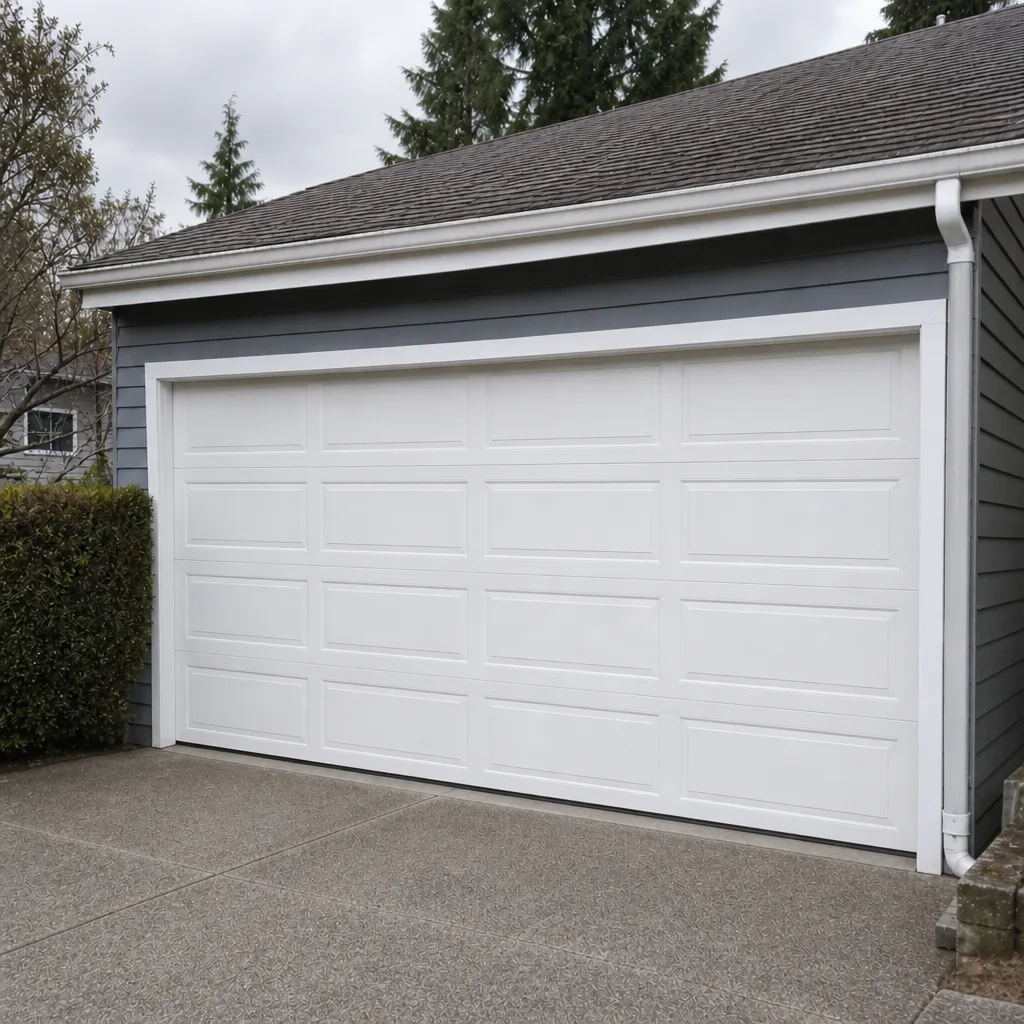 After
When to Call a Professional
Call a professional the moment a check returns a fail. In practice, the triggers are: the door fails the balance test and sinks more than a foot, a spring shows visible rust or the tag says you’re past cycle life, the door reverses mid-travel, the door won’t open or close at all, or you hear clanking, popping, or grinding on the way up. Those last two qualify as emergency calls, especially if your garage is your main home entrance. Bellevue Garage Door Repair Pros offers free estimates in Bellevue. Call (866) 937-9023. We answer 24/7. Fast dispatch from 7am to 7pm, Sunday through Friday.
Frequently Asked Questions
Run the five-minute check once a month and a fuller balance, lubrication, and seal check twice a year, before and after the wet season. Bellevue’s rain makes the bottom and side seals the most time-sensitive items, and the balance test is what catches springs on the way out. A door that’s stayed quiet and balanced through the whole year is doing exactly what it should.
You’ll usually see three clues: the door won’t stay put at the halfway point during a manual lift, the door gets noticeably louder or slower near the top of travel, and the spring itself shows rust, gaps in the coils, or a sagging curve. Any one of those on a Bellevue door is worth a call. Springs are under high tension and not something to inspect by hand beyond looking at the outside. Call (866) 937-9023 for a free estimate. We answer 24/7.
Yes, for springs, hinges, roller stems, and chain drives, using silicone or white lithium spray and a light oil for hinges. The one thing to skip is the track: keep it dry. Nylon rollers and belt-drive rails from LiftMaster and Chamberlain don’t want lubrication either. If you’re unsure which parts of your specific brand need oil, that’s a quick question for a technician.
Typical Bellevue pricing runs $90-$180 for a bottom weather seal replacement, $180-$340 for a single spring replacement, and $250-$450 for a full maintenance service covering lubrication, balance adjustment, hinge inspection, and safety reversal. Matched-pair spring replacement runs about twice the single-spring price because both springs are replaced together. The written estimate sets the final price, and we quote and agree on it before any work starts. Call (866) 937-9023 for an exact quote. Estimates are free.
No. The price we quote before work begins is the price you pay for that work. If we find something additional mid-job, we stop and talk to you about it and get your approval before touching anything else. Nothing gets added to the bill after the fact, and the estimate you sign is the estimate that holds.
The local professionals we connect you with are licensed and insured as their state requires. They’re experienced with the eight major residential brands, including Clopay, Amarr, Wayne Dalton, and Craftsman, plus LiftMaster, Chamberlain, Genie, and Raynor. Our technicians have up to 11 years of experience with these systems, and they work on the brand you already own rather than insisting on a brand swap.
The DIY side is real: roller inspection, bottom seal replacement, lubrication, and the balance test are all safe for most homeowners and worth doing. The professional side is spring and cable work, track realignment, and anything involving the torsion bar. That’s the line that matters. Cross it and you risk serious injury, and the cost of a repair done wrong is always more than a repair done right the first time.
Yes. LiftMaster and Chamberlain belt drives behave differently from Genie screw drives, and Wayne Dalton jackshaft units behave differently again. Diagnosis by brand behavior catches problems that generic troubleshooting misses, like a Chamberlain chain-drive chain that’s stretched rather than a motor that’s dying. One call covers the door and the opener, so there’s no handoff between contractors and no repeat visit.
The Bottom Line
A garage door failure is almost never sudden. It’s a series of small, observable changes that nobody measured. The balance test tells you in five seconds whether your springs are still carrying their share of the load. The cycle math tells you when they’re due. The seal check before the wet season tells you whether Bellevue’s rain is getting under the door. The monthly five-minute routine gives you a baseline so a change means something. Everything beyond that, including spring tension, cable replacement, and track work, needs a trained technician with the right tools. Run the safe checks, watch for changes, and call for the rest. That’s what keeps a door running for years instead of weeks between repairs.
If your checks have turned up a real problem, or you’d just like a professional read on a door that’s been getting louder, we’re a call away. Call (866) 937-9023 for a free estimate. We answer 24/7. Fast dispatch from 7am to 7pm, Sunday through Friday.
Written by the team at Bellevue Garage Door Repair Pros.