
Last updated November 23, 2026
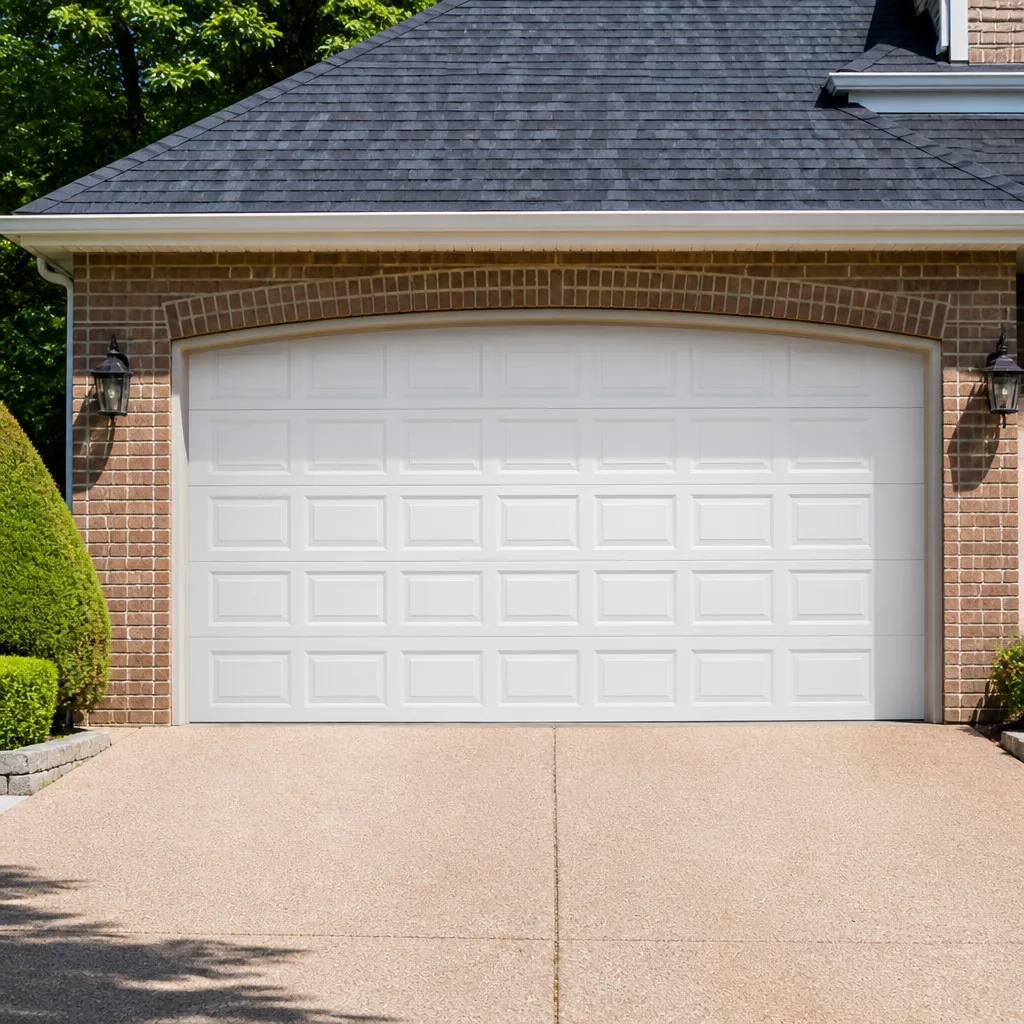 Raised-panel steel
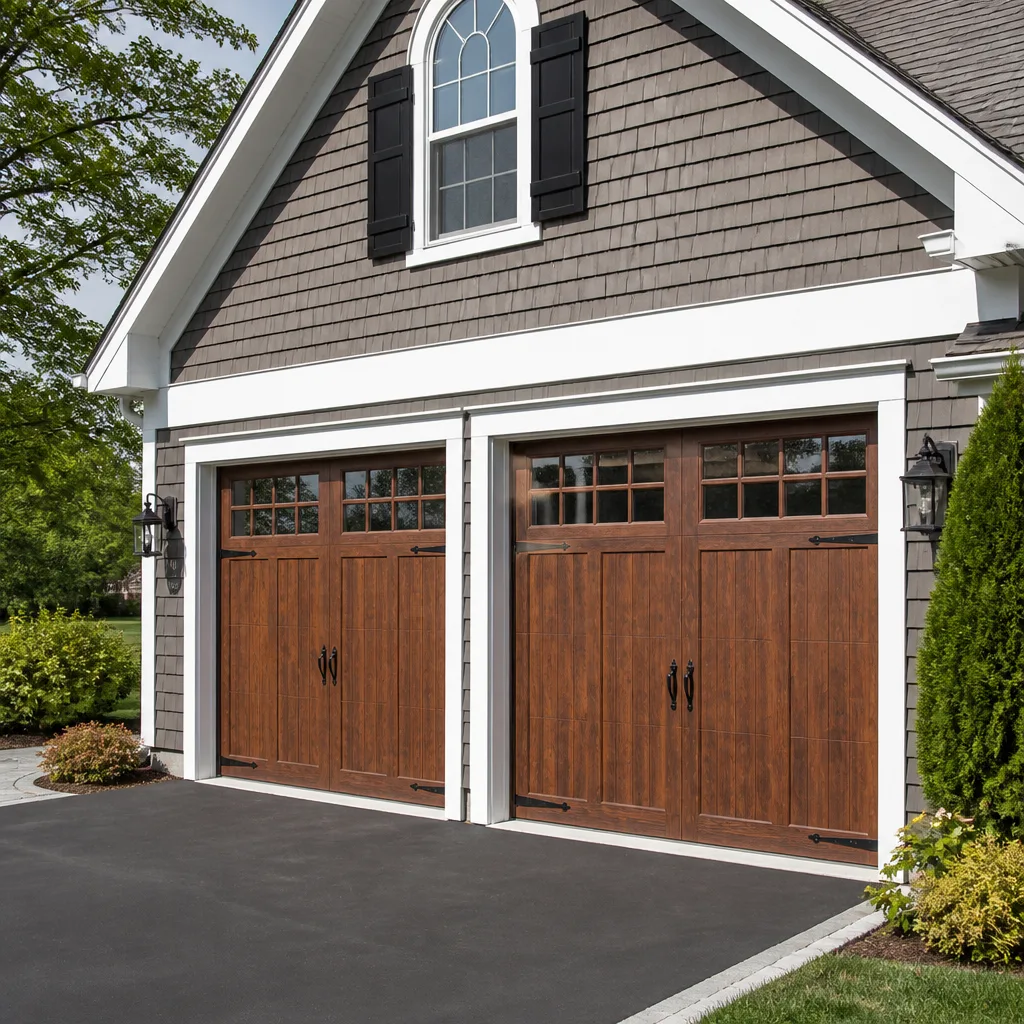 Carriage house
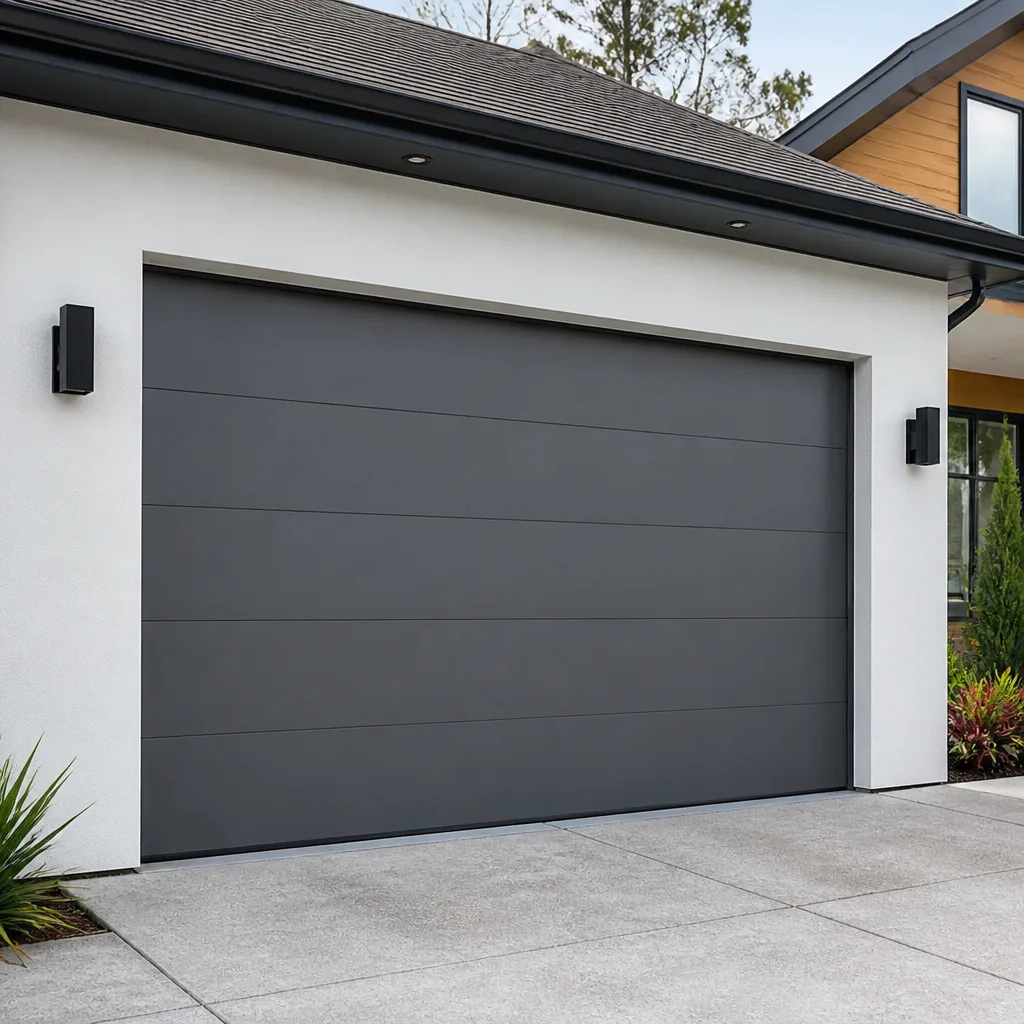 Modern flush
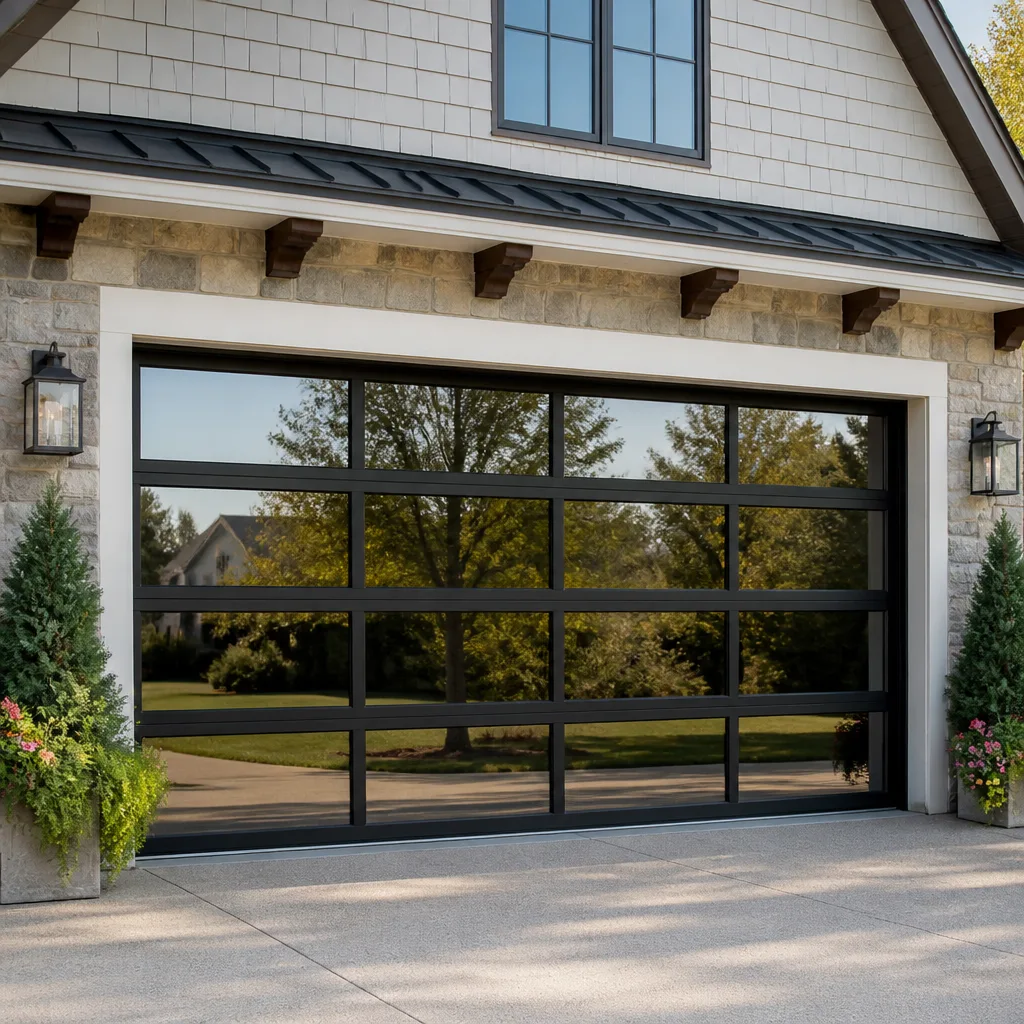 Full-view glass
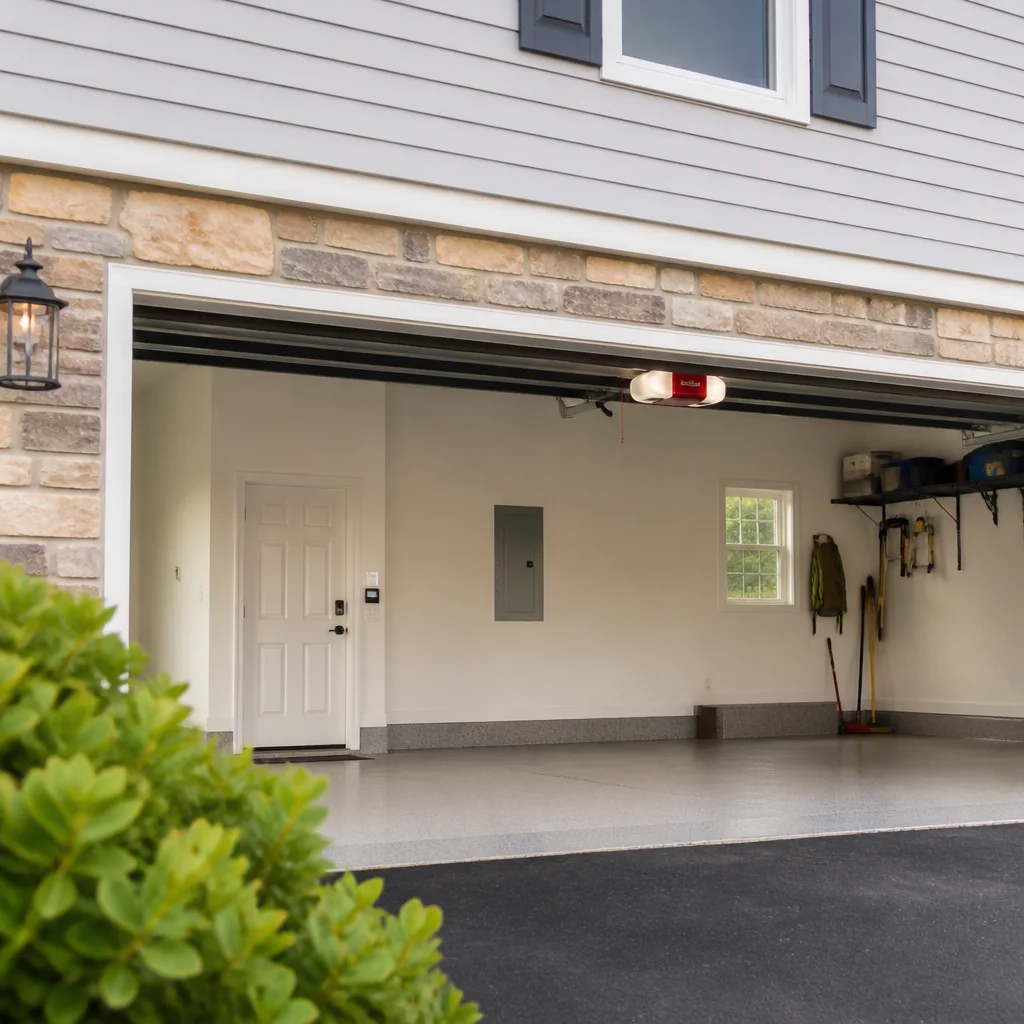 LiftMaster openers
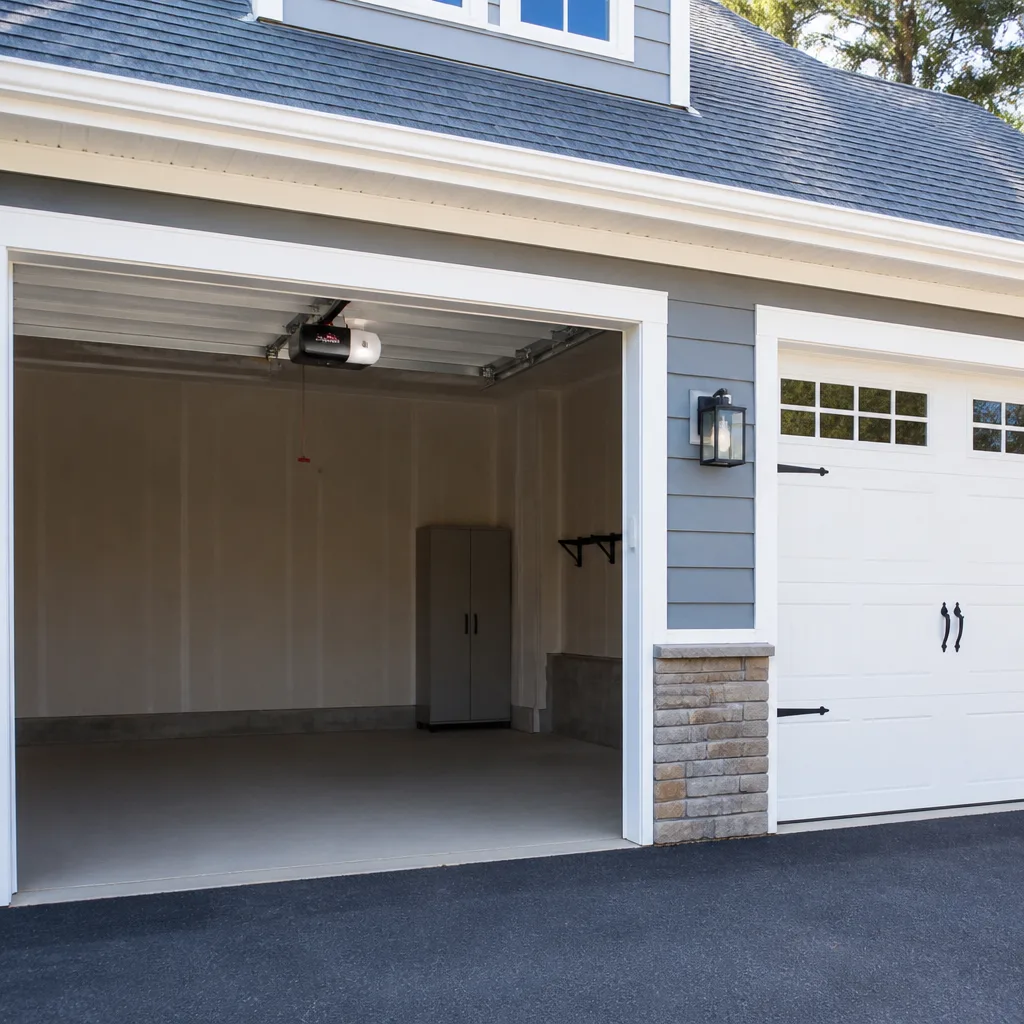 Chamberlain openers
Full 25-point door and opener safety check with every visit - springs, cables, rollers, tracks, and your LiftMaster or Chamberlain opener included
You get a price before we start. It does not change when the pro arrives.
Get your free estimateThe Complete Guide to Garage Doors in Bellevue
Most garage door guides are written for a mythical average homeowner in a mythical average climate. Bellevue’s 38 inches of annual rainfall and the wide swing between summer heat and winter freeze disqualify you from that average immediately. A door that lasts fifteen years in a dry, mild market can wear out years sooner on a west-facing wall here, where afternoon sun bakes a door that was soaked by morning rain. Springs work harder when temperatures drop, weatherstripping takes a beating from constant moisture, and wood doors move in ways their manufacturers never quite intended.
This guide maps the whole journey: what’s actually failing when your door misbehaves, how Bellevue’s weather changes the usual answers, which materials hold up on our exposures, and when a repair makes sense versus when replacement math wins. You’ll find the brands that dominate local installs and why your equipment’s brand matters for parts down the road. We’ll also walk through the neighborhood constraints that catch people off guard, from 1950s Eastgate ramblers to new Bel-Red construction. If you own a door or opener in Bellevue, this is written for you.
Quick Answer
Garage doors in Bellevue need more attention than the national average because the wet winters and temperature swings stress springs, weatherstripping, and wood faster than drier climates. The most common failures are broken torsion springs, worn rollers and cables, and opener motor or logic-board problems, and most of these are repairable for a fraction of replacement cost. Replacement is the right call when the door structure, insulation, or safety hardware is beyond economical repair, or when you’re upgrading an older door in an older Bellevue neighborhood to meet current safety expectations.
Styles & brands we work with
- Raised-panel steel
- Carriage house
- Modern flush
- Full-view glass
- LiftMaster openers
- Chamberlain openers
Table of Contents
- How Bellevue’s Weather Affects Your Garage Door
- The Most Common Garage Door Problems in Bellevue
- Which Door Materials Hold Up in Bellevue
- The Brands You’ll Find in Bellevue Driveways
- How Bellevue’s Neighborhoods Shape Your Options
- Repair or Replace? A Decision Tree
- What Garage Door Work Costs in Bellevue
- A Maintenance Routine That Fits Bellevue
How Bellevue’s Weather Affects Your Garage Door
Bellevue gets roughly 38 inches of rain a year, most of it between late fall and early spring. That moisture does things to a garage door that a homeowner in Phoenix never sees. The biggest effect is on wood doors, which absorb water along their bottom edges and panel joints, swell slightly, then dry and shrink as summer arrives. Over enough cycles that expansion and contraction pulls fasteners loose, opens hairline cracks, and eventually warps panels out of plane. A well-made wood door can last a long time here, but it demands more attention than the same door would need in a dry climate.
Temperature swings affect the mechanical side too. A torsion spring is a piece of steel under constant load, and steel changes its behavior with temperature. On a cold morning the same spring feels stiffer and the door feels heavier; on a hot afternoon the tension eases a little. Over years of this cycling, metal fatigue accumulates, which is why spring failure is one of the most common calls we handle.
Weatherstripping is the quiet casualty. The rubber or vinyl seal along the bottom and sides of a door takes the full brunt of Bellevue rain, and it hardens and cracks faster than it would in a dry market. Once the seal fails, water gets behind the door, and that’s where you start seeing rot at the bottom panel. If you want to know what a failing door looks like in Bellevue specifically, watch the bottom edge first.
The Most Common Garage Door Problems in Bellevue
After enough years of living with our local weather and housing stock, the failures tend to cluster. Here’s what actually breaks, roughly in order of frequency:
- Broken torsion spring. Usually announces itself with a loud snap and a door that won’t lift. Happens on cold mornings and after years of cycling.
- Snapped or frayed cable. Often goes with a spring failure; the door drops on one side or won’t move evenly.
- Worn rollers or hinges. Cause grinding, squealing, and doors that bind in the track. Bellevue moisture rusts cheap steel rollers faster than you’d expect.
- Opener motor or logic-board failure. The door stops responding or reverses unpredictably. Sometimes it’s the safety sensors instead.
- Weatherstripping failure. Leaks, drafts, and water damage around the bottom panel.
- Misaligned or bent track. Often the result of a door hit by a vehicle or run up with an obstruction.
- Panel damage or sagging. Common on older wood doors that have gone through too many wet-dry cycles.
When the door won’t move, we move fast. Emergency garage door service is a core part of what we do, not an upsell, because a door stuck open overnight in Bellevue is an open invitation and a stuck-closed door can strand a car. Our technicians have up to 11 years of experience and diagnose by brand, which matters because the same symptom can mean different things on different systems.
Which Door Materials Hold Up in Bellevue
The material question in Bellevue isn’t abstract. West-facing walls get the full weather treatment: afternoon sun follows morning rain, and that combination is brutal on some materials and kind to others. Here’s how the common options really hold up.
- Steel doors. The default choice for most Bellevue homes. Steel handles moisture better than wood, holds paint well when properly prepped, and stays dimensionally stable through our wet winters. Insulated steel is especially common because it manages heat loss and condensation inside the garage.
- Wood doors. Beautiful and appropriate for the cedar-heavy character of many Bellevue neighborhoods, but the highest-maintenance option. Expect to refinish more often than a homeowner in a dry climate would, and expect them to move. A cedar door on a west-facing wall needs regular attention to last.
- Aluminum and aluminum-glass doors. Good for contemporary homes in newer Bellevue construction. Aluminum doesn’t rust, but glass panels and the aluminum frame need good seals to keep water out.
- Composite and engineered doors. An increasingly popular middle ground. They resist moisture better than solid wood and can mimic the look of wood, making them worth considering for a west-facing exposure where solid wood is high-maintenance.
A rule of thumb: on a west-facing wall, insulation and moisture resistance are more important than looks, because that’s the wall facing our biggest weather swing. On a north or shaded wall, the pressure is lower and you have more freedom on material.
The Brands You’ll Find in Bellevue Driveways
Walk through any Bellevue neighborhood and you’ll see the same handful of names on door panels and opener units. That matters more than people think. Brand fluency means a technician knows the quirks: how a particular opener’s safety circuit behaves, how one brand’s spring setup differs from another’s, and what parts to expect. We work on the brand you already own, and our technicians are trained on eight of the most common residential brands.
On the opener side, you’ll see mostly LiftMaster, Chamberlain, and Genie units, with Craftsman appearing in older homes where the original opener is still running. On the door side, steel doors from Clopay and Amarr are everywhere, and Wayne Dalton doors are common on older neighborhoods where a previous owner replaced the original door. Raynor shows up here and there, often on homes where a specific style or insulation need pointed that direction.
Why does brand matter for you? Because replacement parts, particularly springs and opener components, are easier to source when the technician identifies the brand correctly and knows its specs. It also means fewer diagnostic handoffs, since the same team can handle both the door and the opener in one visit. One call covers the door and the opener.
How Bellevue’s Neighborhoods Shape Your Options
Bellevue is a patchwork of housing eras, and each one comes with its own constraints. A garage door decision that works in one neighborhood can hit a wall in another.
Take the 1950s ramblers around Eastgate. These homes were built when standard garage dimensions and door specs differed from today’s, and a rough opening that looks standard might not be. Headroom above the door is often tighter than contemporary stock doors expect, and replacing a door there sometimes means a low-headroom opener setup rather than a standard rail system. The good news is older wood framing gives you flexibility; the catch is the existing structure has to be measured carefully before anything gets ordered.
Newer construction, particularly in Bel-Red and other newer developments, tends to follow more uniform standards and accommodates contemporary styles, taller doors, and modern openers with no drama. The trade-off is that what fits one model can look different in another, because design variety is the hallmark of new construction.
Between the two ends of the spectrum sit the mid-century and 1970s-80s subdivisions, where you’ll find a mix of original doors and later replacements. Those homes usually respond well to a well-chosen spring upgrade, fresh weatherstripping, and a modern opener that adds safety features.
Repair or Replace? A Decision Tree
This is the question that drives most garage door spending, and it comes down to a handful of concrete factors. It’s not a rule, just a way to think it through honestly. Work through these questions in order:
- Is it a mechanical failure or a structural one? Springs, cables, rollers, springs on the opener, and similar parts are repairs. Sagging panels, a warped frame, or a door that’s racked out of square start to tip toward replacement.
- How old is the door, and how has it handled Bellevue weather? A 20-year-old wood door showing rot at the bottom panel is usually on the replacement side. A 10-year-old steel door that just needs a spring is not.
- Does the fix extend life long enough to justify it? If a repair buys you several more years on a door that’s otherwise sound, do the repair. If you’ll be replacing within a couple of years anyway, the replacement math wins.
- Is safety hardware up to current expectations? Old doors may lack modern safety features like photoelectric sensors on the opener. If the safety side is failing too, replacement is often the cleaner path.
- What’s the condition of the surrounding structure? Track and frame in good shape supports repair. Rot in the frame or a bent track can push repair cost high enough that replacement is worth serious consideration.
If you’re weighing repair against replacement, our Bellevue garage door repair team will give you an honest read on both paths, with a written estimate before any work starts.
What Garage Door Work Costs in Bellevue
Pricing here varies with the door size, access, and brand, and no honest estimate can be given on a call without seeing the job. Still, a rough map of common repair costs helps you budget and ask the right questions. Every price below is a typical estimate, and the written estimate sets the final price.
- Torsion spring replacement. Usually the cost scales with the number of springs. If both springs are replaced together as a matched pair, expect roughly twice the single-spring figure.
- Broken cable replacement. A repair that often pairs with spring work.
- Roller, hinge, and track work. Often the least expensive repair on the list, and one of the highest-value because it restores smooth operation.
- Opener repair. Motor, gear, logic-board, or sensor issues. Usually less than a new opener installed.
- New opener installation. Priced with the labor and any rail or reinforcement needed for your door type.
- Full door replacement. The largest item, priced as a measured job rather than a repair. The written estimate is based on the door you choose and how it fits your opening.
Because springs are involved in this section and are one of the most dangerous garage door parts, this is also where the safety caveat matters most. Do not attempt a spring replacement yourself; the energy stored in a torsion spring can cause serious injury in an instant. Call us for spring repair and let a trained technician handle the tension safely.
Every price we write is quoted and agreed before any work starts, so there’s no surprise invoice. If you’d like a free estimate for a repair or a full installation, call (866) 937-9023.
A Maintenance Routine That Fits Bellevue
You don’t need to be handy to keep a garage door healthy in Bellevue. A short routine goes a long way because it catches the small things before they become failures. Run through this once a season:
- Watch the bottom seal. Check the weatherstripping along the bottom edge and sides for cracking, gaps, or water getting behind it after rain.
- Listen to the door. Grinding, squealing, or a door that hesitates can mean a worn roller, a dry hinge, or the start of an opener problem.
- Look at the door from the inside. Check for sagging panels, loose hinges, and frame rot along the bottom corners where moisture collects.
- Test the opener’s safety reversal. A properly working opener should reverse when it senses an obstruction. If the safety sensors are misaligned or dirty, the door may not close.
- Watch for seasonal changes. After the first cold snap of late fall, spring stiffness becomes more obvious. That’s a good time to schedule a check.
If a door is running smoothly and the seals are holding, keep it that way with the routine. If you spot something you’re not sure about, our Bellevue Garage Door Repair Pros team can take a look, and if you need prompt help we can arrange garage door repair for a symptom that’s getting worse. We answer 24/7. A call outside dispatch hours is booked into the next opening, Sunday through Friday, 7am to 7pm.
Common Mistakes to Avoid
- Ignoring a stiff door in cold weather. A door that suddenly feels heavy in November may be telling you a spring is fatigued. Waiting risks a failure at a worse moment.
- Using the door after a spring breaks. A door with one broken spring should not be operated; the strain on the remaining components can cause a cable failure and a dropped door.
- Skipping the weatherstripping check. In Bellevue, a small gap at the bottom edge lets water in, and water at the bottom panel is where wood rot starts. It’s cheap to replace early and costly to repair later.
- Assuming a new opener will fix a door problem. If the door itself binds or the springs are failing, a new opener just works harder and fails sooner. Diagnose the whole system first.
- Ordering a replacement door without measuring. Older Eastgate and mid-century homes often have non-standard openings and headroom. Measure before you buy, and let a specialist verify the fit.
- Choosing a door for looks on a west-facing wall. The material that looks best isn’t always the one that lasts; ask what the exposure will do to it over the long run.
- Handling springs or cables yourself. These parts are under extreme tension and can cause serious injury. This isn’t a fear tactic; it’s the reason we handle it differently.
See the difference
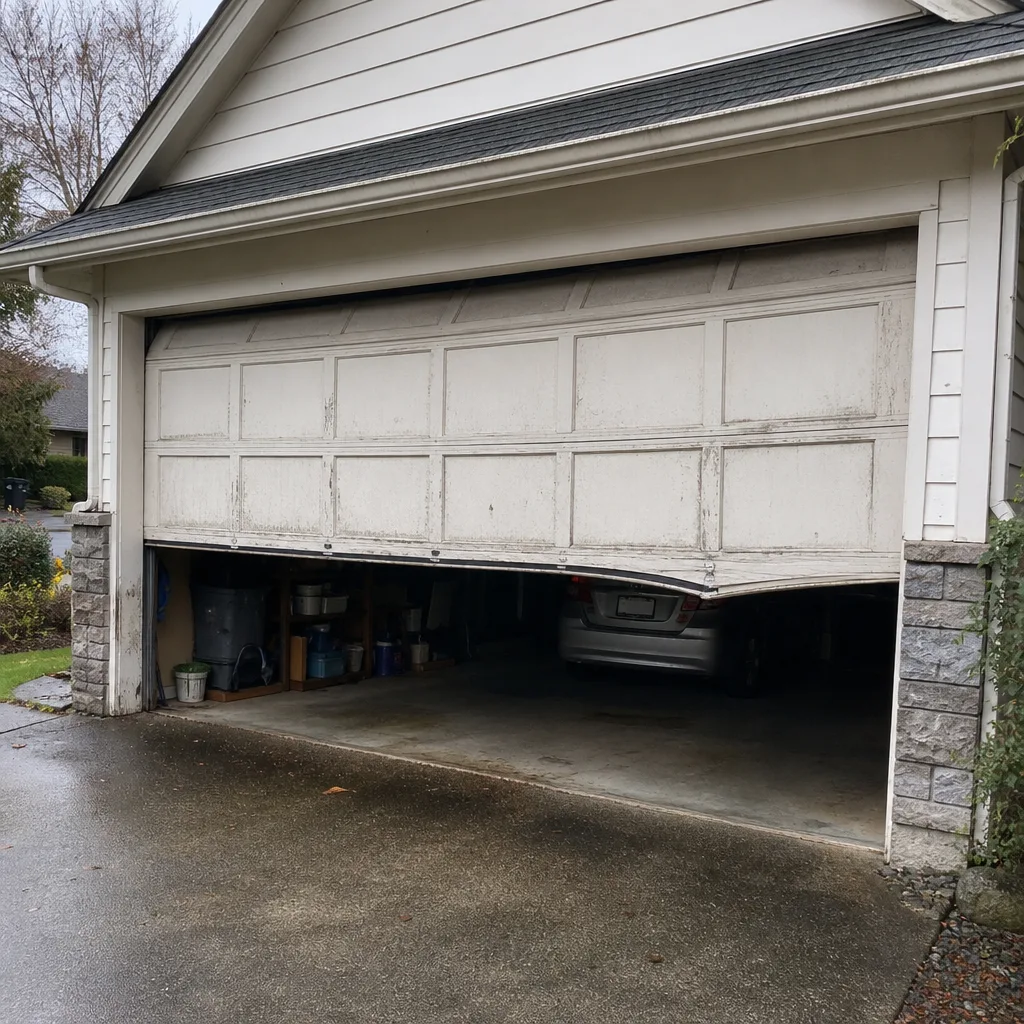 Before
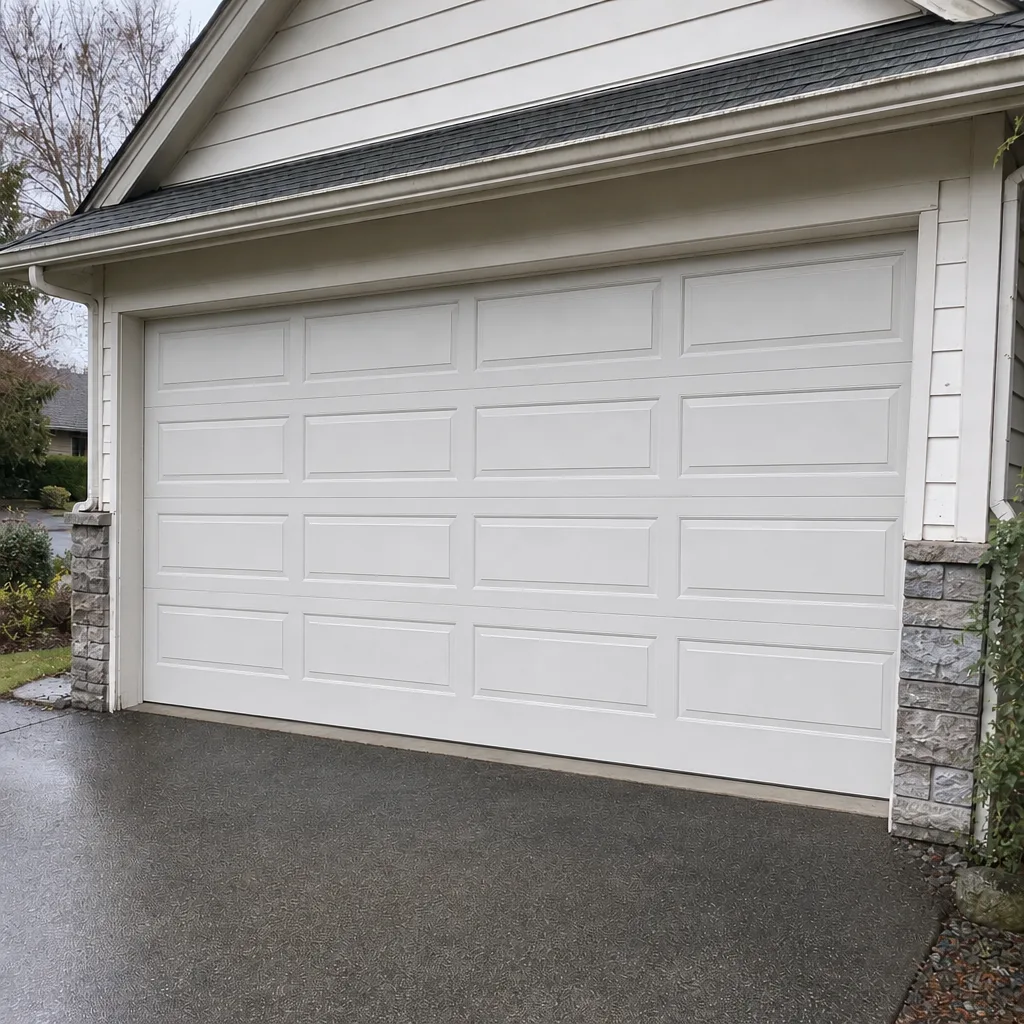 After
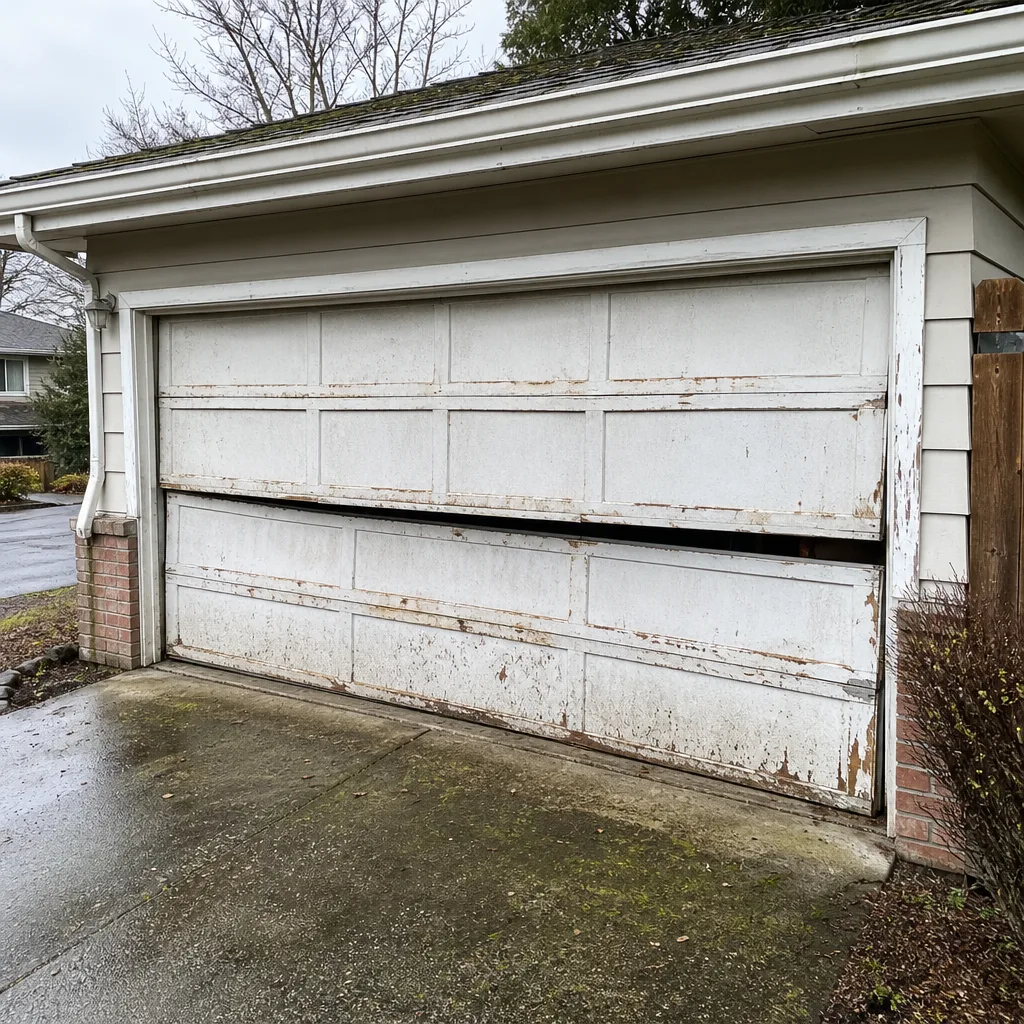 Before
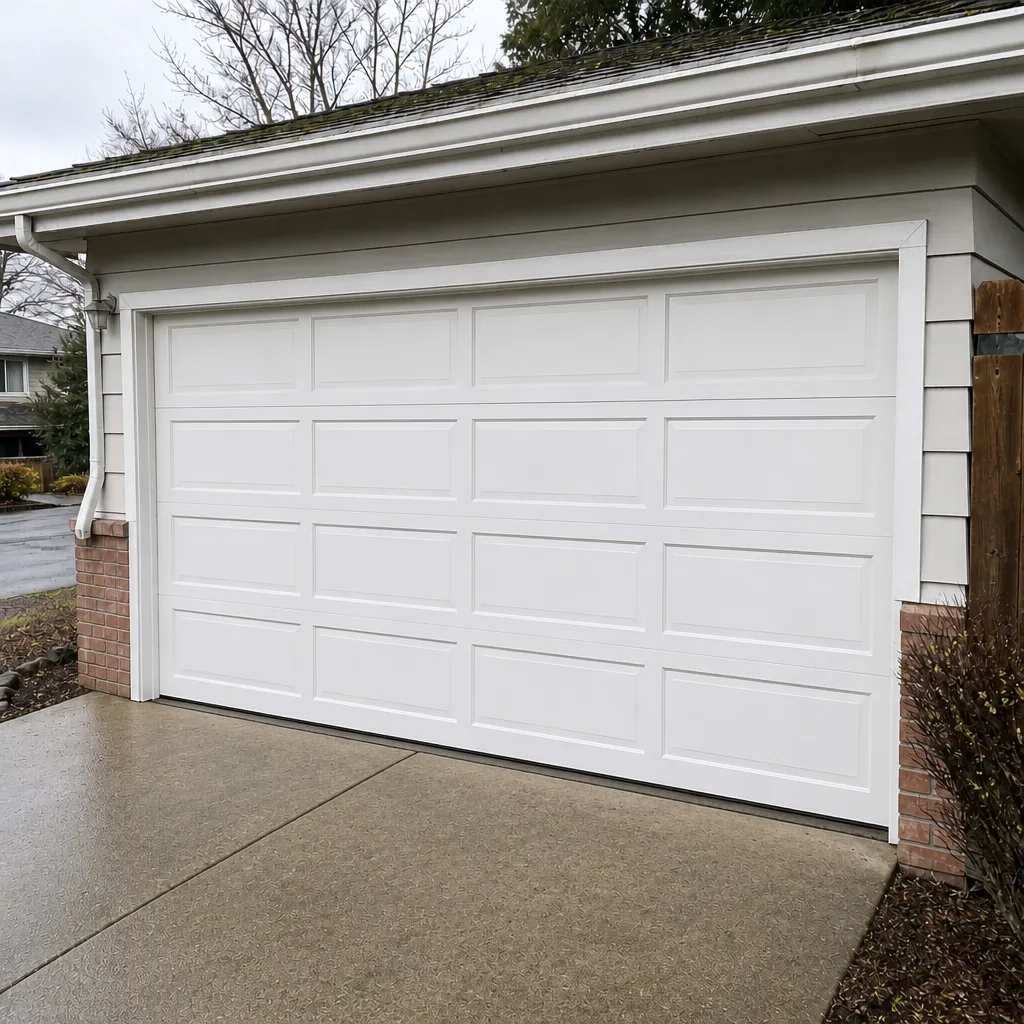 After
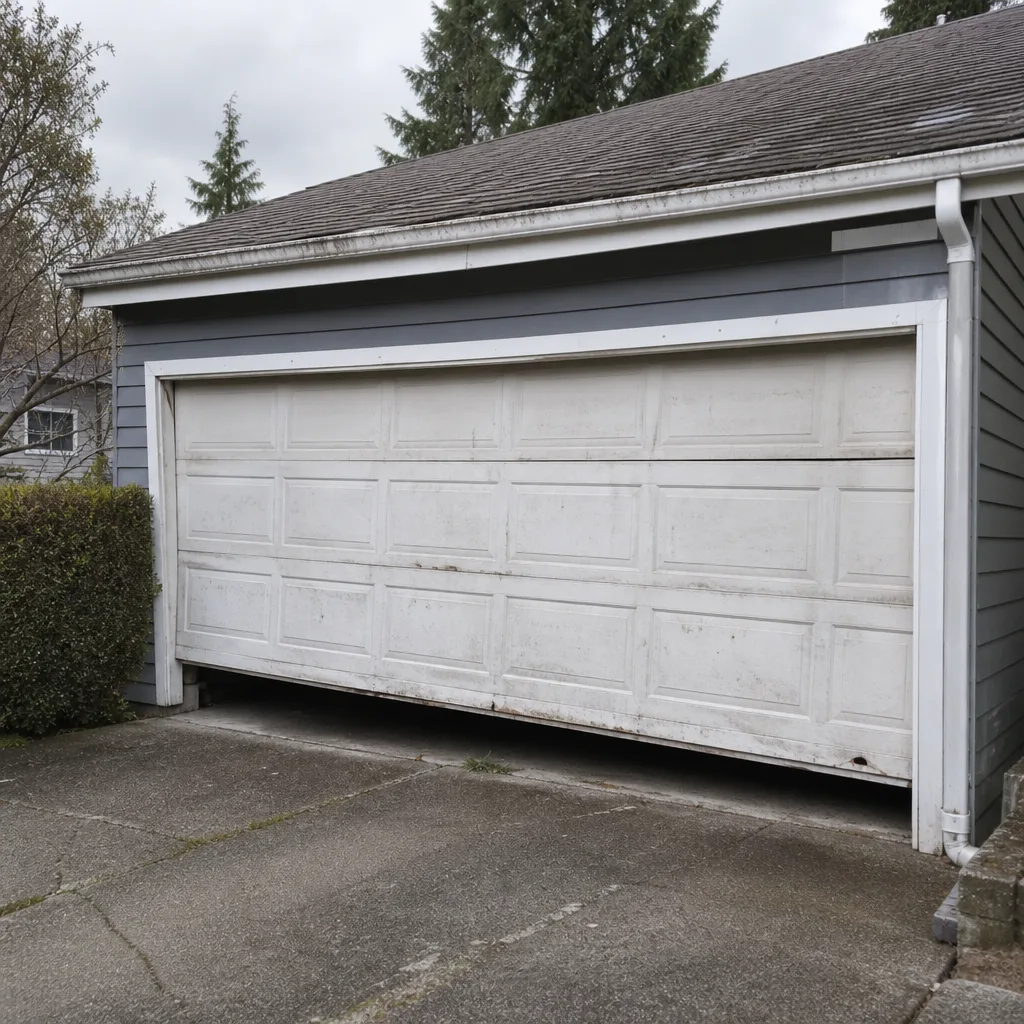 Before
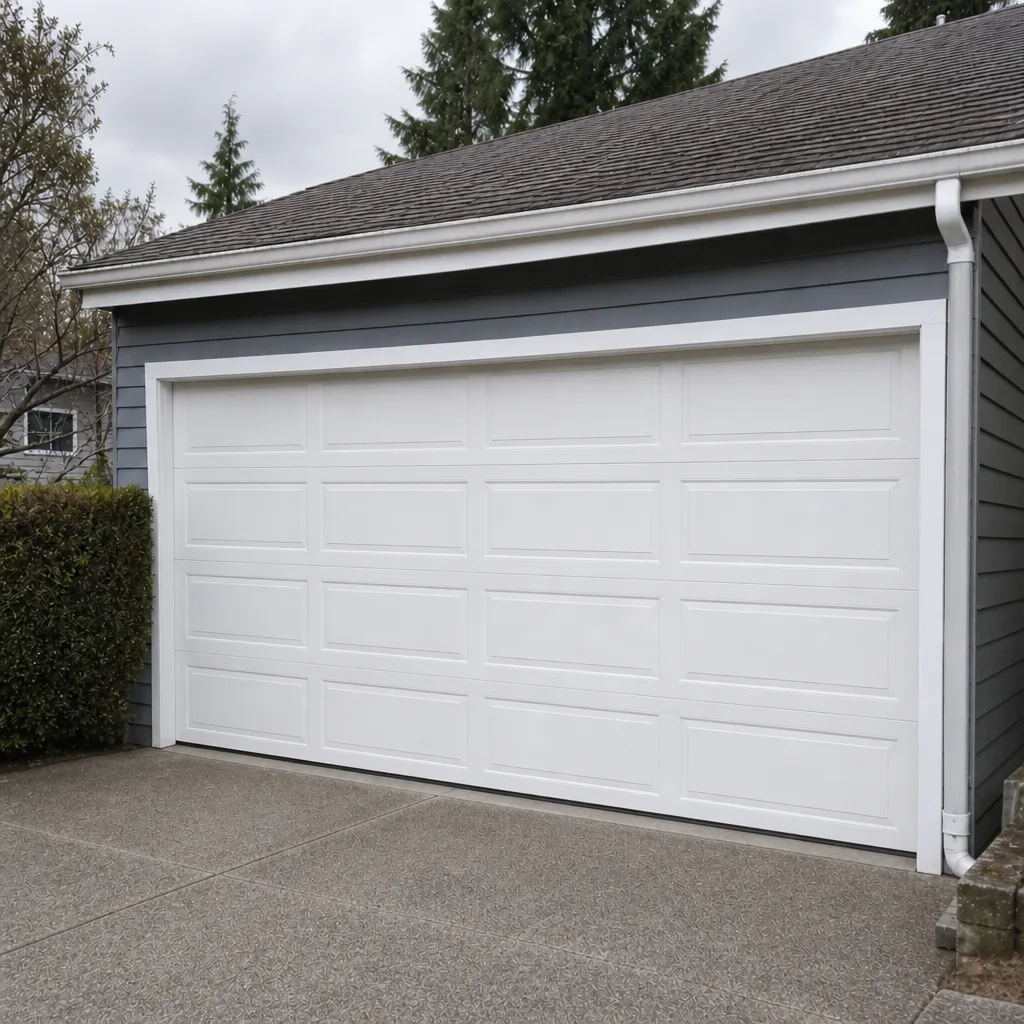 After
When to Call a Professional
Some things are worth a phone call. If a spring has snapped, if a cable is frayed or loose, if the door drops on one side, or if the opener reverses unpredictably, stop using the door and get help. These involve high-tension parts and safety circuits that are genuinely dangerous to work on without training and the right tools. If the door is stuck open or stuck closed and you need access, call so we can get a technician to you. If you’re planning a replacement, call for a measured appointment so the estimate reflects your actual opening. Bellevue Garage Door Repair Pros offers free estimates in Bellevue, call (866) 937-9023. We answer 24/7. Fast dispatch from 7am to 7pm, Sunday through Friday, and we’re closed Saturday. If something fails on a Saturday, call and we’ll book you into Sunday. Our technicians have up to 11 years of experience, and they’ll tell you honestly which path, repair or replacement, makes sense for your door.
Frequently Asked Questions
Spring repair is priced per spring, and if the door uses a matched pair, replacing both together costs roughly twice the single-spring figure. The exact number depends on the door type and access, and the written estimate sets the final price. Call (866) 937-9023 for an exact quote, estimates are free.
In many cases yes, especially for spring, cable, roller, and opener failures where parts are on hand. Same-day service is part of how we’re set up, so if the door fails, call and we’ll get a technician out as soon as the schedule allows. Call (866) 937-9023. We answer 24/7. Fast dispatch from 7am to 7pm, Sunday through Friday.
No, the written estimate is the price, and it’s quoted and agreed before any work starts. If we get into the job and find something unexpected, we’ll talk it through with you before proceeding, so you’re never surprised by an invoice. Call (866) 937-9023 to get the estimate started.
Yes, the local pro we connect you with is licensed and insured as their state requires. Our technicians have up to 11 years of experience and are trained on eight major residential brands, so your system gets diagnosed by someone who knows it. Call (866) 937-9023 to ask about your brand.
It speeds up wear on springs, seals, and wood doors especially. The constant wet-dry cycle of Bellevue winters and summers is harder on doors than the drier climates that many national guides assume, so a little routine attention goes further here. If you’re seeing leaks or stiffness, call (866) 937-9023 for a free estimate.
Yes. Torsion springs store a large amount of energy, and a spring that lets go while someone is working on it can cause serious injury. A trained technician knows how to release the tension safely, which is why we handle spring repair differently than a typical repair. Call (866) 937-9023 if a spring is involved.
The Bottom Line
Bellevue’s wet winters and temperature swings put different demands on a garage door than a national average climate does. Springs fatigue faster, seals wear quicker, and wood doors need more attention, especially on west-facing walls. Match your door material to the exposure, respect the brand of door and opener you own, and measure before you order anything for an older home. When something breaks, repair often wins on cost and life extension, but replacement makes sense when structure and safety hardware are beyond repair. Avoid the DIY trap on springs and cables. And when you want a straight answer on your door, call us for a free estimate.
Call Bellevue Garage Door Repair Pros at (866) 937-9023 for a free estimate. We answer 24/7. Fast dispatch from 7am to 7pm, Sunday through Friday. Our technicians have up to 11 years of experience and work on the brand you already own. If your door needs garage door repair, our team has you covered. Explore our full range of services at Bellevue Garage Door Repair Pros, including garage door opener repair and garage door installation.
Written by the team at Bellevue Garage Door Repair Pros.