
Last updated November 23, 2026
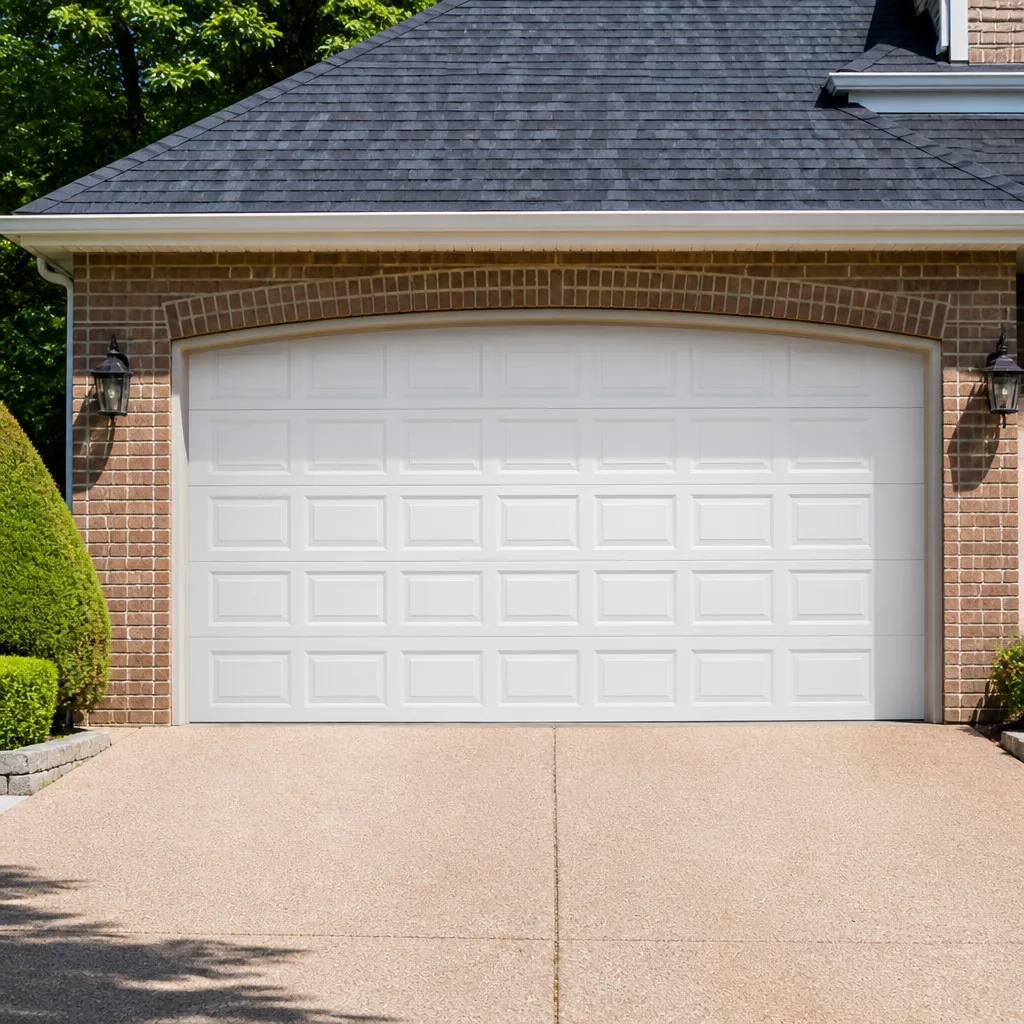 Raised-panel steel
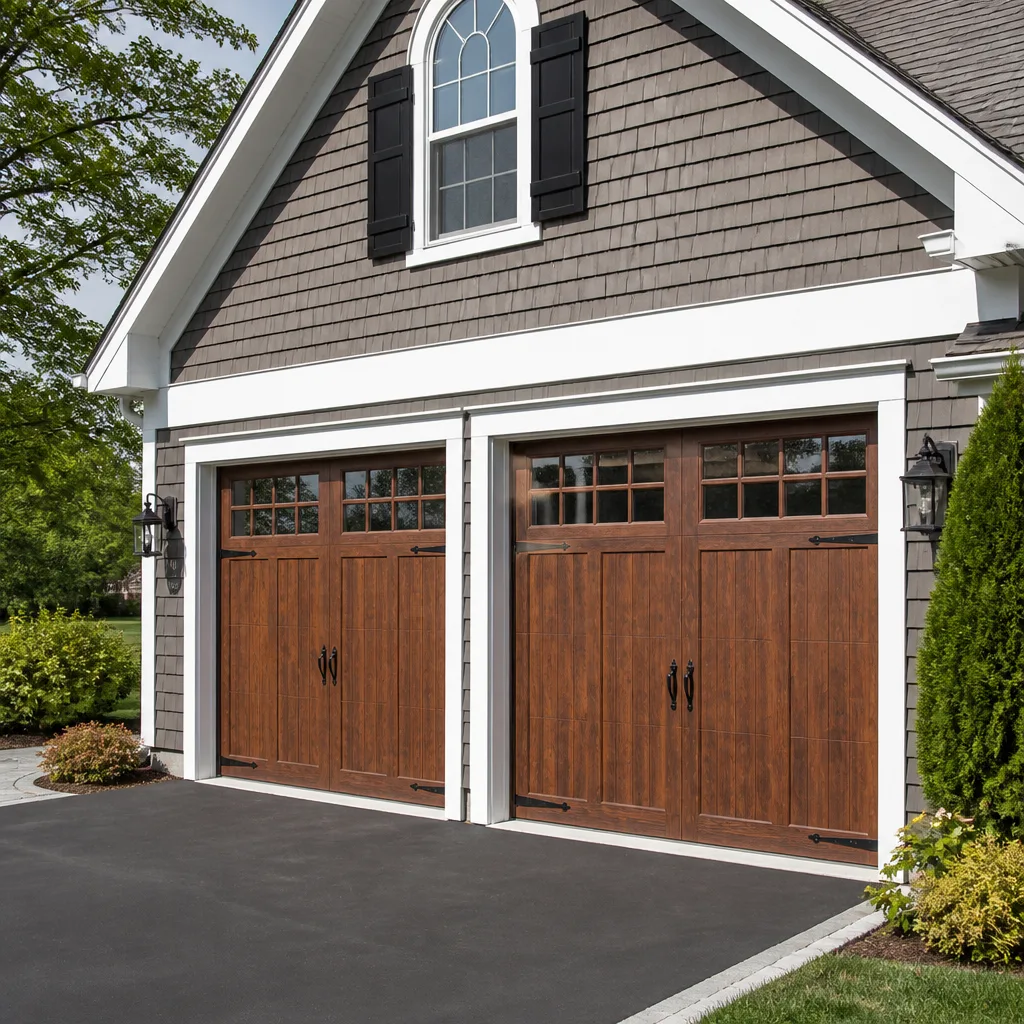 Carriage house
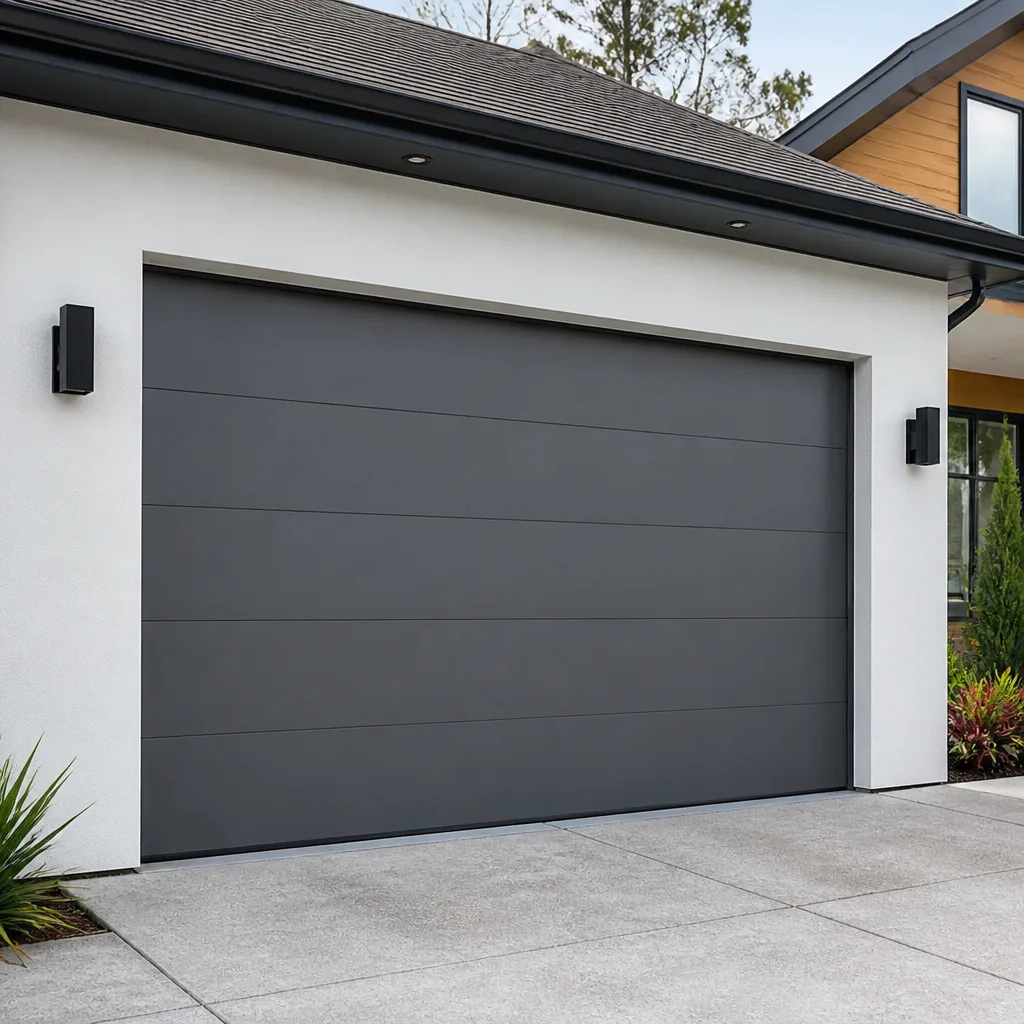 Modern flush
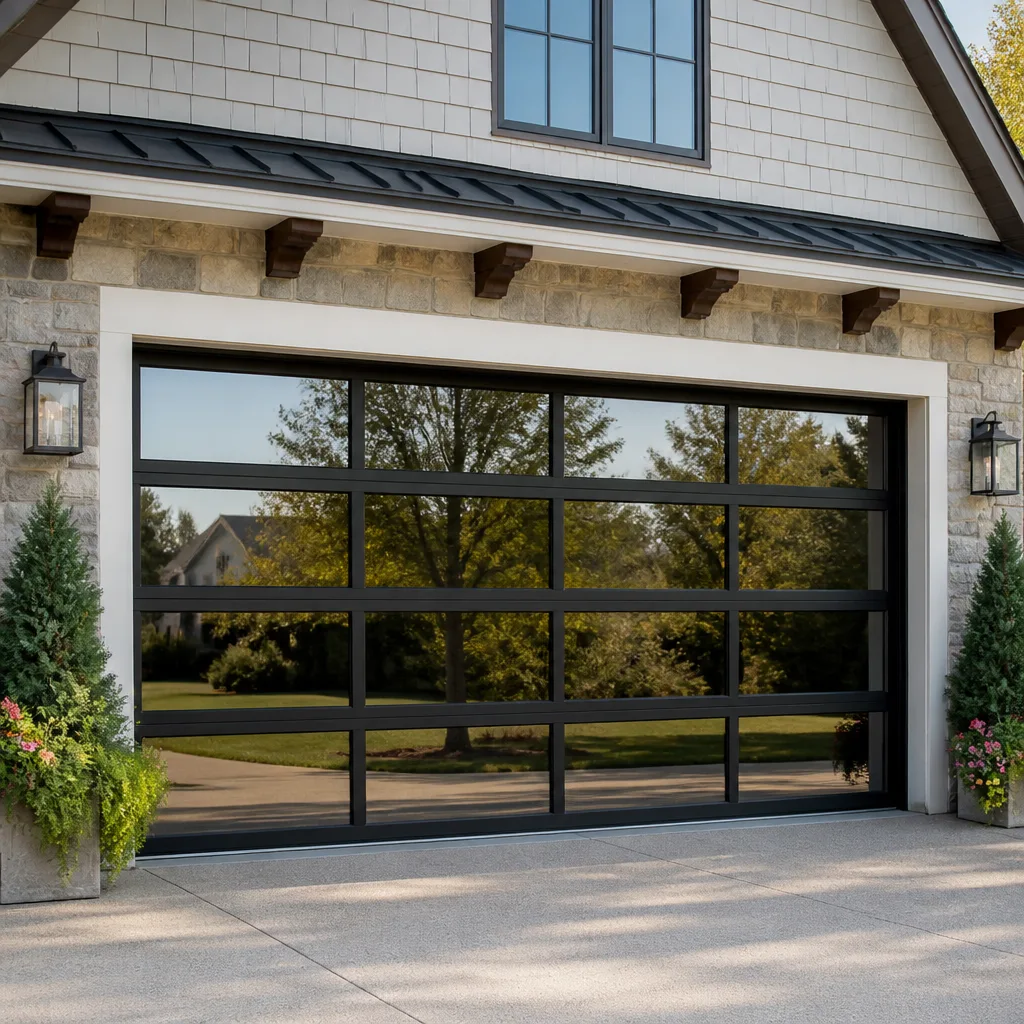 Full-view glass
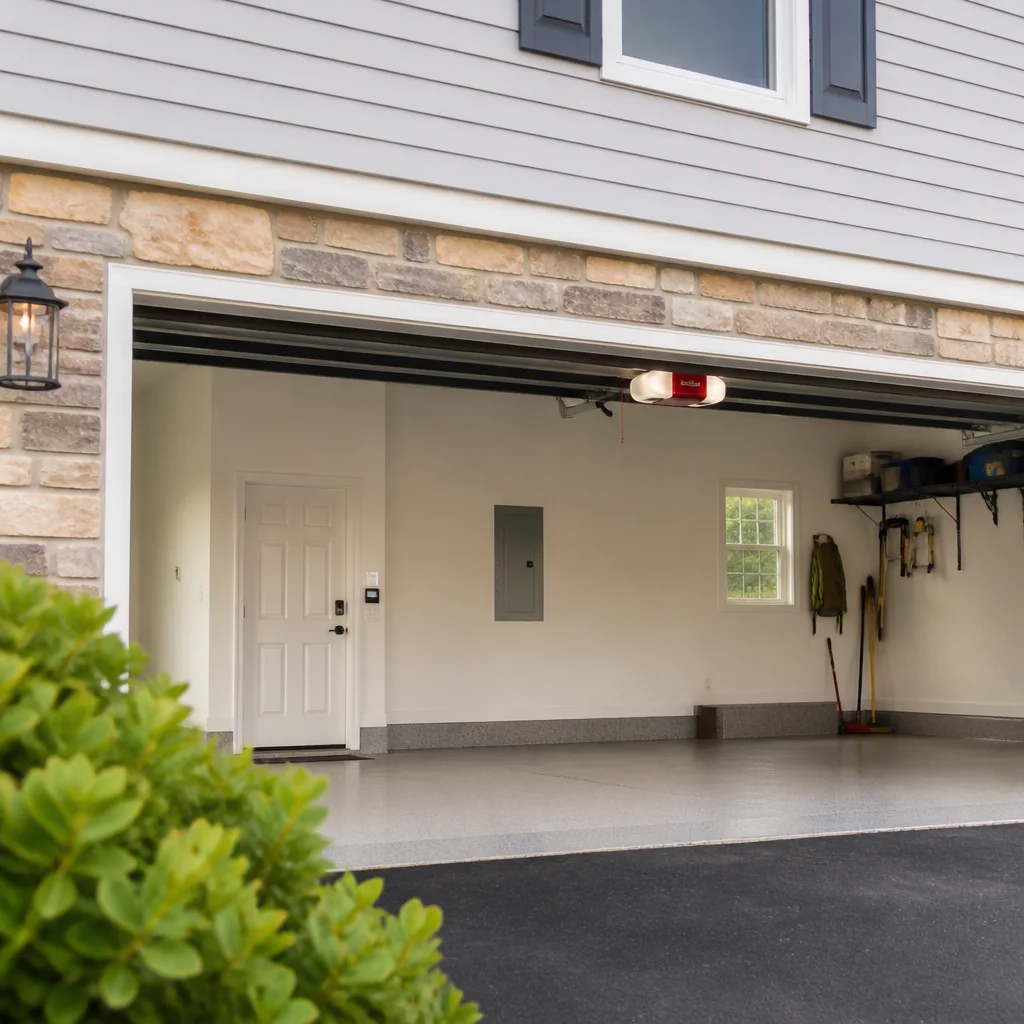 LiftMaster openers
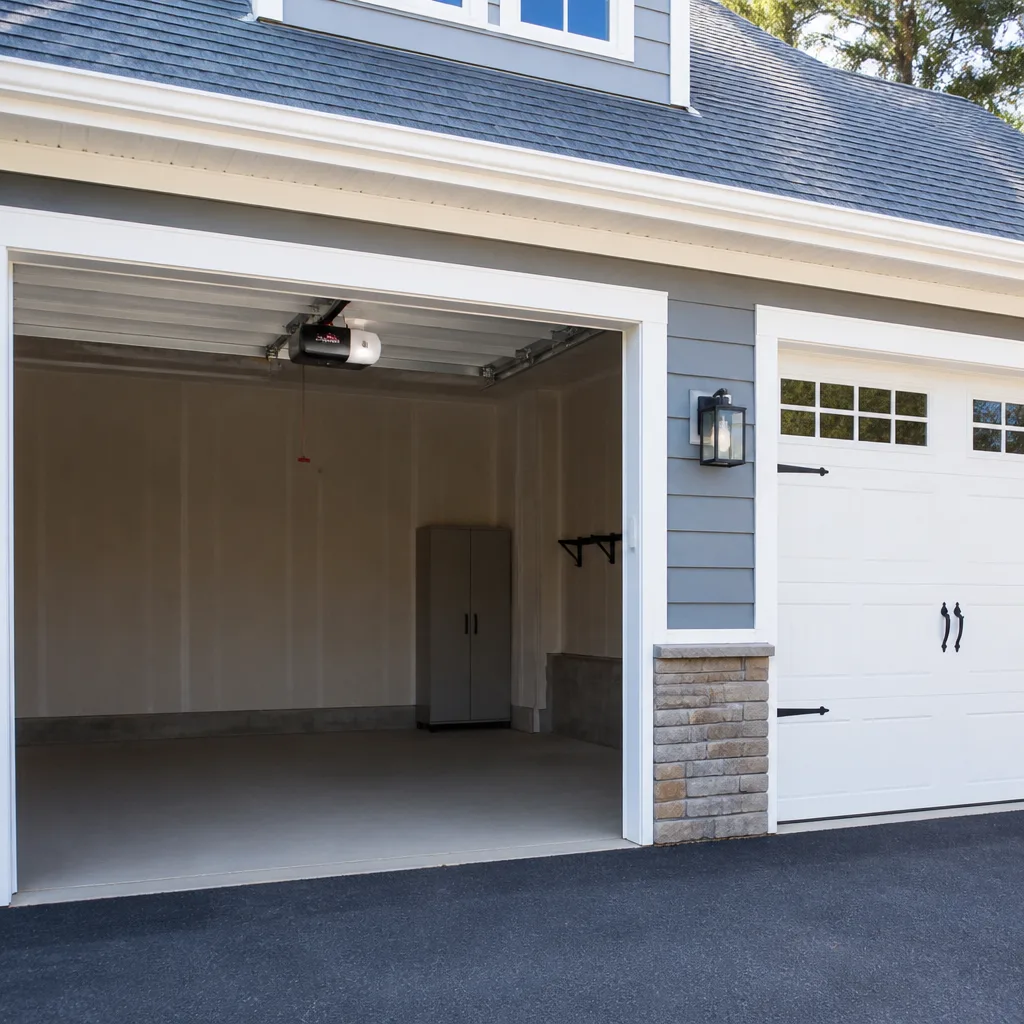 Chamberlain openers
Full 25-point door and opener safety check with every visit - springs, cables, rollers, tracks, and your LiftMaster or Chamberlain opener included
You get a price before we start. It does not change when the pro arrives.
Get your free estimateDIY vs Professional Garage Door: The Bellevue Homeowner’s Decision Guide
Most garage door repairs don’t fail because the homeowner lacked mechanical ability. They fail because the person doing the work didn’t understand where the stored energy was. A torsion spring holds enough tension to launch metal across a garage, and that single fact reshapes the DIY-versus-professional question more than skill ever will. We’re not here to tell you that every job needs a trained technician. Some garage door tasks are genuinely homeowner-friendly. The trick is knowing exactly which ones, and why the rest belong to someone who works with that stored energy every day. This guide breaks garage door work down task by task so Bellevue homeowners can make a clear-eyed call instead of guessing.
Quick Answer
Simple maintenance tasks like replacing a bottom seal, swapping a keypad, installing a Wi-Fi opener module, or touching up exterior panels are reasonable DIY projects for a careful homeowner. Torsion springs, cables, drums, track realignment, and anything involving the opener’s electrical internals are professional-only work because the stored mechanical or electrical energy can cause serious injury. The dividing line isn’t confidence; it’s whether the task puts your hands into a loaded system.
Styles & brands we work with
- Raised-panel steel
- Carriage house
- Modern flush
- Full-view glass
- LiftMaster openers
- Chamberlain openers
Table of Contents
- Why Garage Doors Are Different From Other Home Repairs
- Tasks That Are Genuinely Safe for a Competent DIYer
- Tasks That Belong to a Professional, and the Reason Why
- The Tool Cost Reality Check
- Washington Liability and Your Insurance
- Where DIY Genuinely Makes Sense: Step by Step
- How to Use a Professional Visit Strategically
- Common Mistakes to Avoid
Why Garage Doors Are Different From Other Home Repairs
A garage door is the largest moving object in most homes, and it operates under tension almost every minute it’s closed. The torsion spring above the door is wound tight to counterbalance a door that weighs a couple hundred pounds. Cable systems route that tension through drums and pulleys, and the opener adds electrical and mechanical force on top. That’s three separate energy sources working together, and each one has a different failure mode.
In Bellevue, homes sit at the eastern edge of the Seattle metro where wet winters and humid stretches keep all that metal cycling through condensation and drying. Steel components, springs included, live a slightly harder life than they would in a desert climate. We’ve seen plenty of doors where a spring has lost tension slowly enough that the homeowner never noticed until the door started slamming. The failure is quiet right up until it isn’t.
Here’s the practical upshot. When you replace a toilet flapper or swap a kitchen faucet, the worst outcome is usually a leak. When you touch a wound torsion spring or a loaded cable, the worst outcome can involve a hospital visit and a vehicle that needs body work. That difference in downside risk is why this guide sorts tasks the way it does, and why it’s worth knowing which repairs stay on the homeowner side of the line.
The other thing worth naming: a garage door is a system, not a set of parts. A door that hangs crooked usually has a cable or spring problem behind it. An opener that reverses for no reason often has a sensor issue that traces back to a misaligned track. On a Bellevue street with older homes and mixed door vintages, we see plenty of doors where the component named in the homeowner’s complaint isn’t the actual source of the problem.
Tasks That Are Genuinely Safe for a Competent DIYer
These are the jobs where a careful homeowner with basic tools and a ladder can save real money without touching stored spring tension or live electrical internals. Treat this as the short honest list.
- Bottom seal replacement. The rubber or vinyl seal along the bottom of the door blocks drafts, rain, and pests. Replacing it is a matter of opening the door partway, pulling the old seal out of its channel, and sliding in a new piece cut to length. No tension involved.
- Keypad replacement. Wireless and wired keypads on a LiftMaster or Chamberlain opener are usually a matter of removing a couple of screws and reconnecting terminals or pairing a new unit. Simple, low-risk, and quick.
- Wi-Fi and smart-control modules. Many modern openers accept a plug-in smart hub or a myQ-style adapter. These are designed for homeowner installation; the opener does the work once the module is plugged in and paired.
- Battery and light bulb swaps. Openers use standard bulbs and backup batteries in most cases. Simple enough to be a five-minute job.
- Weatherstripping and threshold work. Jamb weatherstrip on the sides of the door and the threshold on the floor are homeowner-friendly. They’re the barrier between Bellevue’s damp winter air and the inside of your garage.
- Exterior touch-up and painting. Steel and aluminum doors benefit from annual cleaning and touch-up paint to slow rust and oxidation. Safe for anyone with a brush and a Saturday morning.
Notice what’s missing: springs, cables, drums, rollers under tension, and anything inside the opener housing. That’s not an accident. The list above is the part of garage door ownership that a diligent homeowner can genuinely own. Everything else belongs in the next section.
One more tip before you buy parts. Brand matters even on the small jobs. A bottom seal that fits a Clopay door may not fit an Amarr door the same width, and a keypad for a Genie opener won’t pair with a LiftMaster. We work on the brand you already own, and knowing which model you have saves a return trip to the hardware store. Snap a photo of the opener’s model sticker before you walk out the door.
Tasks That Belong to a Professional, and the Reason Why
Each of these jobs can cause serious injury if it goes wrong. The reason differs job by job, and the reason is what makes the difference between “I’ll give it a try” and “I’ll call someone.”
- Torsion spring replacement or adjustment. Spring under stored tension. The winding bars slip, the spring snaps, metal travels. This is the single most dangerous garage door repair there is, and it’s why we keep garage door repair and spring work inside the hands of technicians who do it regularly. Springs aren’t a DIY repair.
- Extension spring replacement. Same category. Different mounting arrangement, same stored energy, same hazard.
- Cable replacement or adjustment. A loaded cable under spring tension can snap with enough force to do serious damage. Cables and springs travel together.
- Cable drum work. Drums sit at the ends of the torsion shaft and are how the door manages cable tension. Never a homeowner job.
- Track realignment. The door’s weight and balance ride on the track. A misaligned track can drop the door, and lifting a track back into place is a structural weight problem, not a wrench problem.
- Opener electrical internals. Capacitors, capacitors, wiring, and circuit boards inside the opener housing carry live current and hold a charge. Wiring or panel-adjacent work is a licensed-electrician territory. Opener diagnostics are opener technician territory. A local pro is licensed and insured as their state requires.
- Panel or section replacement on a loaded door. Sections carry weight and tension routing. Swapping one is a two-person minimum job on any door taller than a standard seven-footer.
Here’s the part most guides skate past. It’s not the difficulty that makes these dangerous. A torsion spring winding job is not intellectually hard. A trained technician can do a spring swap on a standard door in well under an hour. The risk isn’t the complexity; it’s the energy. People who work on cars all day still hire spring specialists, and the reason is exactly the same.
Bellevue is a mix of old and new construction. Mid-century doors in some neighborhoods are more likely to be extension-spring units, while newer builds are almost always torsion. Both fail in the same way, and both are on the professional-only list.
The Tool Cost Reality Check
Here’s a factor that rarely gets named in DIY conversations. The tools needed for the professional-only tasks cost more than the parts and often more than the professional visit itself.
- Torsion winding bars. Two matched bars are the minimum for a safe winding job. A proper set isn’t expensive in absolute terms, but it’s a one-time-use tool for most homeowners.
- Cable drum wrench. Necessary to hold a drum under spring tension. Not a household tool, and not something you’ll use again.
- Cable grips and safety cable. Required for extension spring work in most setups.
- Torque wrench and door jamb level. A door that hangs off-level wears prematurely. A proper 4-foot level is standard on professional visits.
- Ladder rated for the working height. Seven-foot door plus winding above it puts your hands inside a working envelope where a bad ladder is another failure point.
For a homeowner on a Bellevue property where this might be a one-time project, the tool spend alone often exceeds the labor you’d pay on a professional spring repair. And that’s before you get to the skill question. The pragmatic answer for one-time jobs is to let someone who already owns the tools do the work.
The tool math flips when you’re doing many small jobs. If you plan to keep the house and do your own weatherstrip, seals, and touch-up year after year, a homeowner kit for those tasks pays for itself. The tools for the spring jobs never will, because nobody doing spring work once needs a second set of winding bars.
Washington Liability and Your Insurance
Homeowners don’t usually think about liability until something goes wrong. Here’s the landscape in general terms.
Standard homeowner policies typically cover accidental damage to your own property up to policy limits, minus a deductible. If a DIY spring job fails and damages the door, the opener, or a vehicle parked in the garage, the odds are good the claim falls under your own policy, and the deductible may eat a good chunk of the repair cost. Policies vary widely, and your specific coverage is a question for your insurer, not for us.
The bigger liability question comes up if the DIY repair affects someone else. A door that falls on a visiting friend, a contractor working on the house, or a delivery driver is a different category from damage to your own property. Homeowner policies generally cover liability to third parties, but claims involving an unsafe door can complicate the math. And a door that’s been repaired by an unlicensed do-it-yourselfer can raise questions at claim time about whether the repair met a reasonable standard of care.
On the professional side, the local pro you hire should be licensed and insured as their state requires. That means if their work fails, the liability sits with a properly insured business rather than with you. It’s a boring piece of the puzzle until the day it matters, and then it’s the only piece that matters.
For Bellevue properties under an HOA, there’s another wrinkle. Some HOAs have rules about garage door repairs and exterior changes that go beyond city code. If you’re touching the door’s exterior appearance, a quick check with the HOA before you start is worth the two-minute phone call.
Where DIY Genuinely Makes Sense: Step by Step
Three tasks are worth walking through. Each is genuinely homeowner-appropriate and each saves real money without touching the dangerous parts of the door.
Bottom Seal Replacement
- Open the door three to four feet and unplug the opener so it can’t be triggered.
- Measure the door’s width carefully. Seals come in specific widths and profile types; a Wayne Dalton door uses a different seal profile than a similarly sized Clopay.
- Pry the old seal out of its channel with a flathead screwdriver. It may come out in one piece or several; there’s no wrong technique here.
- Clean the channel of dirt and old adhesive.
- Slide the new seal in from one end, working it fully into the channel.
- Trim the excess to match the door width, then plug the opener back in and test the safety reverse.
Total time on a standard single-car door: 20 to 40 minutes. Total cost: the price of the seal and nothing else. The safety improvement in Bellevue’s wet winters is genuinely worth doing, because the seal is what keeps rain and drafts from working their way under the door.
Keypad Replacement
- Locate the keypad’s model number, usually inside the battery cover.
- Remove the two mounting screws and pull the unit off its bracket.
- Disconnect the wiring terminals (wired units) or remove the batteries (wireless units).
- Mount the new keypad and reconnect terminals or install fresh batteries.
- Program the code per the opener’s instruction sheet. This is where knowing whether you own a LiftMaster, Chamberlain, or Craftsman matters, because pairing procedures differ by brand.
Wi-Fi and Smart Module Installation
- Confirm your opener has a compatible port or is listed as compatible with a plug-in module.
- Plug the module in and follow the phone app’s pairing steps.
- Test open, close, and status reporting from the app before relying on it.
These three tasks are the honest core of the DIY-versus-professional answer. Homeowners with a little patience can own that work.
If you’d rather handle an exterior touch-up while you have the ladder out, that’s the fourth homeowner win. A quick clean with a damp cloth, a spot-sand on any rust, and a coat of matching touch-up paint is a Bellevue-specific improvement, because the wet season rusts untreated steel noticeably faster than it does in a drier climate.
How to Use a Professional Visit Strategically
The DIY-versus-professional question isn’t strictly binary. Some Bellevue homeowners get the best value by hiring out the high-risk part and doing the safe work themselves. Here’s how that plays out.
When you book a professional visit for a spring, cable, or opener repair, the technician’s time is the biggest line item. If you clear the vehicle out of the garage beforehand, move junk away from the door track, and have the door’s model info and opener model info ready, the technician walks in and gets to work. Prep on the homeowner side reduces billable time without touching anything dangerous.
Cleanup is the same story. Removing the old spring or door hardware isn’t the technician’s job unless you pay for hauling it. If you’re comfortable disposing of the old parts, say so, and the visit stays focused on the repair rather than the trash.
The other strategic move is asking the technician to take a quick look at the whole system while they’re on site. An expert on-site for a spring repair is the cheapest moment to catch a cable that’s about to fail, a roller that’s about to seize, or an opener behaving as though it’s about to give out. This is one of the reasons we cover both the door and the opener under one call. One visit, one diagnosis, one set of parts ordered.
Brand knowledge matters here more than most homeowners realize. An opener that’s failing on a Raynor door may behave differently from the same opener model on a Craftsman-labeled door from a different year. Diagnosed by brand, fixed to spec, is worth knowing when you book the visit. Have the brand and model info ready; it saves time on the phone and it gets the right parts on the first trip.
Finally, ask for a written estimate before the technician starts. The price should be quoted and agreed before any work begins, and the final price is what’s on that written estimate. If a job turns out to need more than expected, you should hear about it before the work continues, not after.
Common Mistakes to Avoid
- Winding a torsion spring without proper bars. Screwdrivers, pliers, and improvisation are how people get hurt. Springs aren’t a DIY repair, and the shortcuts that “work” once shouldn’t be repeated.
- Skipping the safety reverse test after any repair. Every garage door should reverse when it meets an object on the way down. If yours doesn’t, stop using it until it’s fixed, even the DIY-friendly repairs.
- Buying parts by guess. A seal that fits one brand rarely fits another, and an opener part that fits one model often won’t fit the next. Photograph your door and opener model stickers before you shop.
- Ignoring the wet-season rust window. Bellevue’s winters are hard on unpainted metal. A quick touch-up in fall is what prevents panel replacement in spring.
- Treating a garage door like a handyman job. Spring and cable work is a specialty, not a general repair. A generalist may mean well, but not every general repair tech is trained on the specific brand system on your door.
- Putting off a failing opener. An opener that’s grinding, reversing randomly, or responding unpredictably is telling you it needs garage door opener repair now, not after the door stops working entirely.
- Assuming the door is a one-time purchase. Garage doors need spring, roller, seal, and opener upkeep over their lifetime. Treating the door as set-it-and-forget-it is why Bellevue door failures often end up as emergencies.
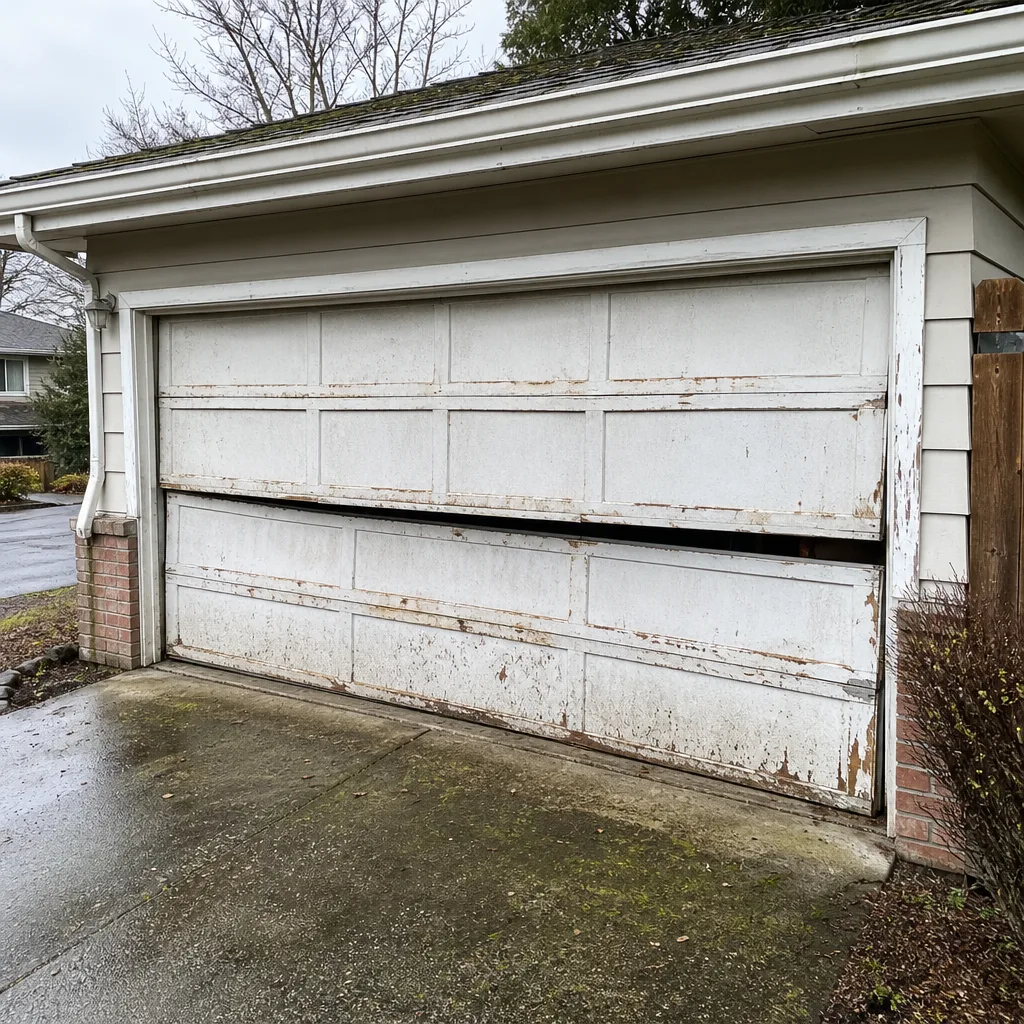
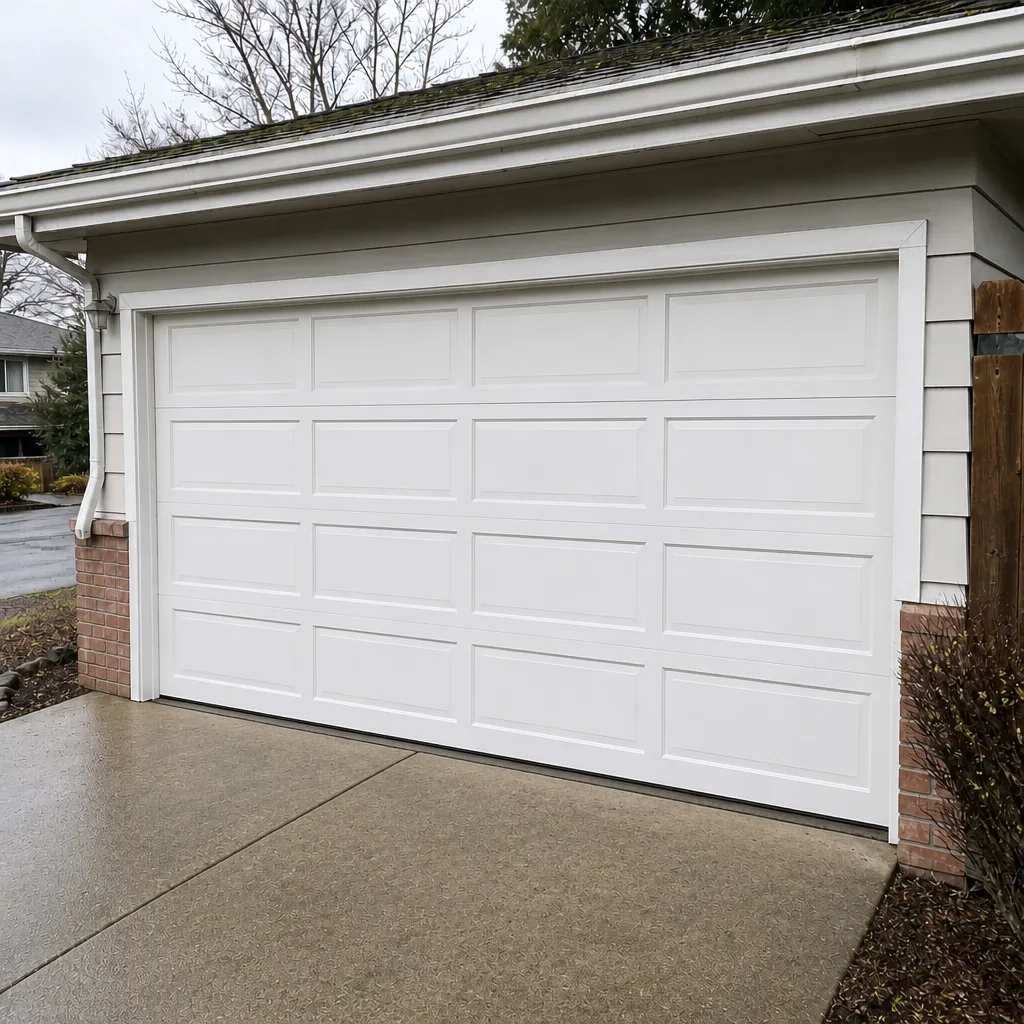
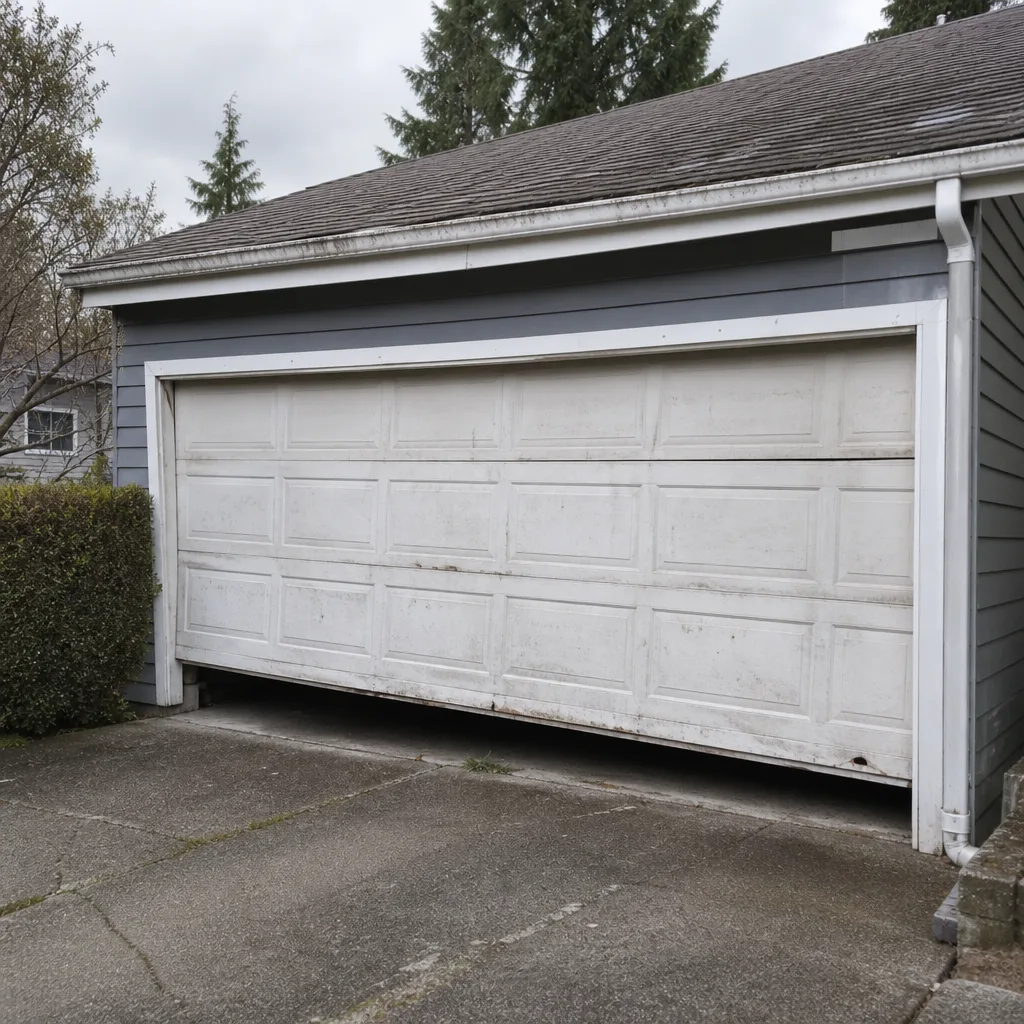
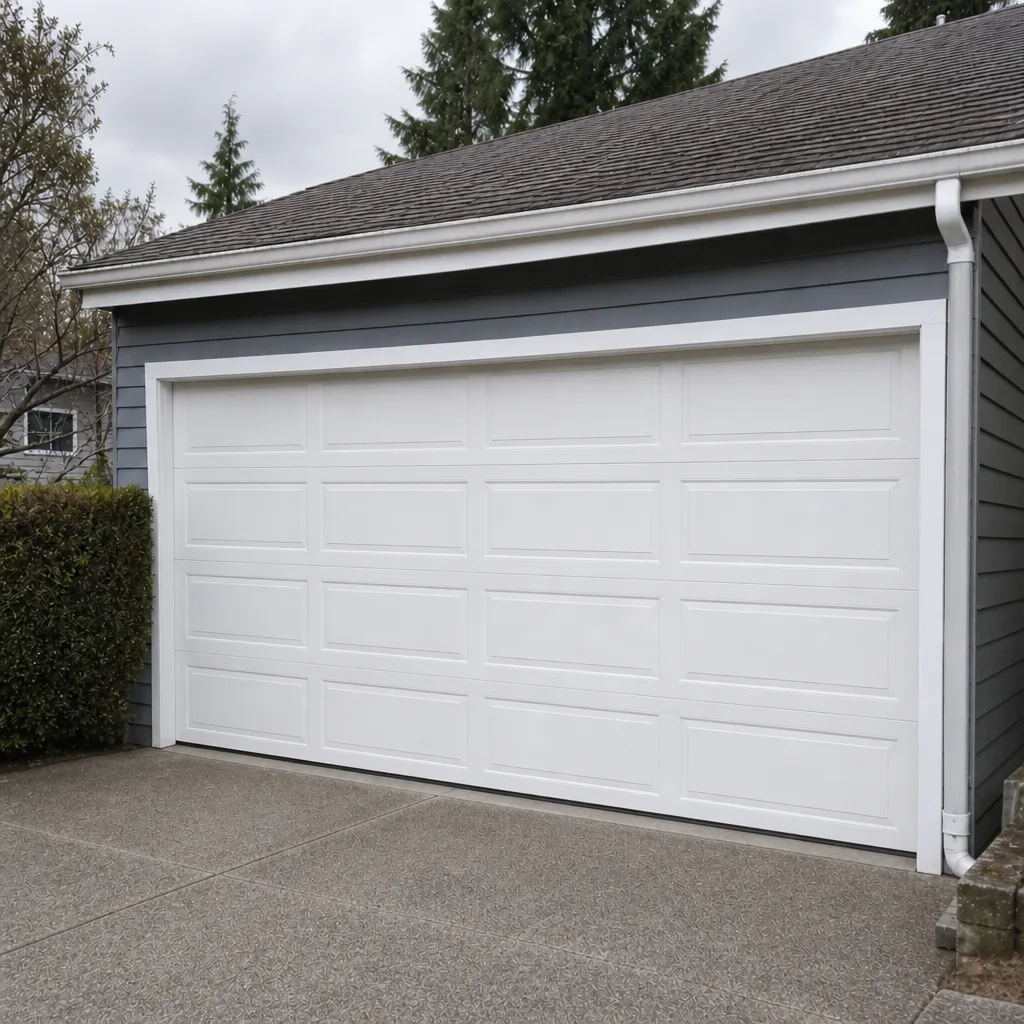
See the difference
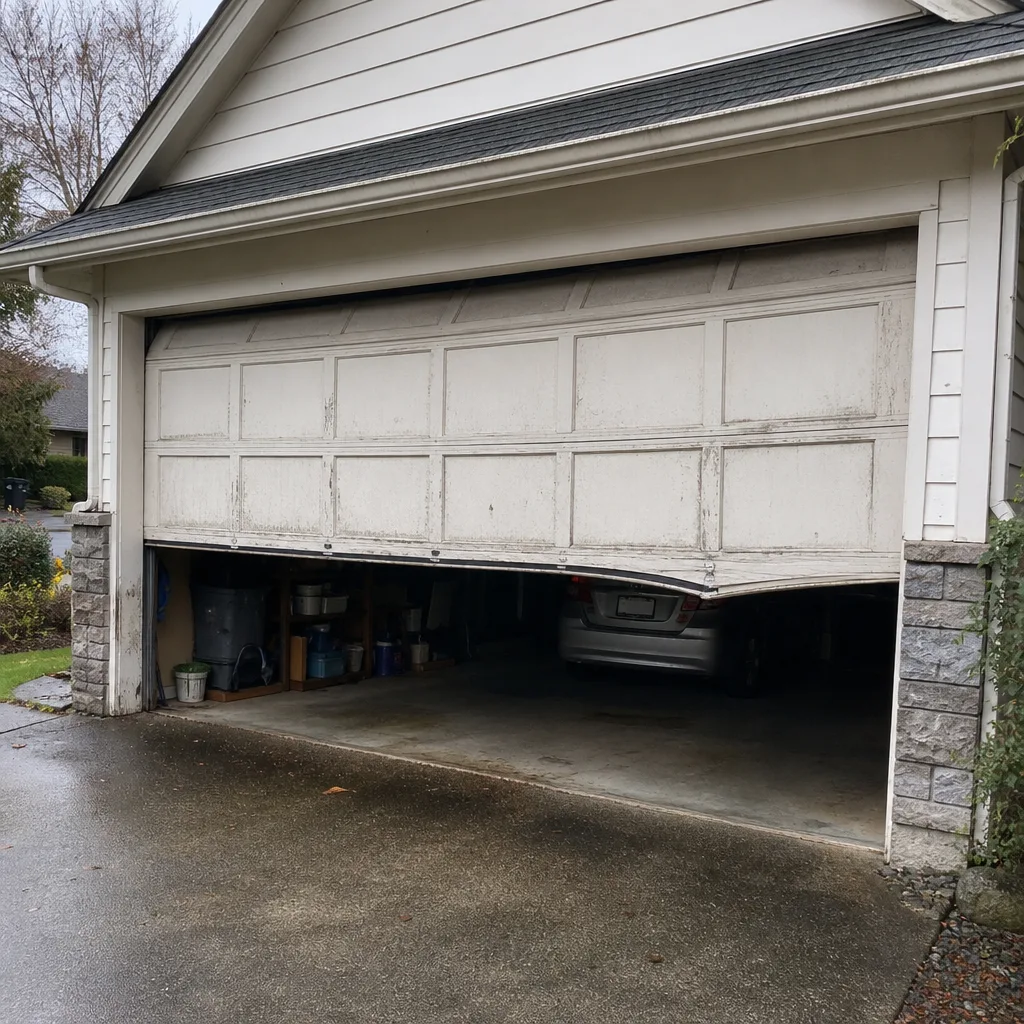 Before
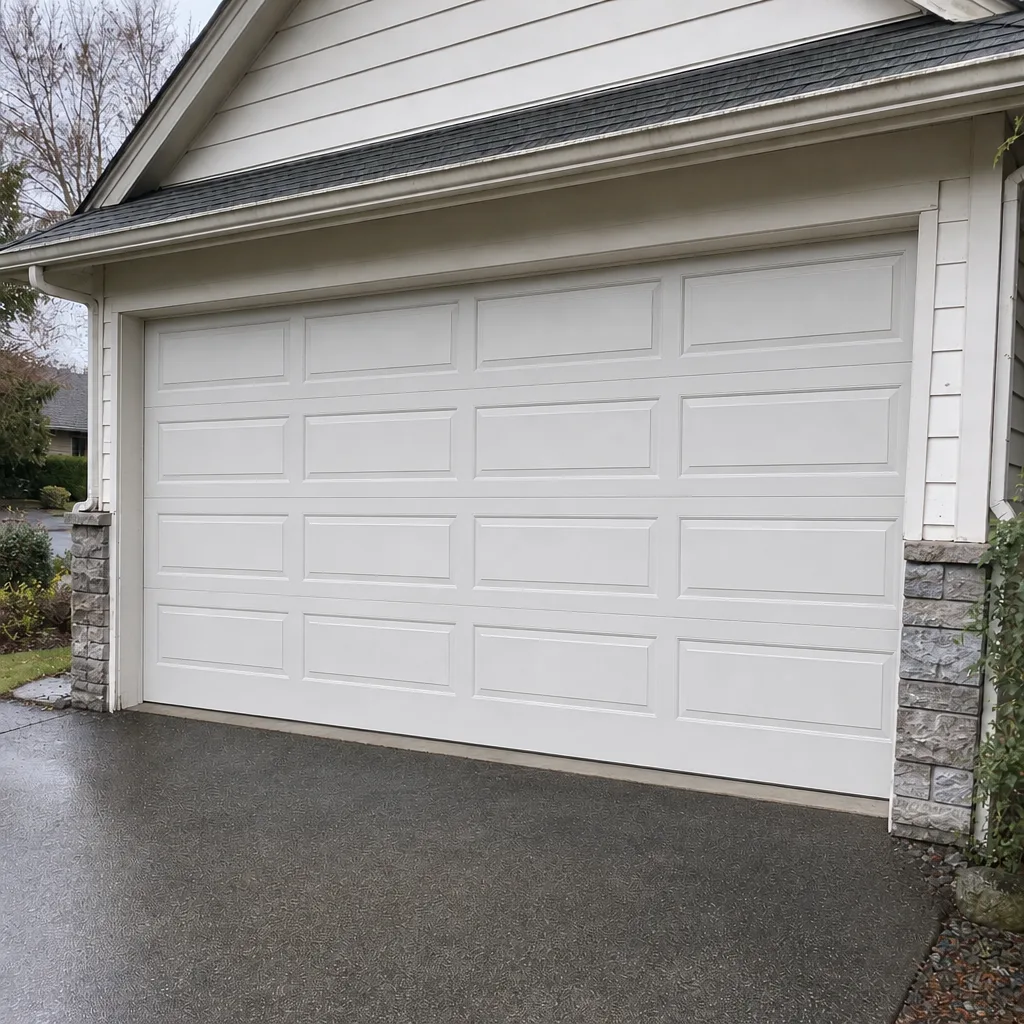 After
 Before
 After
 Before
 After
When to Call a Professional
Call a professional when the repair touches springs, cables, drums, track realignment, opener internals, or structural door panels. Call sooner rather than later if the door won’t move, won’t close fully, moves unevenly, or makes a loud bang followed by silence. A door stuck partway open is a security and access issue in a Bellevue home, and a door that’s slamming is a door that’s about to fail completely. Emergency service is available through Bellevue Garage Door Repair Pros because when the door won’t move, the homeowner needs a real answer fast.
For planned work, including a new door or opener, the right move is a free measure and a written price rather than a same-day promise. Our technicians have up to 11 years of experience across the eight common residential brands, and they’ll tell you plainly whether a repair or a replacement makes more sense for your door. Bellevue Garage Door Repair Pros offers free estimates in Bellevue – call (866) 937-9023. We answer 24/7. Fast dispatch from 7am to 7pm, Sunday through Friday.
Frequently Asked Questions
No. Torsion springs store enough energy to cause serious injury if the wind slips, and the spring itself can snap during removal. Spring work is the single most dangerous garage door repair there is, and it belongs in the hands of a trained technician. Call (866) 937-9023 for a free estimate on spring repair – estimates are free.
Bottom seal replacement, keypad swaps, Wi-Fi module installation, battery and bulb changes, weatherstripping, and exterior touch-up paint are all homeowner-appropriate. Torsion springs, cables, drums, track realignment, and opener internals are not. The dividing line is stored mechanical or electrical energy. If the repair puts your hands inside a loaded system, call us at (866) 937-9023.
Spring repair is priced per job, and the range varies with door height, spring type, and whether it’s a single spring or a matched pair. A matched pair is usually replaced together, so a pair costs roughly twice a single spring. The written estimate is the price; there are no surprises added after the fact. Call (866) 937-9023 for an exact quote – estimates are free.
Usually yes, subject to your deductible and policy limits, if the damage is to your own property. The bigger concern is third-party liability if someone else is injured by a door that failed due to an improper repair. Your specific coverage is a question for your insurer. On the professional side, the local pro is licensed and insured as their state requires, which shifts that liability off your shoulders. Call (866) 937-9023 to get a properly insured technician on the job.
Not after the estimate is written. The price is quoted and agreed before any work starts, and the written estimate sets the final price. If a technician discovers something mid-job that changes the scope, you’ll hear about it before the work continues, not on the invoice. Call (866) 937-9023 for an exact quote – estimates are free.
Yes. Clearing the garage, moving items away from the door track, and having the model info ready on the homeowner side reduces billable technician time. So does handling cleanup and old-part disposal if you’re comfortable with it. The strategic move is to let the technician spend their time on the high-risk work while you take care of the low-risk parts. For a scheduled garage door installation in Bellevue, the right move is a free measure and a written price, not a same-day promise. Call (866) 937-9023.
The Bottom Line
DIY versus professional isn’t a values question. It’s a per-task question, and the answer changes with what’s actually on the table. Bottom seal, keypad, and Wi-Fi module work stays on the homeowner side. Springs, cables, drums, track work, and opener internals go to a trained technician, because the risk isn’t complexity; it’s stored energy and live current. Bellevue’s wet winters add a small case for annual touch-up and weatherstrip upkeep on the homeowner side, and a strong case for not putting off spring or opener failures. If you’re unsure which side of the line your repair sits on, that alone is a reason to call.
One call covers the door and the opener. Whether you own a LiftMaster, Chamberlain, Genie, Clopay, Amarr, Wayne Dalton, Craftsman, or Raynor system, we work on the brand you already own. For garage door installation and repair across Bellevue, the fastest way to a straight answer is to get a technician looking at the actual door.
Call (866) 937-9023 for a free estimate. We answer 24/7. Fast dispatch from 7am to 7pm, Sunday through Friday. When the door won’t move, we move fast, and when the job is routine, we’ll still tell you honestly whether it’s a repair or a replacement fit for your Bellevue home.
Written by the team at Bellevue Garage Door Repair Pros.