
Last updated November 23, 2026
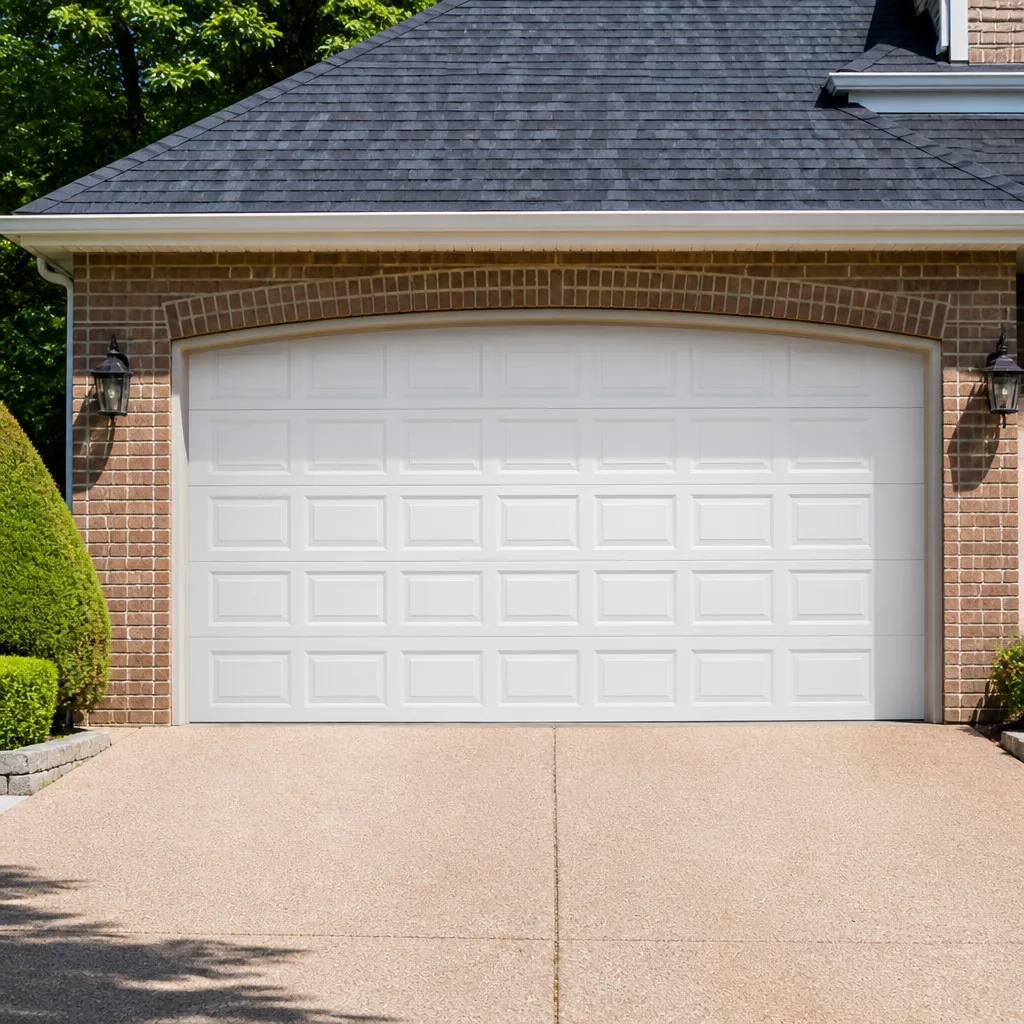 Raised-panel steel
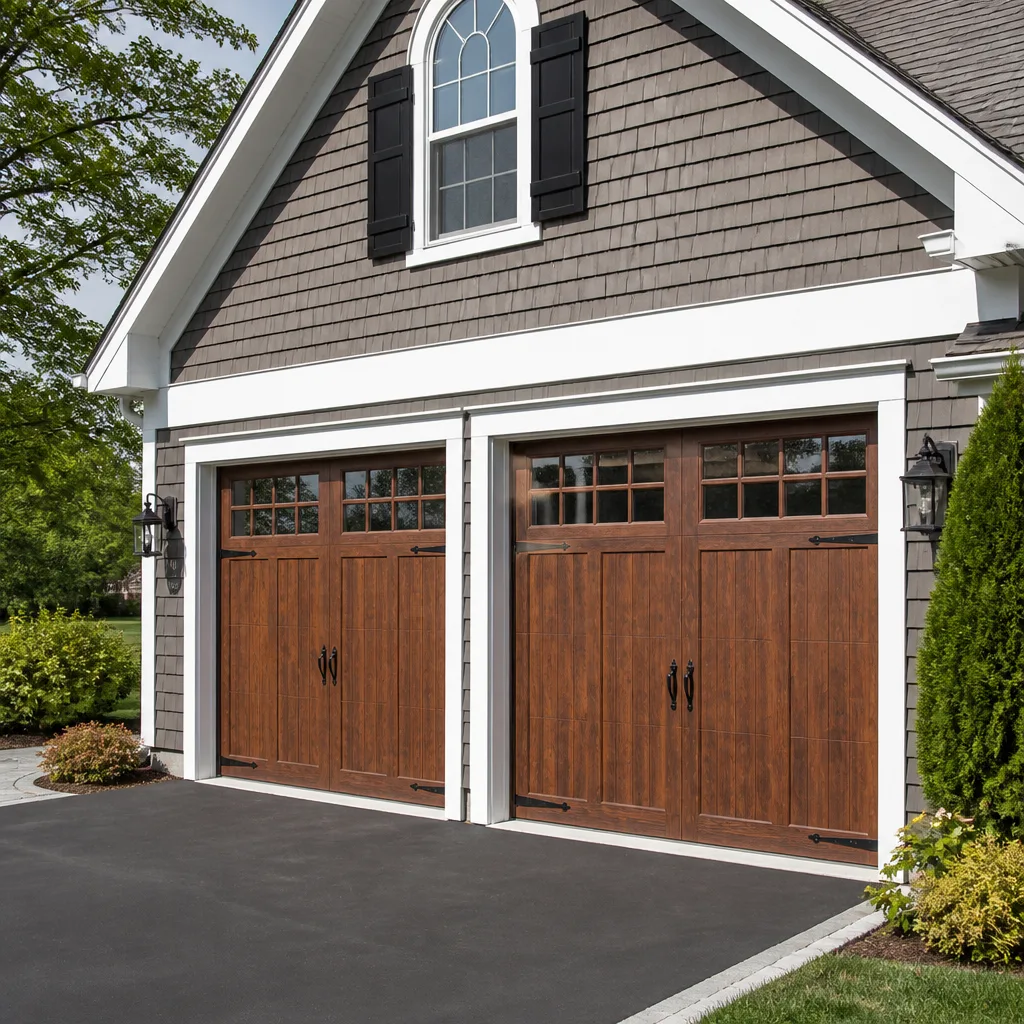 Carriage house
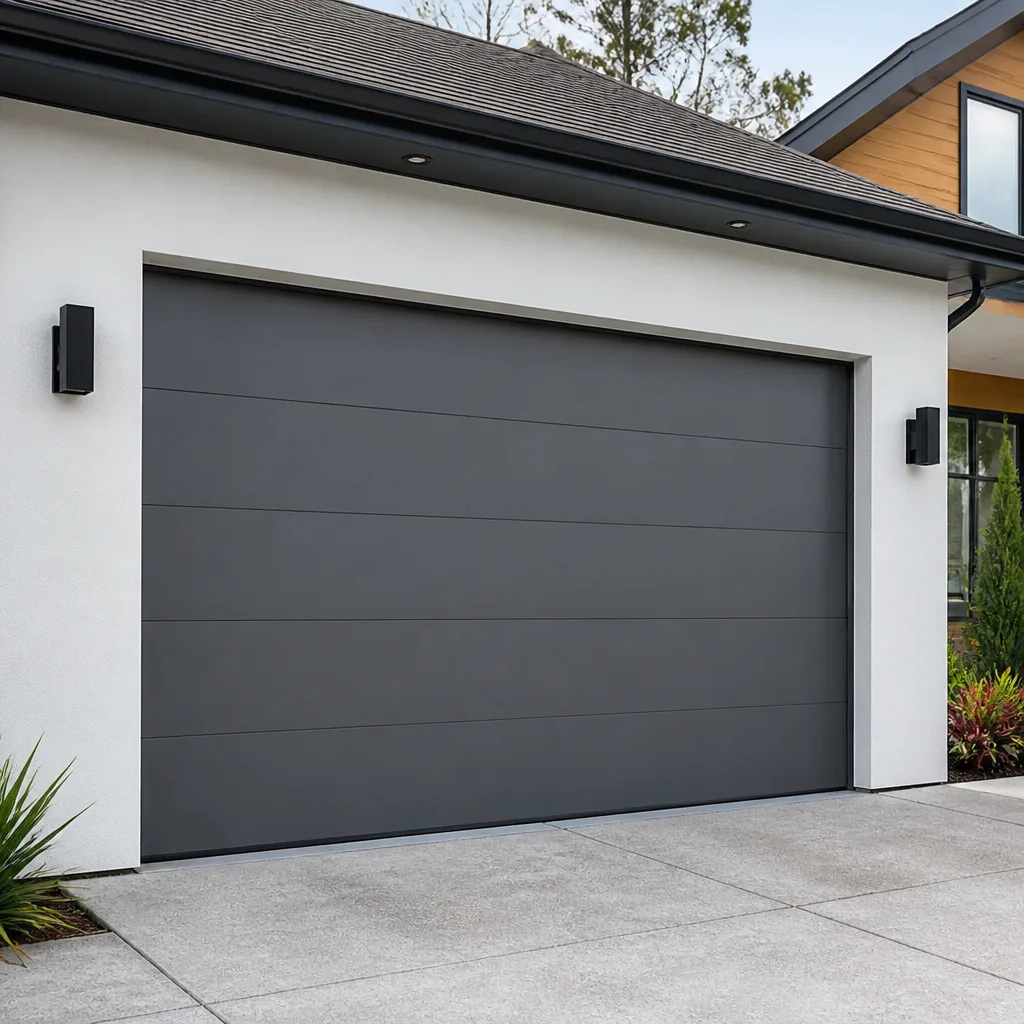 Modern flush
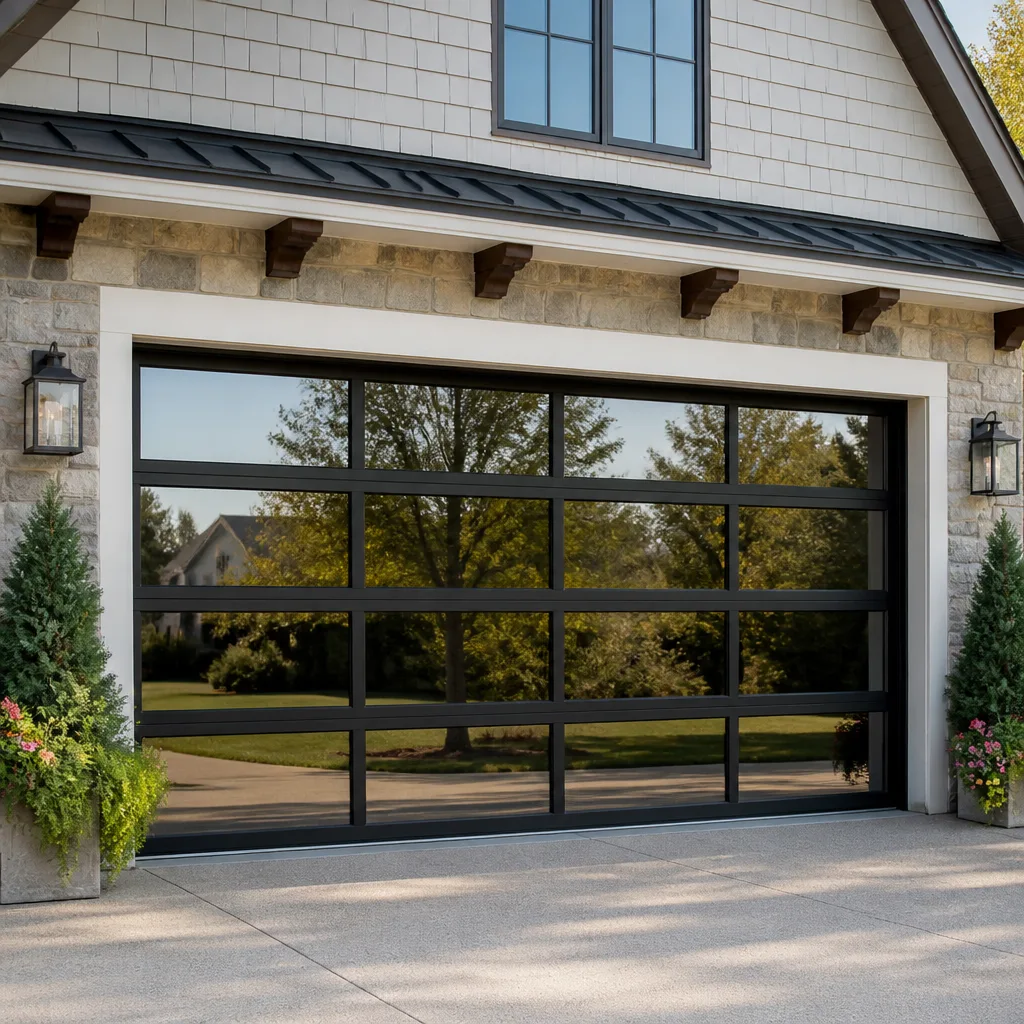 Full-view glass
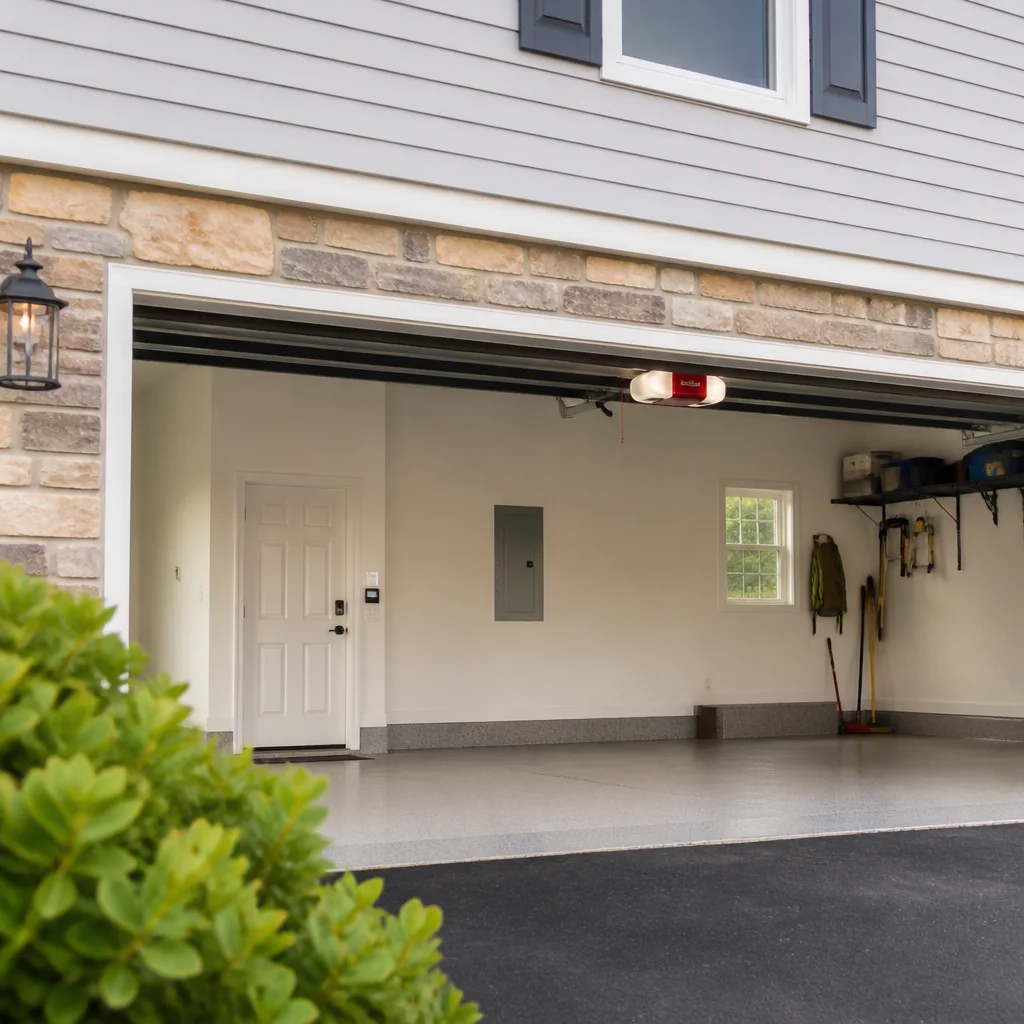 LiftMaster openers
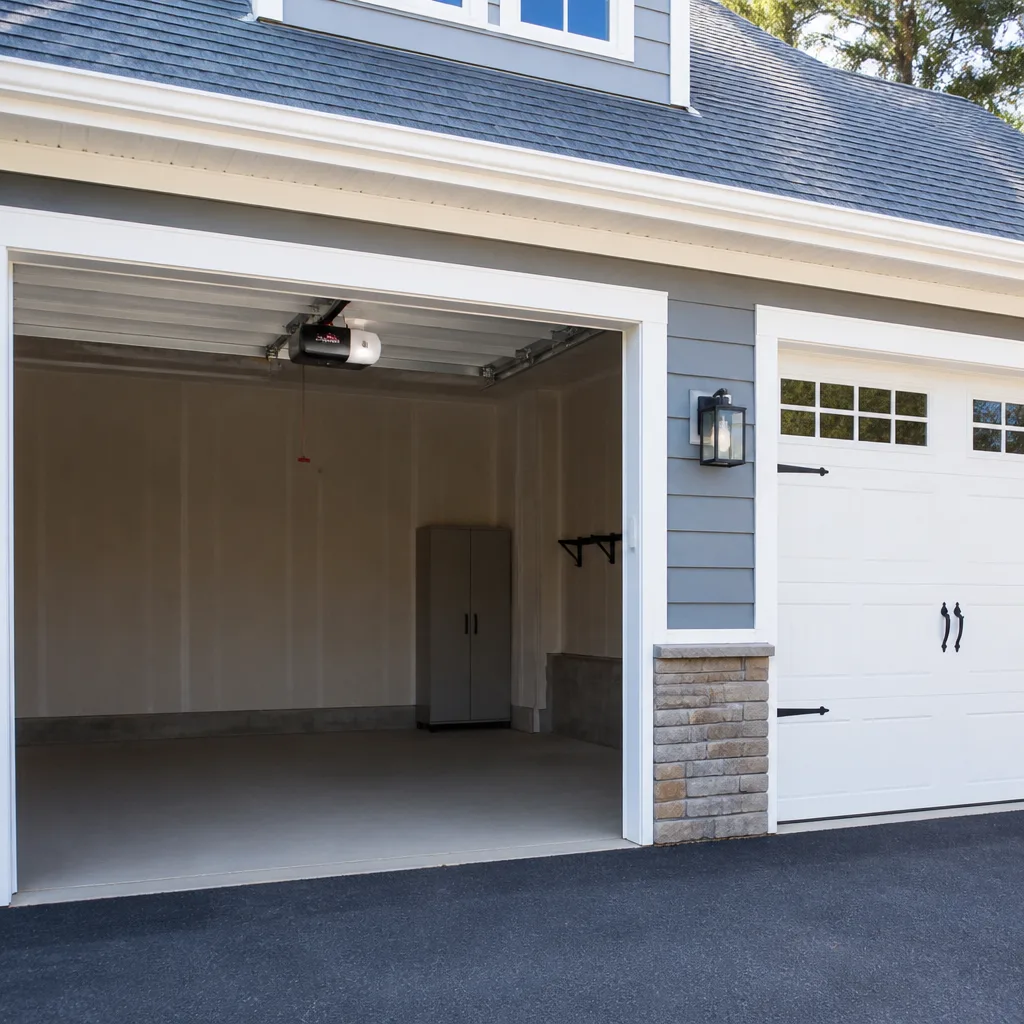 Chamberlain openers
Full 25-point door and opener safety check with every visit - springs, cables, rollers, tracks, and your LiftMaster or Chamberlain opener included
You get a price before we start. It does not change when the pro arrives.
Get your free estimateGarage Door Emergency Preparedness Guide for Bellevue Homes
Most homeowners picture a garage door emergency as a dramatic crash or a snapped spring. In our experience across Bellevue, the far more common call is quieter than that: the power is out, the car is inside, and the homeowner doesn’t know the door has a manual release at all. Bellevue’s windstorms knock out power in neighborhoods from Bridle Trails to Somerset, and when they do, an electric opener becomes a very expensive paperweight until someone remembers the cord. Mechanical failures and power failures are the two categories of garage door emergency, and they call for completely different responses. This guide walks through both: how to release a dead door safely, how to secure one that won’t close, which battery backup systems actually help, and the three things to check before storm season so a bad night never becomes a security or access crisis.
Quick Answer
A garage door emergency in Bellevue almost always falls into one of two buckets: a mechanical failure (broken spring, snapped cable, off-track door) that leaves the door stuck, or a power outage that makes a working opener useless. For power outages, use the manual release cord to disconnect the opener and lift the door by hand. For mechanical failures, especially a broken spring, do not force the door. Secure it temporarily and call a professional. If you want a quick path to help, call (866) 937-9023. We answer 24/7, and fast dispatch runs from 7am to 7pm, Sunday through Friday.
Styles & brands we work with
- Raised-panel steel
- Carriage house
- Modern flush
- Full-view glass
- LiftMaster openers
- Chamberlain openers
Table of Contents
- The Two Kinds of Garage Door Emergency in Bellevue
- How to Use the Manual Release Cord on Common Bellevue Openers
- Why the Release Cord Doesn’t Make a Spring-Broken Door Safe
- How to Secure a Garage Door That Won’t Close
- Battery Backup Systems by Brand: What’s Built In and What Isn’t
- What to Do When a Panel Is Damaged but the Door Still Moves
- Pre-Emergency Checklist Before Storm Season
- Common Mistakes to Avoid
The Two Kinds of Garage Door Emergency in Bellevue
Nearly every call we take during a Bellevue storm season fits into one of two categories, and knowing which one you’re facing changes what you do in the first five minutes. The first is a mechanical failure: a torsion spring that snaps, a cable that jumps its drum, a door knocked off its track. The second is a power failure: the door and opener are perfectly fine, but the electricity that drives them isn’t. Bellevue gets windstorms that take down lines in wooded neighborhoods like Cougar Mountain and the older streets off Lake Washington Boulevard, and a garage door opener with no battery backup simply stops. The door itself still works. The motor just can’t lift it.
Why the distinction matters: a power outage calls for releasing the door and lifting it by hand. A mechanical failure calls for the opposite. Forcing a door with a broken spring or a jumped cable can turn a repair into a replacement, or worse, into an injury. Treat the two separately and you’ll know exactly which move is safe.
Mechanical failures that strand you
- A snapped torsion spring, which is the single most common garage door failure and also the most dangerous to touch.
- A cable that has come off its drum, which drops one side of the door and can jam it crooked.
- A door that has jumped the track after a bump from a car or a heavy wind event.
- A stripped opener gear or a dead logic board, which leaves the motor running but the door unmoving.
Power failures that strand you
These are gentler on the equipment but every bit as frustrating. In Bellevue, an outage during a winter windstorm can last hours, and if your car is in the garage and your opener has no battery, you’re walking or waiting. The fix here is the manual release, covered next.
How to Use the Manual Release Cord on Common Bellevue Openers
Every residential garage door opener sold in the last several decades, from LiftMaster to Genie to Craftsman, has a manual release that disconnects the door from the motor so you can lift it by hand. Bellevue-area homes are full of these systems, and the procedure is nearly identical across the brands we work on: LiftMaster, Chamberlain, Genie, Clopay, Amarr, Wayne Dalton, Craftsman, and Raynor. Find the release cord hanging from the trolley that runs along the ceiling rail. It usually has a red handle or a red tag on the end. Pull it straight down and toward the door until it clicks. That disengages the trolley from the drive, and the door is now free to move manually.
- Locate the release cord. It hangs from the trolley on the overhead rail, near the door’s center. LiftMaster, Chamberlain, and Craftsman openers typically use a red handle. Genie and Raynor units vary but the placement is the same.
- Pull it with a firm, steady motion toward the door. You should hear or feel a click as the trolley releases. If it feels stuck, don’t yank. A door under tension may need a gentle assist from the bottom as you pull.
- Lift the door by hand from a standing position in the center. A balanced door lifts with modest effort. If it feels heavy or fights you, stop and don’t force it.
- When power returns, re-engage the trolley. Pull the cord again or run the opener to re-latch it, then cycle the door once to confirm it’s connected.
One caveat that matters more than anything else in this section: the release cord frees the door from the motor, not from gravity. It does not make a door with a broken spring safe to lift, and it does not fix a mechanical failure. If the door is heavy, uneven, or slams down, put the cord back and read the next section before doing anything else.
Why the Release Cord Doesn’t Make a Spring-Broken Door Safe
This is the safety point we repeat more than any other. A garage door’s torsion spring is what balances its weight, and when that spring snaps, the door is holding its full weight against gravity with nothing to offset it. A homeowner who pulls the manual release on a spring-broken door has just disconnected the only thing keeping the door from coming down on whatever is underneath. The cord made the door lighter to disengage. It did not make it safe to lift.
Signs the spring has failed:
- A loud bang from the garage, often described as sounding like a gunshot or a dropped weight, followed by the door refusing to open.
- The opener motor runs but the door doesn’t move, or moves a few inches and stops.
- A visible gap in the torsion spring above the door, where the metal coil has split.
- A door that feels extremely heavy when you try to lift it a few inches by hand.
If any of these apply, leave the door closed and call for professional spring repair. Springs are wound under enough tension that a slip can cause serious injury, and this is not a repair any homeowner should attempt. What you can do is unplug the opener so no one accidentally cycles it, and keep the area clear. Our technicians work on this repair daily, and it’s one of the most precise jobs in the trade because a mismeasured spring can leave a door dangerously out of balance. If you’re unsure whether your door has a spring problem, a same-day inspection settles it. Call (866) 937-9023, and we’ll get a technician out to assess it.
How to Secure a Garage Door That Won’t Close
A garage door that won’t close is a security concern first and a repair second. If it hangs open, the house is exposed. Here’s what actually holds the door in the closed position, and what doesn’t.
What works
- A pair of locking C-clamps on the vertical tracks. Clamp each side just above a roller so the door can’t slide up. This holds a stationary door in place and is the standard temporary measure.
- A heavy bar or pipe laid across the top of the closed door on the inside, wedged where the door meets the frame, if the door is fully down and just won’t latch.
- Manual lock bars that engage the track on older doors. If your door has them, slide both into position.
What doesn’t work
- Locking the opener’s wall button or remote. This prevents the motor from running, but it does nothing to hold a door that’s already hanging open or that gravity is pulling down.
- Wedging a chair or box under the door. It’ll shift, and it won’t stop the door from moving if the spring or cable lets go.
- Pulling the manual release and hoping the door stays put. On a door with any tension problem, the release can let the door drop.
When you’ve secured the door with clamps or a bar, treat it as a closed door with a repair pending. Don’t operate it, don’t cycle the opener, and don’t lift it. Call to schedule a same-day visit and we’ll get a technician there to check the track, springs, and opener in one trip. One call covers the door and the opener, so you’re not coordinating two contractors to sort out a single failure.
Battery Backup Systems by Brand: What’s Built In and What Isn’t
Battery backup is the single best defense against a Bellevue windstorm outage, and the good news is that some of the most common openers already have it. The catch is knowing which units include it and which need a separate unit added. Here’s how it breaks down for the brands we work on most often in Bellevue:
- LiftMaster offers battery backup built into select models, typically the ones marketed with a battery icon in the name, and a separate add-on battery unit for models without it. Whether yours has it depends on the exact model, which you’ll find on the label on the back or side of the motor head.
- Chamberlain, which shares engineering with LiftMaster, follows the same pattern: certain models include integrated backup, others accept a separate battery unit that mounts to the opener or the wall.
- Genie and Craftsman generally require a separate backup unit or don’t offer one for older models. Craftsman openers, many of which are now well into their second decade in Bellevue homes, often predate built-in backup entirely.
- Wayne Dalton and Raynor openers vary by model and installation, so check the label before assuming.
If you want the number, call us and have your model ready. We’ll price a backup unit that fits your specific opener, since the cost depends on the unit and whether it’s integrated or add-on. What we can say with confidence: adding battery backup to an opener that lacks it is a modest investment compared to the cost of being stuck during a multi-hour outage. And if your opener is old enough that backup isn’t an option, that’s often the moment to consider a replacement with a unit that includes it. Call (866) 937-9023 and we’ll talk through both paths.
What to Do When a Panel Is Damaged but the Door Still Moves
A door that’s taken an impact, from a car bumper, a fallen branch, or a misjudged turn, can be damaged at the panel while the mechanics keep working. The door still moves, so it’s tempting to keep using it. Before you do, inspect in this order:
- Look at the panel itself. A dent is cosmetic. A crease that runs across a hinge line, or a panel that’s bowed out from the frame, can mean the panel’s structural strength is compromised.
- Check the hinge points at the damaged panel. A bent hinge will pull the door out of square over time and wear the rollers and track.
- Watch the door open and close once from the side. Run it slowly by hand. If it binds, grinds, or drifts to one side, the door is out of alignment and shouldn’t be operated by the opener.
- Check the track on the damaged side. Impact often bends the track just enough that the roller jumps.
- Confirm the bottom seal and the door’s contact with the floor. A shifted panel can leave a gap that lets in water and pests.
If the inspection is clean, a damaged panel is often a repair rather than a replacement. If the door is out of square or the track is bent, operating it makes the problem worse. We repair panels and hardware on Clopay, Amarr, Wayne Dalton, and Raynor doors, and we can tell you in one visit whether a panel repair or a full garage door repair is the right call. When the damage is severe enough that replacement makes more sense, we also handle garage door installation, so you’re not hunting for a second company.
Pre-Emergency Checklist Before Storm Season
Three things you can verify before the first windstorm of the year keep an outage or a failure from becoming a crisis. Do them once, in the fall, and you’ll know exactly what to do when the lights go out.
- Find and test the manual release. Open the garage, pull the cord once to confirm the trolley releases smoothly, then re-engage it. Make sure the cord is reachable and not tangled. If you can’t find it, we’ll point it out at your next service visit.
- Check whether your opener has battery backup. Look for a battery icon on the opener or read the model label. If you’re not sure, snap a photo and call us. We’ll tell you whether yours has it and what it would take to add it.
- Test the door’s balance by hand. Disconnect the opener and lift the door halfway. It should stay put with light effort. If it drifts down or feels heavy, the springs are wearing and should be checked before they fail.
While you’re at it, clear the area around the door’s path so a power failure doesn’t leave you lifting a door into a stack of stored boxes. Bellevue garages tend to be tight, and the difference between a clean lift and a strained back is often the clear space in front of the door. If any of the three checks raises a flag, schedule a visit before the next storm rather than after. Our technicians have up to 11 years of experience across LiftMaster, Chamberlain, Genie, Clopay, Amarr, Wayne Dalton, Craftsman, and Raynor systems, and they diagnose by brand rather than guesswork. For a deeper look at opener-specific issues, our garage door opener repair page covers the faults we see most often.
Common Mistakes to Avoid
- Forcing a spring-broken door by hand. A door with a snapped spring can weigh several hundred pounds with nothing balancing it. Never lift it; call for professional spring repair instead.
- Operating a door with a damaged panel. A bent hinge or out-of-square panel will wear the track and rollers every time it cycles. Inspect before you run it.
- Assuming the opener has battery backup. Many Bellevue homes have openers without integrated backup, especially older Craftsman and Genie units. Check the model before the storm, not during it.
- Using a chair or box to prop a door that won’t close. It won’t hold, and it can let the door drop on whatever’s underneath. Use C-clamps on the tracks.
- Cycling the opener on a door that’s jumped the track. Running the motor against a misaligned door bends the track further and can snap a cable. Stop the opener and call.
- Ignoring a slow, heavy-feeling door. A door that gets harder to lift is telling you the springs are wearing. That’s an early warning, and it’s worth acting on before it becomes a failure during a storm.
- Waiting until the power is already out to read the manual. The release cord procedure is simple, but only if you’ve found the cord ahead of time.
See the difference
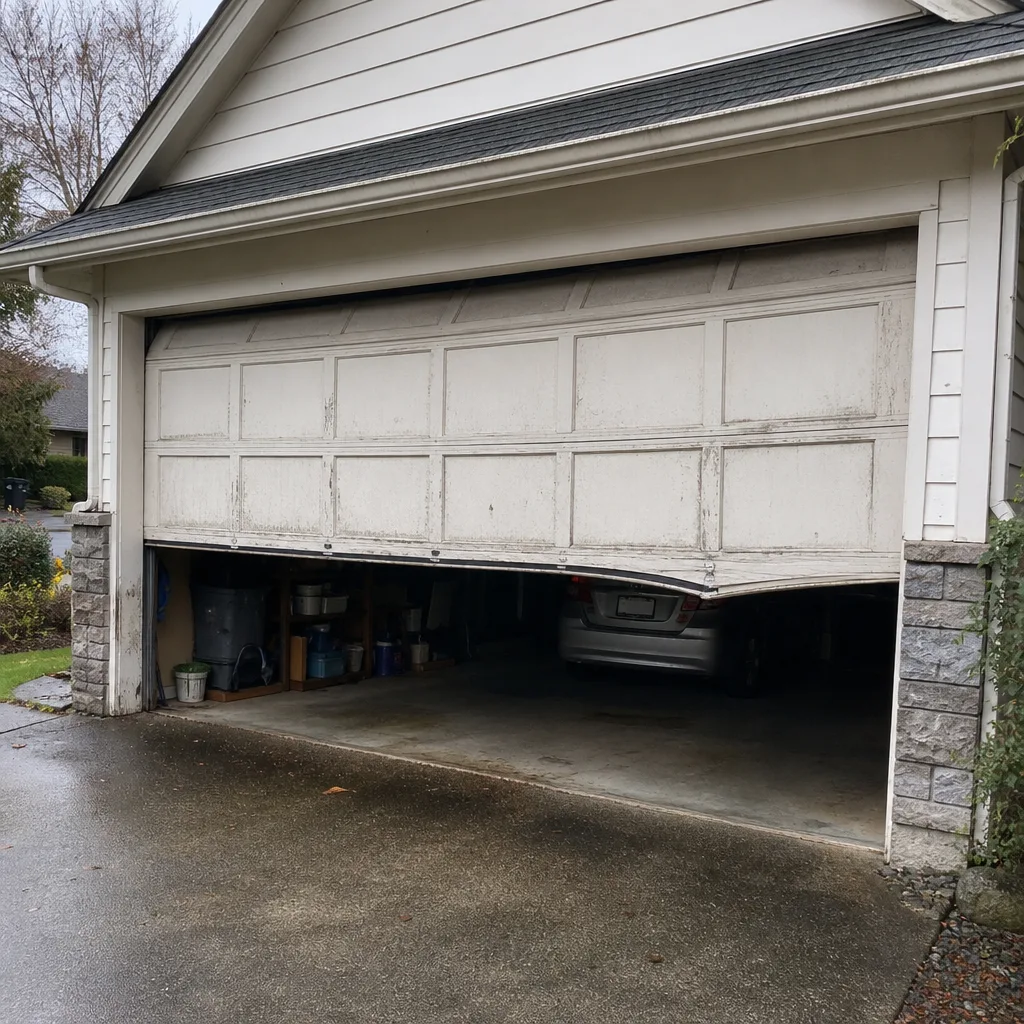 Before
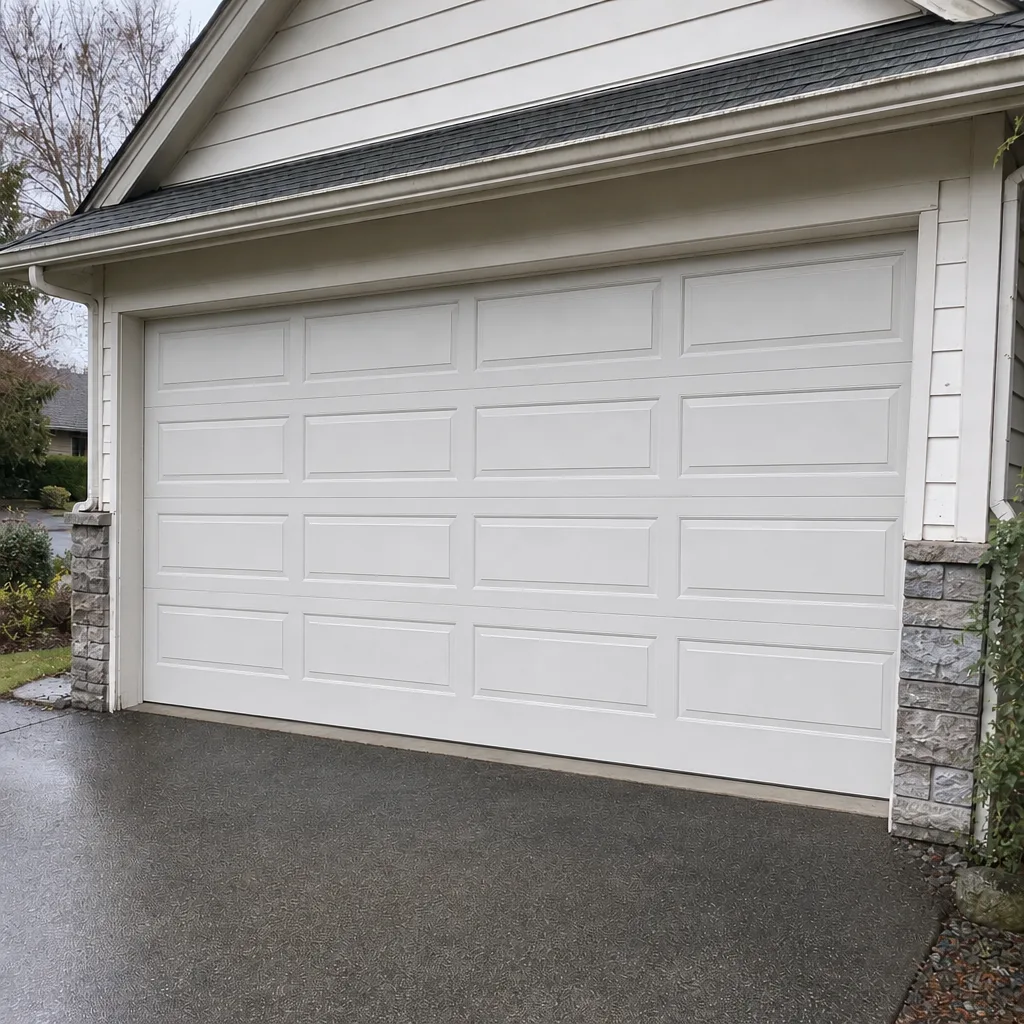 After
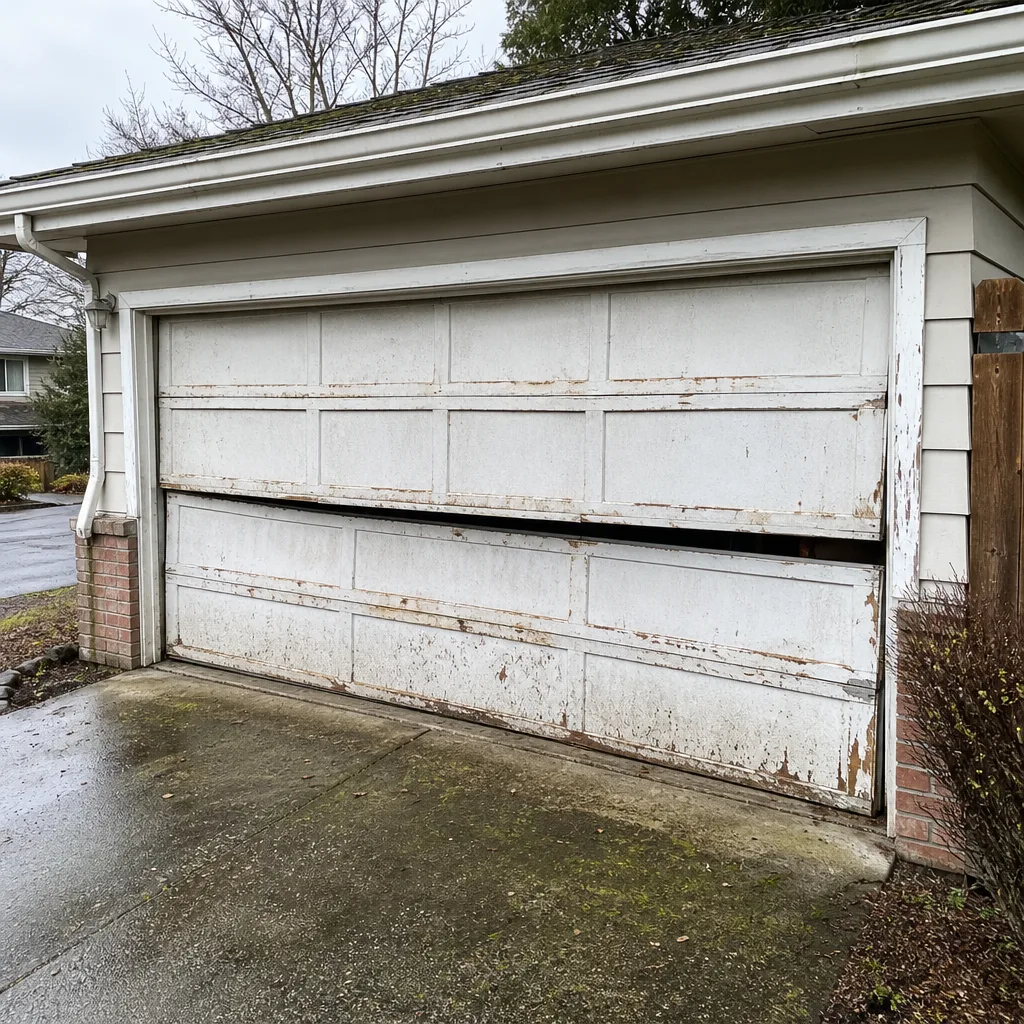 Before
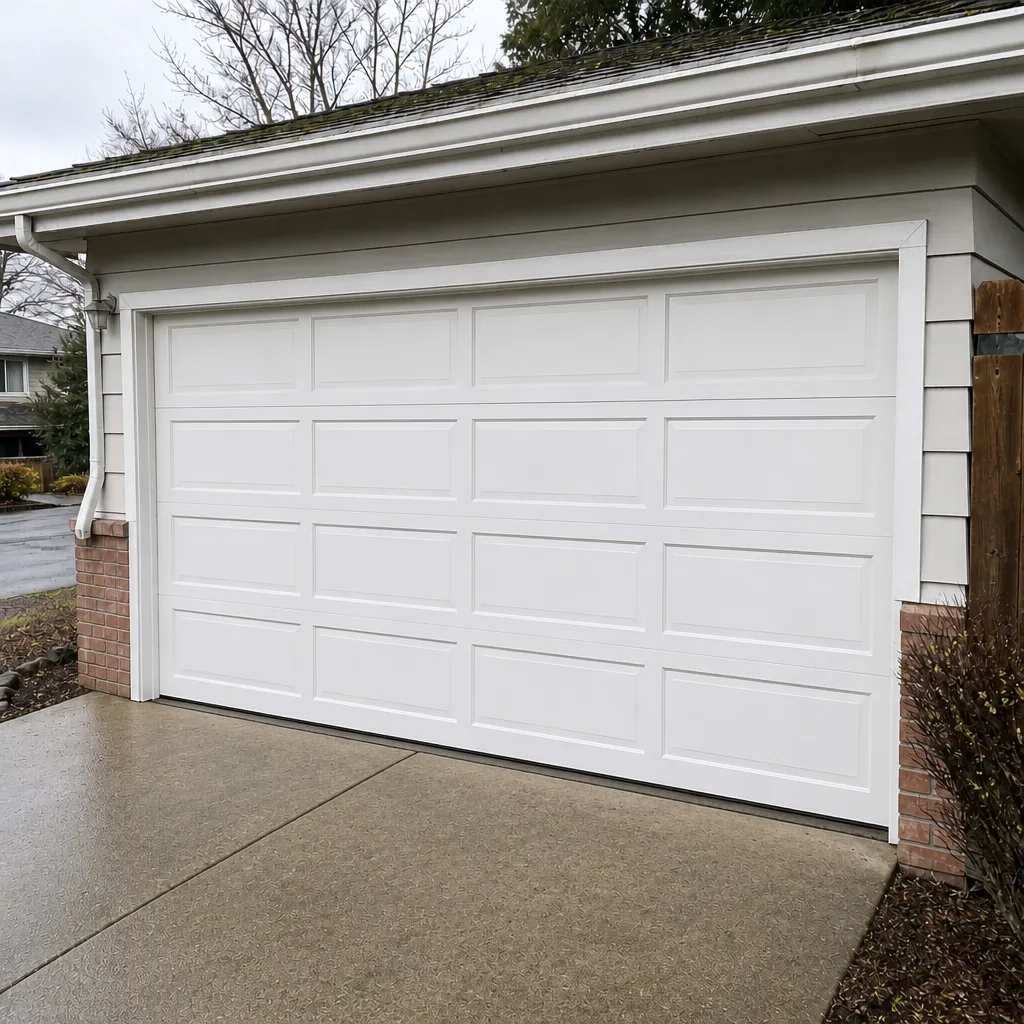 After
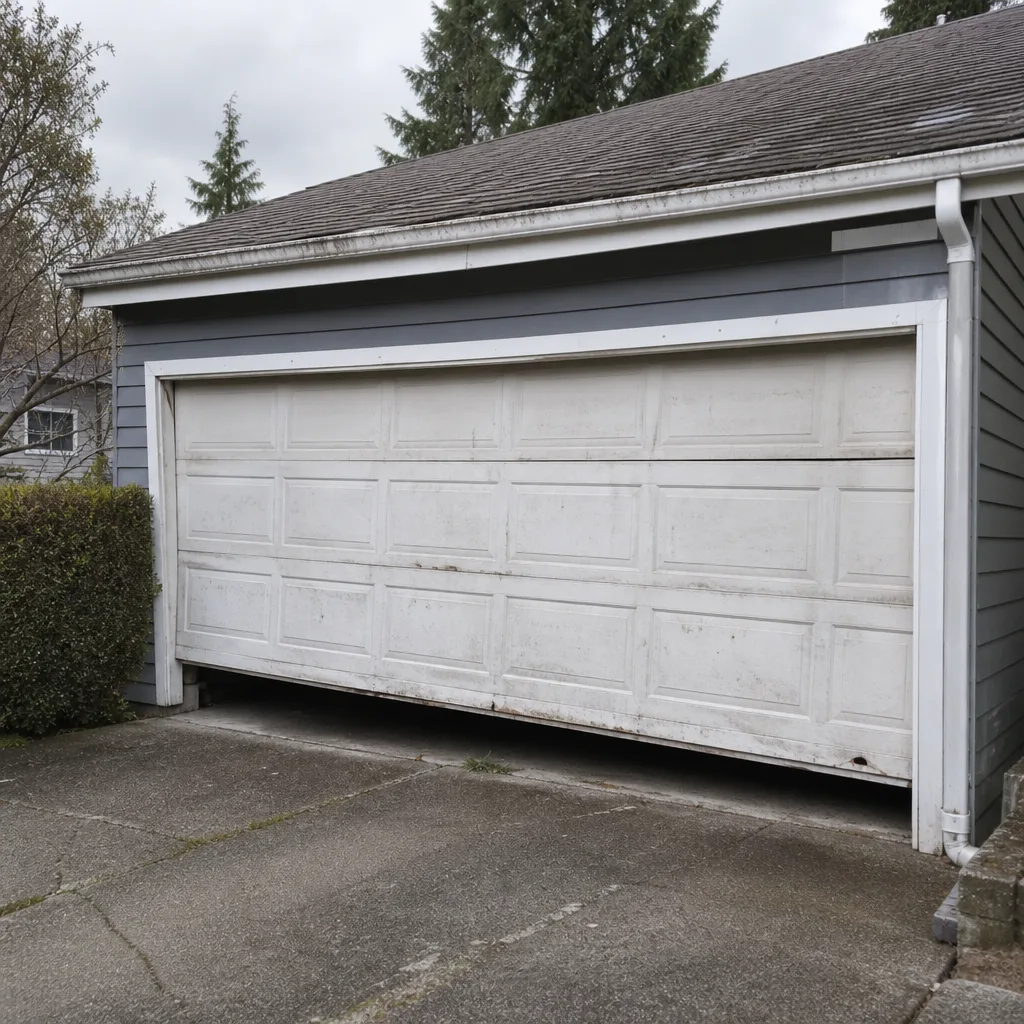 Before
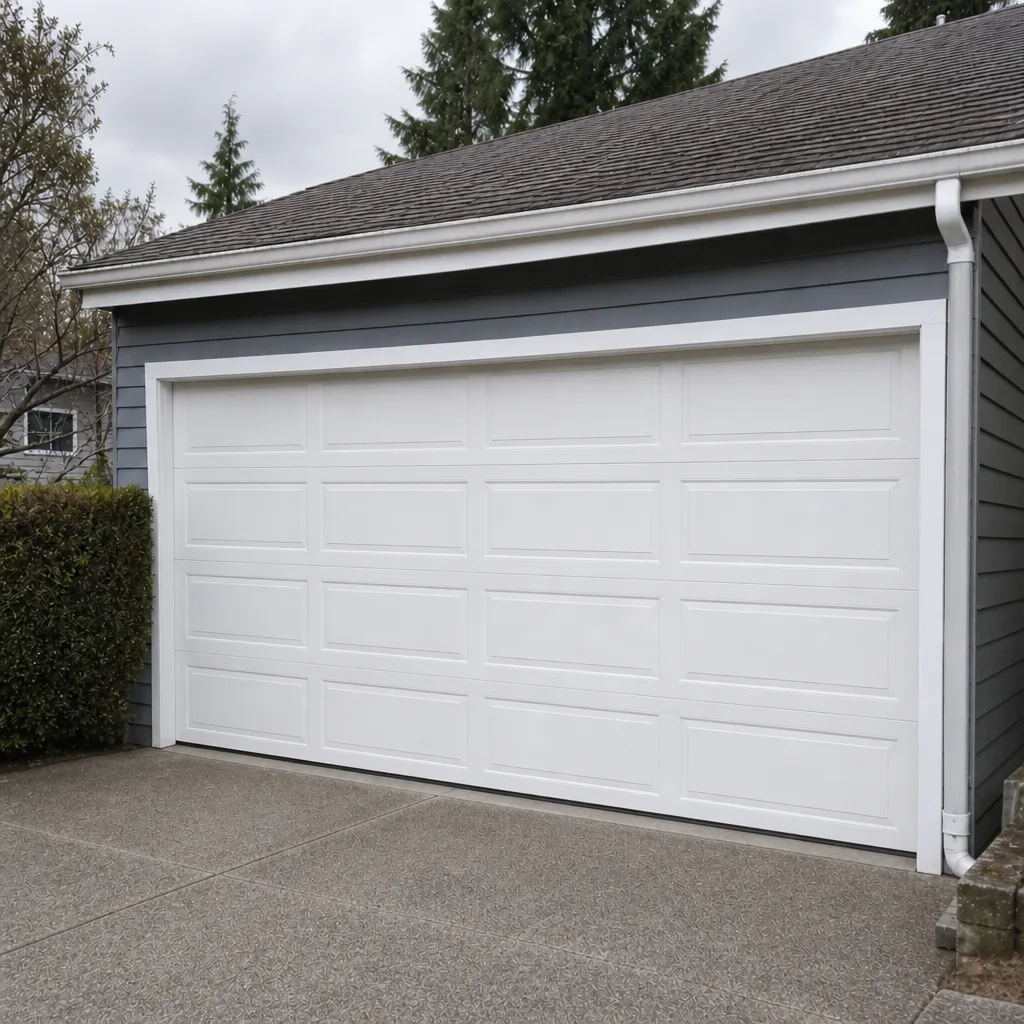 After
When to Call a Professional
Some garage door problems wait for a scheduled visit. Others don’t. Call a professional immediately if a spring has snapped and the door won’t lift, if a cable has come off its drum, if the door has jumped the track or is hanging crooked, or if a panel has been damaged in a way that leaves the door out of square. These are the situations where operating the door can turn a repair into an injury or a replacement. For a door that won’t close and needs securing, we’ll get a technician out to check the whole system in one trip. Bellevue Garage Door Repair Pros offers free estimates in Bellevue, so call (866) 937-9023 to schedule. We answer 24/7, and fast dispatch runs from 7am to 7pm, Sunday through Friday. If your call comes outside dispatch hours, we’ll book you into the next opening, and you’ll have a firm time to plan around.
The mechanical side of a door and the opener system are both our work, so you won’t need to hand off between a door company and an electrician. That reduces diagnostic handoffs and repeat visits, and it means one technician can confirm whether a failure is in the door or the drive. If you’re not sure whether your situation is an emergency, call anyway. It’s a free estimate, and a two-minute conversation beats a night of guessing.
Frequently Asked Questions
Pull the manual release cord hanging from the opener’s trolley, then lift the door by hand from the center. The cord disconnects the door from the motor so it moves freely. This only works if the door’s springs are intact and balanced. If the door feels heavy, stop. Call (866) 937-9023 for help sorting out whether it’s a power issue or a spring problem.
No. A door with a broken spring has no counterbalance, and lifting it can cause serious injury or drop the door. Leave it closed, unplug the opener, and call for professional spring repair. Call (866) 937-9023 and we’ll get a technician out to assess it.
It depends on the model, not just the brand. Some LiftMaster and Chamberlain units include integrated battery backup, while others require a separate add-on unit, and many older Genie and Craftsman openers predate it entirely. Check the label on the motor head or call us with the model number and we’ll tell you what you have and what it would take to add backup.
Use a pair of locking C-clamps on the vertical tracks just above a roller to hold the door in place, then call for a same-day repair. Don’t use a chair or box, and don’t cycle the opener on a door that’s misaligned. Call (866) 937-9023 and we’ll get someone out to check the door and the opener in one visit.
Inspect it before operating it further: check for creases across hinge lines, bent hinges, a bowed panel, or a bent track, then run the door by hand once to confirm it’s tracking straight. If it binds or drifts to one side, stop and call. If the inspection is clean, a panel repair is usually the fix, and we handle panels on Clopay, Amarr, Wayne Dalton, and Raynor doors. Call (866) 937-9023 for a free estimate.
No. The price is set per job by the written estimate, and you’ll see the number before any work starts. We quote it, you approve it, and that’s the price. Estimates are free, so call (866) 937-9023 for an exact quote on your situation.
Not without your approval. We inspect the door and opener, explain what’s wrong, and give you a written estimate before we begin. If the problem turns out to be something different from what the call suggested, we’ll tell you and requote rather than surprise you with a bigger bill. Call (866) 937-9023 to get started.
The local pros we connect you with are licensed and insured as Washington requires. We can work with your insurer on covered damage, and we’ll explain what’s typically covered before any repair begins. Call (866) 937-9023 with questions about your specific situation.
The Bottom Line
A garage door emergency in Bellevue is almost always one of two things: a mechanical failure or a power outage, and each has its own safe response. For outages, use the manual release and lift by hand if the door is balanced. For spring, cable, and track failures, secure the door and call a professional rather than forcing it. Three prep steps, verified before storm season, cover most of the risk: find and test the release cord, check whether your opener has battery backup, and test the door’s balance by hand. If any of them raises a flag, address it before the storm, not during it. For a free estimate on a repair, an inspection, or battery backup, call (866) 937-9023. We answer 24/7, and fast dispatch runs from 7am to 7pm, Sunday through Friday. For a full look at our home service, visit Bellevue Garage Door Repair Pros.
Written by the team at Bellevue Garage Door Repair Pros.